



Research background: Read the Pinealon Research Guide.
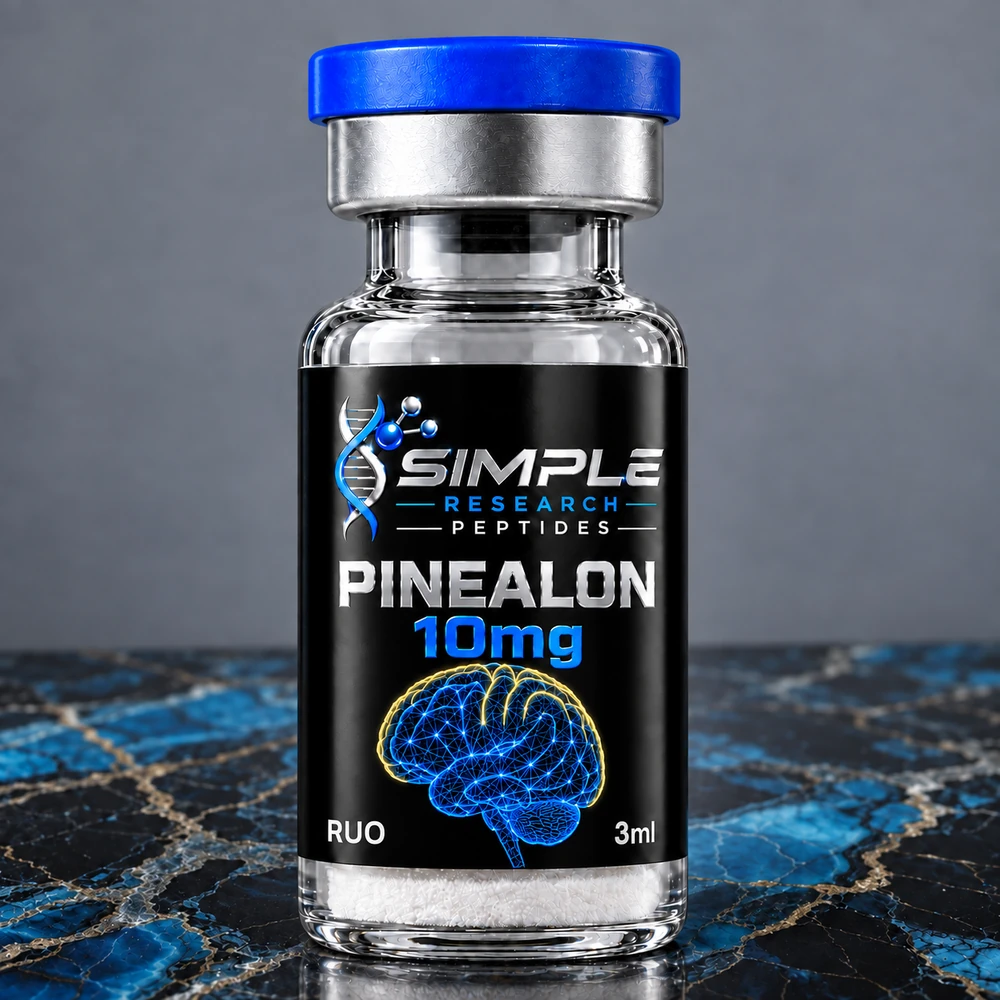
Pinealon (10 mg Vial) is listed for qualified laboratory research use only.
- Research category: Longevity / Bioregulator Research
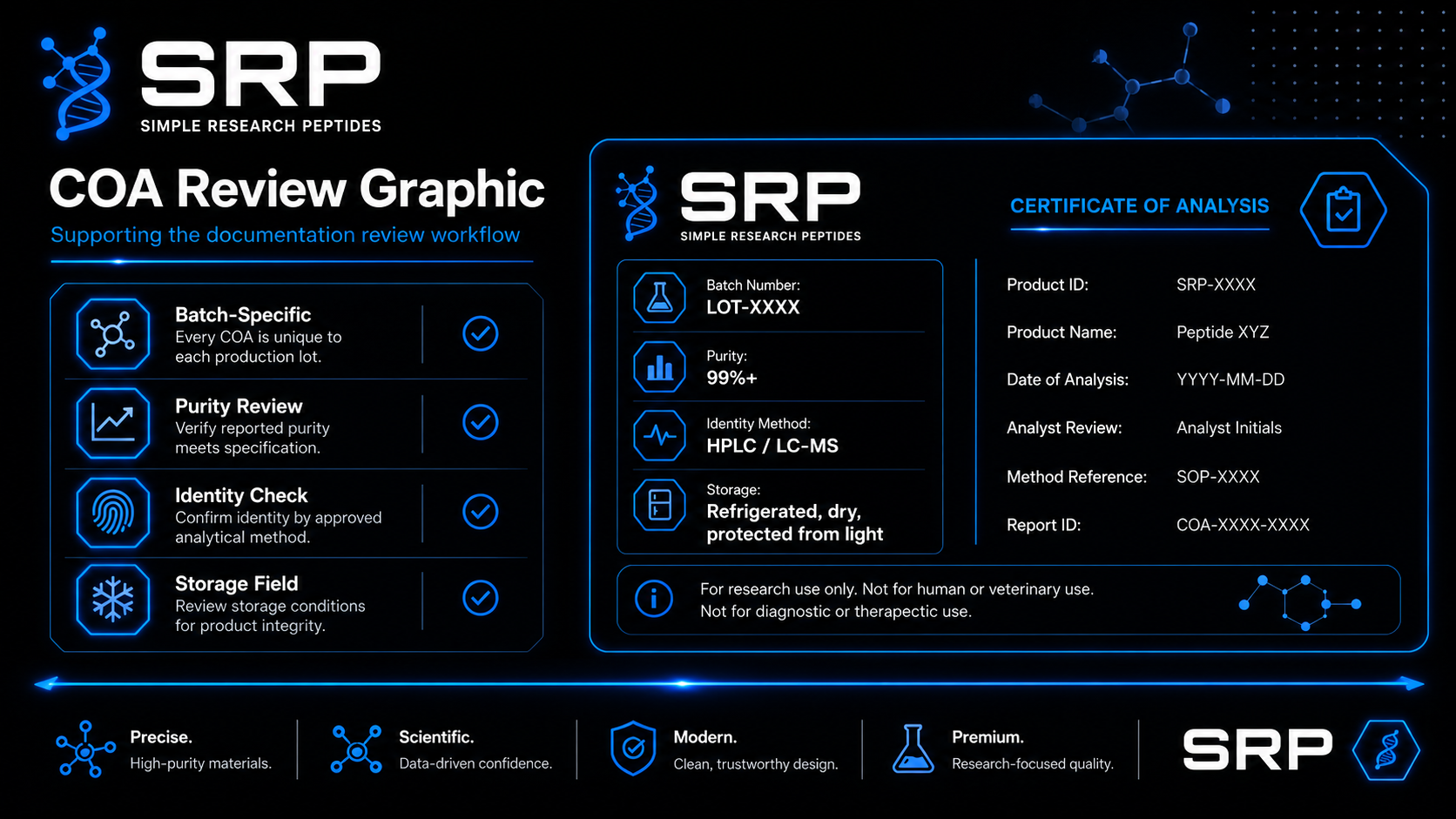
- COA verified
- Third-party tested when available
- For research and laboratory use only
Important: This product is not intended for human consumption, medical use, diagnostic use, or treatment of any disease.
Pinealon Dosage Chart (10 mg Vial)
Pinealon is commonly studied at 1–2 mg once daily in educational research protocols. A 10 mg vial reconstituted with 1.5 mL bacteriostatic water yields a concentration of approximately 6.67 mg/mL, providing the same easy syringe measurements as the 20 mg version.
Research Use Only – Not for Human Consumption
Reconstitution
Add 1.5 mL bacteriostatic water
Final Concentration
10 mg ÷ 1.5 mL = ~6.67 mg/mL
At this concentration:
- 1 unit (U-100 insulin syringe) = 0.01 mL ≈ 66.7 mcg
- 15 units = 1.0 mg
- 22.5 units = 1.5 mg
- 30 units = 2.0 mg
Pinealon (10 mg Vial) – Educational Dosage Protocol
Pinealon is a synthetic tripeptide bioregulator (Glu-Asp-Arg) developed as part of Professor Vladimir Khavinson’s peptide research program. It has been investigated for its potential neuroprotective properties, support of cognitive function, and influence on gene expression within nervous tissue.
This educational protocol outlines a once-daily subcutaneous research schedule using a practical dilution that allows accurate measurements with a standard U-100 insulin syringe.
Dosing & Reconstitution Guide
Standard Approach (1.5 mL = ~6.67 mg/mL)
| Days | Daily Dose | U-100 Syringe |
|---|---|---|
| Days 1–5 | 1.0 mg (1,000 mcg) | 15 units (0.15 mL) |
| Days 6–14 | 1.5 mg (1,500 mcg) | 22.5 units (0.225 mL) |
| Days 15–20 | 2.0 mg (2,000 mcg) | 30 units (0.30 mL) |
Frequency: Once daily via subcutaneous injection, preferably in the morning or early afternoon.
Standard research cycles typically last 10–20 days, with some protocols extending to 28 days. Additional cycles are commonly separated by 2–3 months.
Reconstitution Steps
- Draw 1.5 mL of bacteriostatic water using a sterile syringe.
- Slowly inject the water down the inside wall of the vial.
- Avoid foaming.
- Gently swirl until completely dissolved. Do not shake.
- Label the vial and refrigerate at 2–8°C (35.6–46.4°F).
- Protect from light.
Storage
Lyophilized vial
- Store frozen at −20°C (−4°F) until use.
After reconstitution
- Refrigerate at 2–8°C (35.6–46.4°F).
- Avoid repeated freeze–thaw cycles.
Supplies Needed
Peptide Vials (10 mg each)
- 10-day cycle: 2 vials
- 20-day cycle: 3 vials
- 28-day cycle: 4 vials
U-100 Insulin Syringes
- 1 injection per day
- 10-day cycle: 10 syringes
- 20-day cycle: 20 syringes
- 28-day cycle: 28 syringes
Bacteriostatic Water (10 mL Bottle)
Each vial requires 1.5 mL.
- 10-day cycle (2 vials): 3 mL
- 20-day cycle (3 vials): 4.5 mL
- 28-day cycle (4 vials): 6 mL
One 10 mL bottle is sufficient for all of the above.
Alcohol Prep Pads
Use:
- One pad for the vial stopper
- One pad for the injection site
Daily requirement:
- 2 alcohol swabs per day
Totals:
- 10-day cycle: 20 swabs
- 20-day cycle: 40 swabs
- 28-day cycle: 56 swabs
A 100-count box is recommended.
Protocol Overview
Goal
Support neuroprotection, cognitive function, and healthy cellular signaling within nervous tissue in laboratory research settings.
Schedule
Once-daily subcutaneous administration for 10–20 days.
Dose Range
1.0–2.0 mg daily with gradual titration.
Reconstitution
Add 1.5 mL bacteriostatic water to each 10 mg vial, yielding approximately 6.67 mg/mL.
Storage
Freeze lyophilized product. Refrigerate after reconstitution. Avoid repeated freeze–thaw cycles.
Dosing Protocol
Days 1–5
- 1.0 mg daily
- 15 units
Days 6–14
- 1.5 mg daily
- 22.5 units
Days 15–20
- 2.0 mg daily
- 30 units
Frequency
Once daily via subcutaneous injection.
Preferred Timing
Morning or early afternoon.
Cycle Length
Typically 10–20 days, with optional extension to 28 days.
Repeat Cycles
Every 2–3 months if appropriate for the research protocol.
Important
This guide is provided for educational and laboratory reference purposes only.
Research Use Only. Not for Human Consumption.
Storage Instructions
Proper storage preserves peptide quality.
- Lyophilized: Store at −20 °C (−4 °F) in dry, dark conditions; minimize moisture exposure.
- Reconstituted: Refrigerate at 2–8 °C (35.6–46.4 °F); prepare aliquots if needed and avoid freeze–thaw.
- Allow vials to reach room temperature before opening to reduce condensation uptake.
Important Notes
- Use new sterile insulin syringes; dispose in a sharps container.
- Rotate injection sites (abdomen, thighs, upper arms) to reduce local irritation.
- Inject slowly; wait a few seconds before withdrawing the needle.
- Document daily dose and site rotation to maintain consistency.
- Effects typically become noticeable after 10–14 days of consistent administration[6].
How This Works
Potential Benefits & Side Effects
- Neuroprotective effects through reduction of oxidative stress and preservation of neuronal viability[3][9].
- Improvements in memory, learning capacity, and cognitive function in both animal and human studies[6][10][11].
- Modulation of caspase‑3 activity may reduce apoptosis in neurons and other tissues[12][13].
- Potential support for circadian rhythm regulation and pineal gland function[14].
- Generally well tolerated; occasional mild injection‑site reactions (redness, itching) may occur with subcutaneous administration[15].
Lifestyle Factors
- Maintain a balanced diet rich in antioxidants and essential nutrients to support neurological health.
- Engage in regular physical activity and cognitive exercises to reinforce brain plasticity.
- Prioritize consistent sleep schedules and stress management practices.
- Consider timing administration in the morning or early afternoon to optimize cognitive benefits throughout the day.
Injection Technique
- Clean the vial stopper and skin with alcohol; allow to dry.
- Pinch a skinfold; insert the needle at 45–90° into subcutaneous tissue[17][18].
- Do not aspirate for subcutaneous injections; inject slowly and steadily[17].
- Rotate sites systematically (abdomen, thighs, upper arms) to avoid lipohypertrophy[19].
References
-
Biogerontology (Springer)
— Peptide bioregulation of aging: 35‑year research overview by Khavinson and Anisimov -
Advances in Gerontology (Springer)
— Peptide bioregulators as geroprotectors: experimental studies review -
Rejuvenation Research
— Pinealon increases cell viability by suppressing ROS and activating proliferation -
Biotech Peptides Research Review
— Pinealon mechanism of action: direct DNA interaction and gene regulation -
LIVV Natural Medical Review
— Pinealon in neurological disorders: clinical applications and protocols -
Innerbody Research
— Pinealon peptide: comprehensive review of benefits, safety, and clinical use -
Paragon Sports Medicine
— Pinealon peptide: brain health, memory, and cognitive enhancement research -
Core Peptides Research
— Pinealon effects on neuroprotection, cell vitality, and aging processes -
PMC (PubMed Central)
— Pinealon protects rat offspring from prenatal hyperhomocysteinemia and cognitive deficits -
Doklady Biological Sciences
— Regulatory peptides protect brain neurons from hypoxia in vivo -
PubMed
— Effects of synthetic peptides in patients with chronic polymorbidity and organic brain syndrome -
Advances in Gerontology (Springer)
— Effects of peptides on behavior and caspase‑3 activity in brain after carotid artery occlusion -
Peptide Sciences Research
— Pinealon research: reduction of caspase‑3 and free radical damage -
Recess Rx Clinical Reference
— Pinealon: dosing, mechanism, neuroprotection, and clinical considerations -
Advances in Gerontology
— Clinical efficacy of peptide bioregulators: comprehensive review and safety profile -
PMC (Subcutaneous Drug Injection Review)
— Pharmacologic considerations of the subcutaneous route -
CDC
— Vaccine administration: subcutaneous route (angle/site; no aspiration) -
CDC (Subcut Injection PDF)
— Technique diagram and site guidance for subcutaneous injections -
NCBI Bookshelf
— Best practices for injection (asepsis, preparation, and administration)

Jessica –
This stuff is amazing after the first week I noticed that my brain fog was completely gone and I woke up refreshed and energized I added it onto another peptide I’m taking for sleep which is dsip and it allowed my REM sleep to increase by another hour and my deep sleep to increase by another two I have never felt better when I wake up in the last 10 years I will definitely continue buying this and other pet sides from simple research peptides because I know the quality is amazing and their customer service is awesome you can call their owner at any time and he will answer any questions that you have about your research he is an expert and knows everything when it comes to nutrition what timing to take these peptides so you don’t end up wasting your money or you end up taking a peptide that cancels out another or taking too many peptides that can cause the system burnout which is what happened to me I would severely suggest give him a call if you have any questions or doubts about your sack or the peptides you’re taking his name is Bobby he is such a nice dude.