

YOUR OCTOBER GIFT
Free GHK-Cu 100 mg vial with every order through October 11
One complimentary vial is added automatically when you add a paid item to your cart. Your gift appears as FREE at checkout. No gift code is needed.
Free gift with every order, plus 20% off. Use code SRP20 for the October discount. Visit SRP20.com for Halloween savings →
Ends October 11, 2026, at 11:59 PM Eastern. One gift per order. Laboratory research only. Not for human use.
Continue to shop →Hormone signaling · Compound guide
GHK-Cu
Explore the mechanisms, study findings and evidence limits behind this research topic.
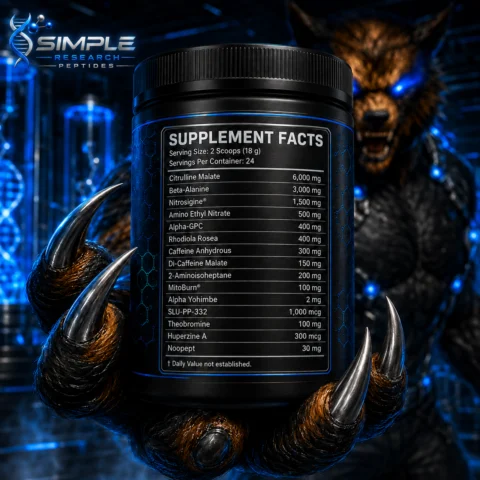
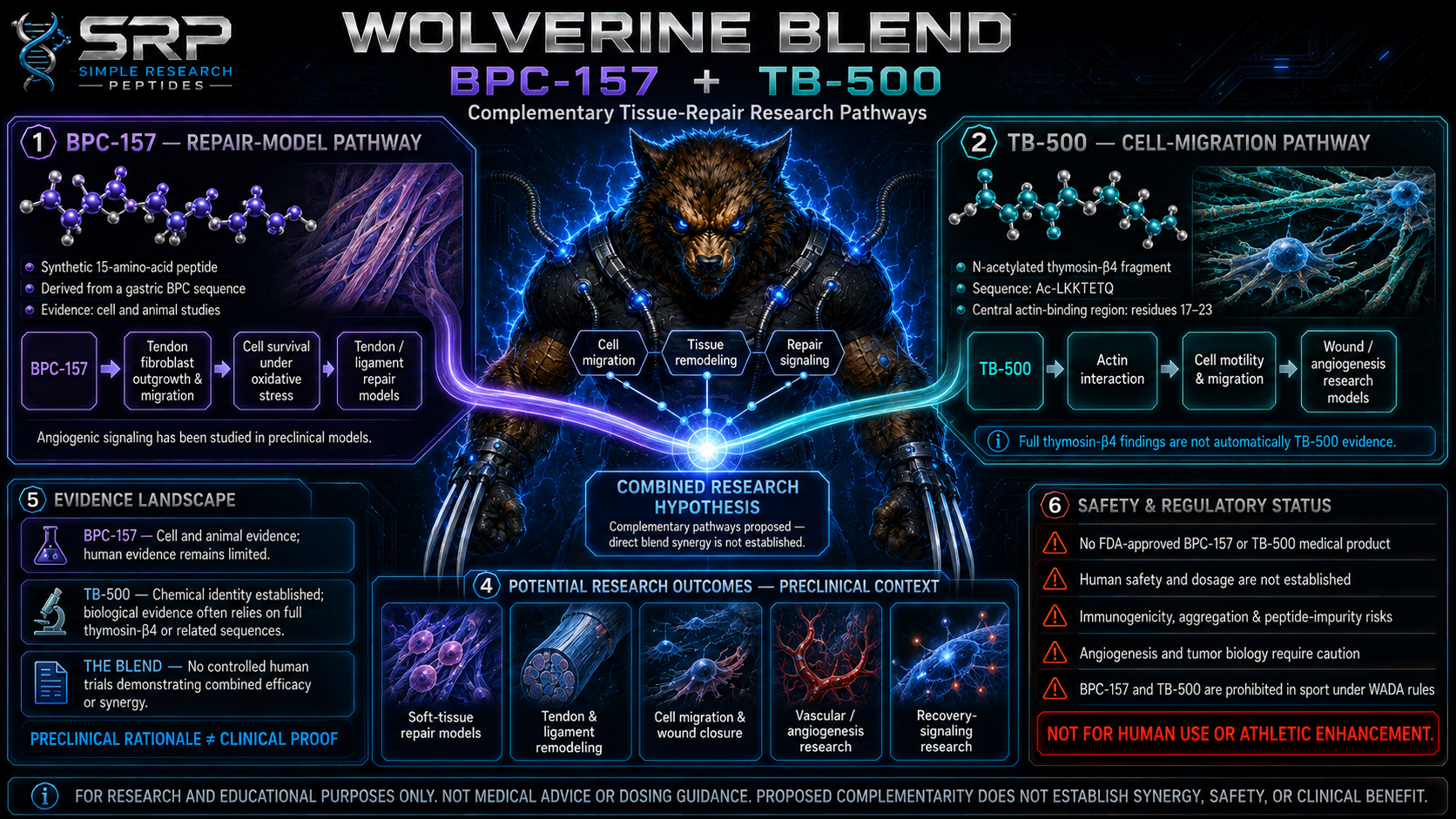
Product artwork identifies the SRP listing. It does not demonstrate safety or clinical benefit. The evidence guide and its sources follow below.
View product label and documentation →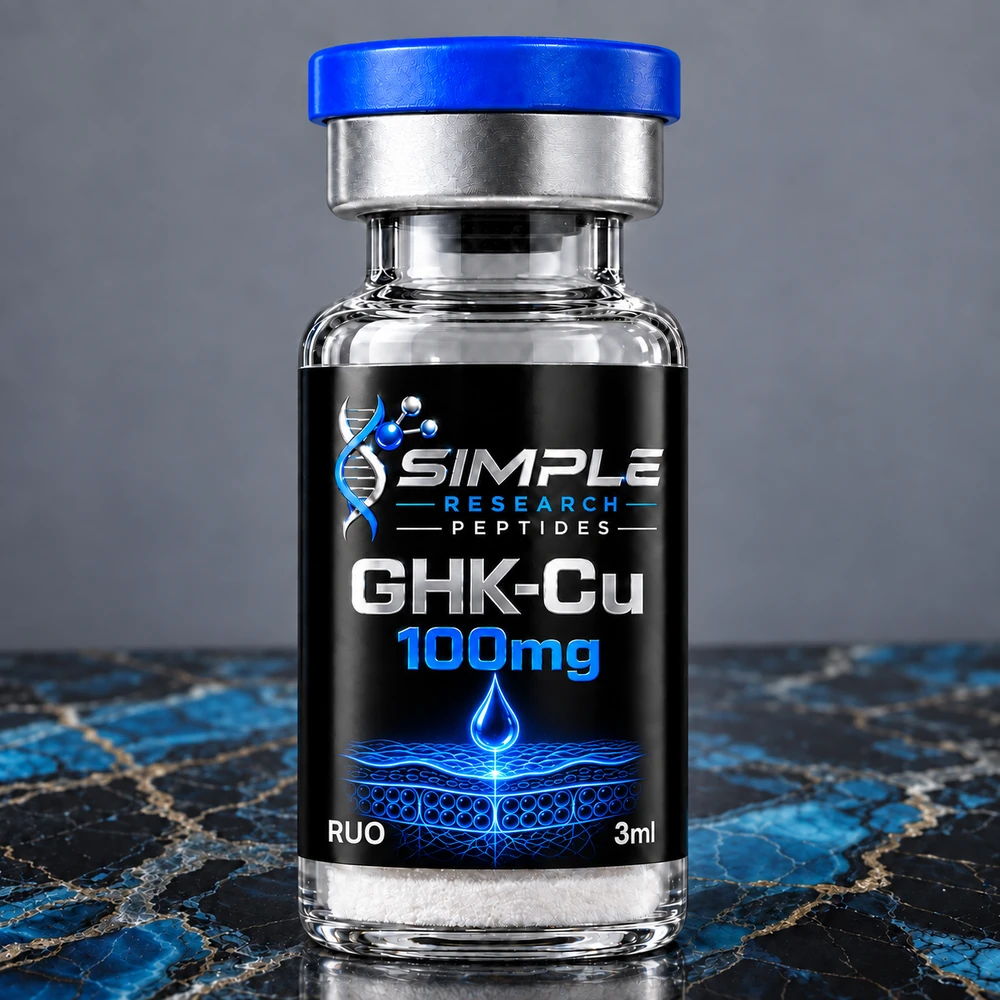
GHK-Cu Research Guide
An evidence-mapped guide to the copper-binding tripeptide GHK-Cu, including extracellular-matrix research, delivery studies, evidence gaps, and route-specific safety concerns.
Fast Answer
GHK-Cu is a naturally occurring copper-binding tripeptide complex studied for its interactions with fibroblasts, collagen production, extracellular-matrix remodeling, and tissue-repair models. Much of the literature is preclinical or formulation-focused.
Topical cosmetic discussion should not be treated as evidence for injectable use. Route, formulation, purity, and exposure can materially change both biological behavior and safety questions.
Proposed Biological Roles
GHK contains the amino acids glycine, histidine, and lysine and can coordinate copper ions. Laboratory studies have reported effects on collagen synthesis and on matrix metalloproteinase and tissue-inhibitor expression in cultured fibroblasts.
These observations support investigation of matrix turnover rather than a simple “more collagen” claim. Healthy tissue remodeling requires regulated synthesis and breakdown, and cell-culture findings do not prove a cosmetic or therapeutic outcome in people.
Evidence Map
- Cell research: fibroblast studies report changes in collagen and MMP-2-related pathways.
- Delivery research: microneedle and hydrogel studies explore permeability and localized delivery.
- Animal models: biomaterial studies report wound-closure, angiogenesis, and remodeling signals.
- Human evidence: limited for many promoted claims, especially systemic or injectable use.
Safety and Interpretation Limits
FDA states that compounded injectable GHK-Cu may present immunogenicity risks related to aggregation and peptide impurities and that human safety information is limited. That caution is route-specific and should not be blurred with topical cosmetic research.
SRP material is for laboratory research only. This page does not establish clinical effectiveness, personal suitability, injection safety, or an anti-aging indication.
Frequently Asked Questions
Is GHK-Cu the same as copper metal?
No. GHK-Cu is a peptide complex that coordinates a copper ion; its biological and chemical behavior depends on the complex and formulation.
Is most GHK-Cu evidence clinical?
No. Much of the cited evidence comes from cells, animal models, and delivery-formulation studies.
Can topical findings be applied to injection?
No. Route-specific exposure and safety questions make that extrapolation unreliable.