
Cellular health · Compound guide
NAD+
Explore the mechanisms, study findings and evidence limits behind this research topic.
Product artwork identifies the SRP listing. It does not demonstrate safety or clinical benefit. The evidence guide and its sources follow below.
View product label and documentation →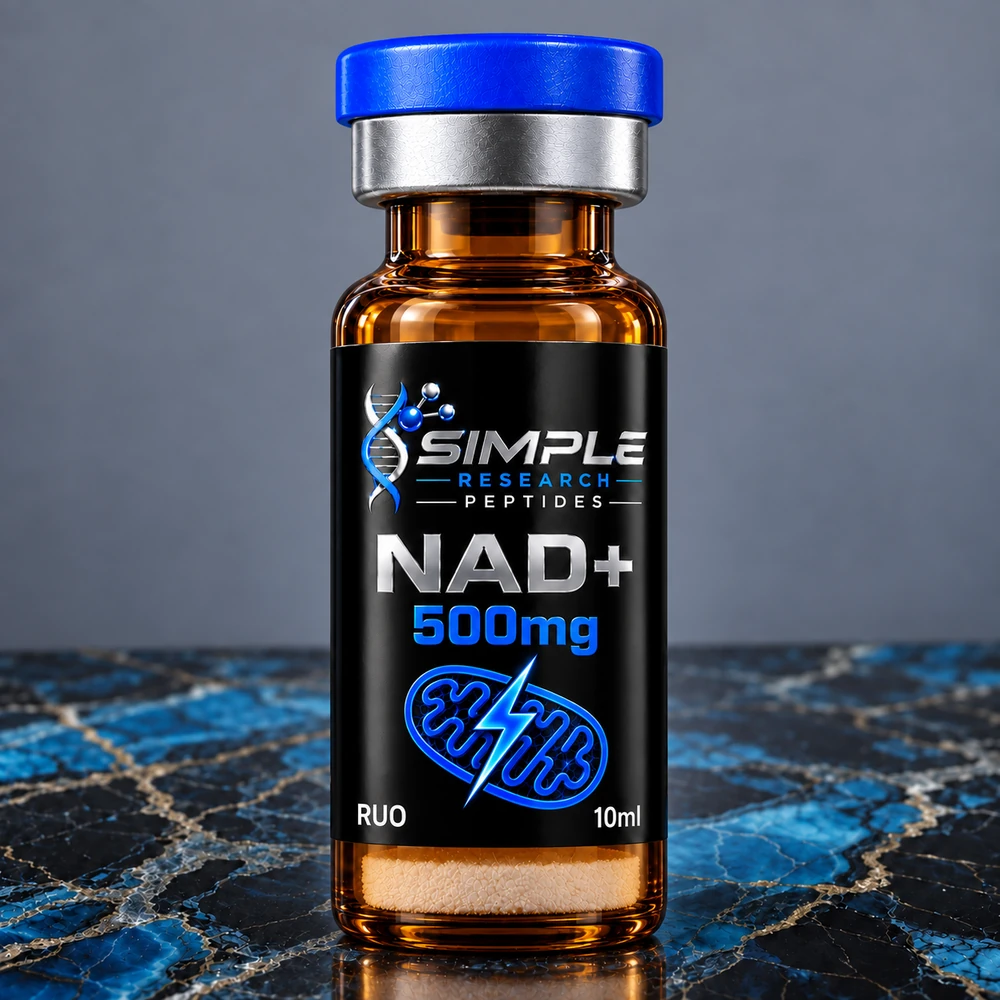
NAD+ Research GuideNadide · CID 5892 · not NADH · not a peptide
NAD+ (nicotinamide adenine dinucleotide; oxidized form; USAN/INN nadide) is an essential dinucleotide coenzyme, not a peptide, with opened PubChem CID 5892, CAS 53-84-9, UNII 0U46U6E8UK, formula C21H27N7O14P2, MW 663.4 g/mol, InChIKey BAWFJGJZGIEFAR-NNYOXOHSSA-N. IUPHAR ligand 2451 (type Metabolite; approved: false). It is not NADH, not nicotinamide riboside (NR), not nicotinamide mononucleotide (NMN), not niacin / nicotinic acid, and not nicotinamide / niacinamide. Human efficacy of a research-market 500 mg, 1,000 mg or 2,000 mg vial is not established.
Educational information only. This page describes a laboratory research material. It is not medical advice. Materials are for laboratory research only and are not for human or veterinary use. No human-use protocol appears on this page.
NAD+ Research Guide
Research date: 16 August 2026, America/Indianapolis (ET / UTC-4).
Research-use-only framing. This page describes an investigational laboratory research coenzyme. It is not medical advice. Simple Research Peptides (SRP) materials are for laboratory research only and are not for human or veterinary use, consumption, administration, diagnosis, treatment, or therapeutic application. No human dosing, reconstitution, or administration protocol appears on this page.
One-sentence identity. NAD+ (nicotinamide adenine dinucleotide; oxidized form; USAN/INN nadide) is an essential dinucleotide coenzyme, not a peptide, with opened PubChem CID 5892, CAS 53-84-9, UNII 0U46U6E8UK, formula C21H27N7O14P2, MW 663.4 g/mol, InChIKey BAWFJGJZGIEFAR-NNYOXOHSSA-N. IUPHAR ligand 2451 (type Metabolite; approved: false). It is not NADH, not nicotinamide riboside (NR), not nicotinamide mononucleotide (NMN), not niacin / nicotinic acid, and not nicotinamide / niacinamide. Human efficacy of a research-market 500 mg, 1,000 mg or 2,000 mg vial is not established.
Chemical identity
The identity table summarizes public registry records and papers that identify NAD+ / NAD / nadide / nicotinamide adenine dinucleotide / β-NAD+ / coenzyme I. Registry information describes the substance and should be checked against batch documentation for the material under investigation.
NAD+ research vial options. SRP lists a 500 mg vial and 1,000 mg and 2,000 mg options. Check the product pages for current pricing, availability and batch documentation.
Comparing vial amounts. The amount listed per vial is a product specification. It does not establish a clinical benefit or provide a human-use protocol.
Batch identity matters. Registry identifiers describe a chemical substance. Confirm the exact form, identity, purity and quantity for the supplied material using its batch documentation.
Keep the evidence separate. NAD+ biology, studies of NAD+ itself and studies of its precursors answer different questions. Evidence for NR, NMN, niacin or nicotinamide should not be treated as evidence for an SRP NAD+ vial.
Use the product links below for current vial options and batch documentation. This guide explains the compound and its research literature.
| Identifier | Value on opened page | Source opened |
|---|---|---|
| Common / research names | NAD+; NAD; nadide; nicotinamide adenine dinucleotide; β-NAD+; β-NAD; coenzyme I; diphosphopyridine nucleotide; cozymase | PubChem CID 5892 synonym block; NCATS UNII 0U46U6E8UK; IUPHAR ligand 2451 |
| Chemical class | Oxidized nicotinamide adenine dinucleotide. Dinucleotide coenzyme (adenine nucleotide + nicotinamide nucleotide joined by a pyrophosphate). Not a peptide. | PubChem PUG + synonyms; IUPHAR type Metabolite; SRP index |
| PubChem title | Nadide | PubChem PUG CID 5892, opened 16 August 2026 |
| PubChem CID | 5892 | PubChem PUG + synonyms + xrefs |
| CAS (primary) | 53-84-9 (first CAS in the opened synonym list; NCATS primary CAS; PubChem RN list) | PubChem synonyms; PubChem xrefs RN; NCATS |
| Additional CAS RNs on the same CID | 64417-72-7, 4090-29-3, 477981-33-2 also appear in the opened PubChem RN / synonym block. They were not opened as separate substance records. Do not treat them as a second molecule, and do not assume they identify the SRP lot (hydrate / salt / labeling variants are possible). | PubChem xrefs RN |
| UNII | 0U46U6E8UK | PubChem synonyms (0U46U6E8UK, UNII-0U46U6E8UK); NCATS |
| Formula / MW | C21H27N7O14P2; 663.4 g/mol (PubChem computed). NCATS structure MW 663.4251 | PubChem PUG; NCATS |
| Exact / monoisotopic mass | 663.10912256 Da | PubChem PUG |
| InChIKey | BAWFJGJZGIEFAR-NNYOXOHSSA-N | PubChem PUG; NCATS |
| Defined stereocenters | 8 / 8 (NCATS) | NCATS UNII page |
| IUPAC (computed) | [[(2R,3S,4R,5R)-5-(6-aminopurin-9-yl)-3,4-dihydroxyoxolan-2-yl]methoxy-hydroxyphosphoryl] [(2R,3S,4R,5R)-5-(3-carbamoylpyridin-1-ium-1-yl)-3,4-dihydroxyoxolan-2-yl]methyl phosphate | PubChem PUG |
| ChEBI | CHEBI:44215 | PubChem synonyms; NCATS |
| ChEMBL | CHEMBL1234613 | PubChem synonyms; NCATS |
| EPA DSSTox | DTXSID2045236 | PubChem synonyms; NCATS |
| DrugBank | DB14128 | PubChem synonyms; NCATS |
| EINECS | 200-184-4 | PubChem synonyms; NCATS |
| NSC | 20272 / NSC-20272 | PubChem synonyms; NCATS |
| MeSH | NAD; MeSH Unique ID D009243 | NCATS; CT.gov interventionBrowseModule on opened NAD+ records |
| IUPHAR / GtoPdb | Ligand 2451; name NAD; type Metabolite; INN empty; approved: false | IUPHAR /services/ligands/2451 |
| USAN / INN / JAN / WHO-DD | NADIDE (opened NCATS locators: INN, JAN, MART., USAN, WHO-DD) | NCATS |
| ClinicalTrials.gov (direct NAD+ / Coenzyme I administration, opened) | Three opened interventional records that actually name NAD+ or Coenzyme I as the intervention: NCT07328100, NCT06558253, NCT06919328. All hasResults false. Broad query.intr=NAD+ / nadide / nicotinamide adenine dinucleotide returned totalCount 261 and is mostly lexical noise (mobile apps, acupuncture, NR trials). Unused as a count of NAD+ trials. | CT.gov API v2, versionHolder 2026-08-14 |
| openFDA Drugs@FDA | search=nadide: HTTP 404 | openFDA API, opened 16 August 2026 |
| FDA-approved NAD+ drug | None on opened IUPHAR (approved: false), openFDA, or PubChem pages | Same |
| SRP vial options | 500 mg; 1,000 mg; 2,000 mg | 500 mg listing · 1,000 / 2,000 mg listing |
Critical identity point. CID 5892 / UNII 0U46U6E8UK is the oxidized dinucleotide (NAD+ / nadide). NADH is a different molecule (CID 439153; CAS 58-68-4; UNII 4J24DQ0916; formula C21H29N7O14P2; MW 665.4; InChIKey BOPGDPNILDQYTO-NNYOXOHSSA-N). An SRP “NAD+ 500 mg” or “1000 mg” lot is not automatically NADH, not a lithium salt, not a hydrate, and not a precursor vitamin. Confirm oxidized vs reduced form, salt, hydrate, and purity on a COA / LC-MS / NMR.
Registry chaos that must not be collapsed.
- PubChem CID 5892 depositor synonyms include “beta-Nicotinamide adenine dinucleotide, reduced.” That string sits on the oxidized CID. It is nomenclature noise, not identity. NADH is CID 439153.
- PubChem synonyms also include “NAD Lithium salt” and several hydrate catalog strings. Those sit on the free / inner-salt CID. They do not prove the SRP counter-ion or hydration state.
- Additional CAS RNs 64417-72-7, 4090-29-3, and 477981-33-2 appear on CID 5892. Only 53-84-9 is treated as the primary opened CAS (first synonym CAS + NCATS primary). The extras were not opened as separate substances.
- NCATS UNII 0U46U6E8UK is titled NADIDE and prints the NAD+ formula / InChIKey, but the prose block on that page conflates NADIDE with Enada (NADH) (“NADIDE (NADH)”, “Enada by Birkmayer”, “First approved in 2010”, oral 2.5–5 mg Enada language, chronic-fatigue / Parkinson claims). Enada is a NADH synonym on CID 439153, not proof that NAD+ is an approved drug. That NCATS marketing/prose block is unused as NAD+ approval, unused as NADH identity for this SKU, and unused as a dose. NCATS structure data (formula, InChIKey, CAS 53-84-9, UNII) remain usable.
- ClinicalTrials.gov
NAD+/nadide/nicotinamide adenine dinucleotideis a lexical collision (totalCount 261). Hits include Niagen / NR trials (example: NCT03482167 intervention is Niagen®, not NAD+), NMN trials, and unrelated “NAD” substrings. Unused as a trial census. - IUPHAR ligand 2451 is NAD (metabolite, not approved). Do not invent a peptide ligand.
NAD+ and related compounds
Catalog “Cellular Health / Metabolic / longevity” language does not convert a research dinucleotide into a precursor vitamin, a reduced cofactor, or a peptide.
| Identity | What opened sources actually describe | Peptide? | Typical literature role |
|---|---|---|---|
| NAD+ / nadide (this page) | Oxidized dinucleotide; CID 5892; CAS 53-84-9; UNII 0U46U6E8UK; C21H27N7O14P2; MW 663.4; InChIKey BAWFJGJZGIEFAR-NNYOXOHSSA-N; IUPHAR 2451; approved: false | No (coenzyme) | Redox cofactor and substrate for sirtuins, PARPs, CD38. Extensive cell/animal biology. Sparse direct human administration data. Not an approved drug on opened pages. |
| NADH (reduced form) | CID 439153; CAS 58-68-4; UNII 4J24DQ0916; C21H29N7O14P2; MW 665.4; InChIKey BOPGDPNILDQYTO-NNYOXOHSSA-N; synonyms DPNH, ENADA, reduced NAD | No | Two-electron-reduced partner of the NAD+/NADH couple. Different molecule. Enada marketing on the NCATS NADIDE page is NADH, not this SKU. |
| Nicotinamide riboside (NR) | CID 439924; CAS 1341-23-7; UNII 0I8H2M0L7N; C11H15N2O5+; MW 255.25; InChIKey JLEBZPBDRKPWTD-TURQNECASA-O; synonyms Niagen, TruNiagen | No (nucleoside) | Oral NAD+ precursor vitamin. Human PK: Trammell 2016 PMID 27721479; Airhart 2017 PMID 29211728. Not NAD+. |
| Nicotinamide mononucleotide (NMN) | CID 14180; CAS 1094-61-7; UNII 2KG6QX4W0V; C11H15N2O8P; MW 334.22; InChIKey DAYLJWODMCOQEW-TURQNECASA-N | No (nucleotide) | NAD+ precursor. Human NMN trial: Yoshino 2021 PMID 33888596. Review: Yoshino 2018 PMID 29249689. Not NAD+. |
| Niacin / nicotinic acid | CID 938; CAS 59-67-6; UNII 2679MF687A; C6H5NO2; MW 123.11; InChIKey PVNIIMVLHYAWGP-UHFFFAOYSA-N; Niaspan / Niacor | No (vitamin B3 acid) | Classic NAD+ precursor vitamin; approved niacin drug products exist for niacin, not for NAD+. Bogan & Brenner 2008 PMID 18429699. Not this vial. |
| Nicotinamide / niacinamide | CID 936; CAS 98-92-0; UNII 25X51I8RD4; C6H6N2O; MW 122.12; InChIKey DFPAKSUCGFBDDF-UHFFFAOYSA-N | No (vitamin B3 amide) | NAD+ precursor / PARP-product amide. Not NAD+. |
| MOTS-c / SS-31 / other SRP peptides | Separate SRP listings and (where they exist) dedicated peptide guides | Yes (different class) | Do not cite peptide papers as NAD+ evidence. |
The 500 mg vial is not the 1000 mg vial. Two SRP SKUs. Same research name. No opened paper tested an SRP lot.
NAD+ is not a peptide. It is a dinucleotide coenzyme. The SRP index states this explicitly. Do not file it with peptide bioregulators.
NAD+ is not NADH. One hydride / two electrons and two protons of mass separate them (663.4 vs 665.4; InChIKeys share the stereo suffix NNYOXOHSSA-N but have different first blocks: BAWFJGJZGIEFAR vs BOPGDPNILDQYTO). NCATS/Enada prose that writes “NADIDE (NADH)” is a registry error, not chemistry.
NAD+ is not NR, NMN, niacin, or nicotinamide. Those are biosynthetic precursors (or, for nicotinamide, also a product of NAD+-consuming enzymes). Yoshino 2018 (PMID 29249689) and Bogan & Brenner 2008 (PMID 18429699) exist to keep those streams apart. Grant 2019 (PMID 31572171) states that precursor data (example: NR raising plasma NAD+) are not a substitute for measuring infused NAD+ itself.
Do not equate this vial with NADH, Enada, NR / Niagen, NMN, niacin / Niaspan, nicotinamide, tryptophan, MOTS-c, or an FDA-approved metabolic drug. Research use only.
Proposed mechanisms
Opened reviews support a redox-coenzyme plus NAD+-consuming-enzyme working model. It is not a treatment claim. It was not generated with an SRP 500 mg, 1,000 mg or 2,000 mg vial. Observed means a measurement in an opened paper. Proposed means a hypothesis. Not shown means the opened papers did not establish it for a research-market lot.
Observed — redox cofactor and NAD+-consuming enzymes (reviews) Covarrubias, Perrone, Grozio and Verdin 2021 (PMID 33353981; PMC 7963035; *Nat Rev Mol Cell Biol*) open: NAD+ is a coenzyme for redox reactions and an essential cofactor for non-redox NAD+-dependent enzymes, including sirtuins, CD38, and poly(ADP-ribose) polymerases. It can influence metabolic pathways, DNA repair, chromatin remodelling, cellular senescence, and immune-cell function. Ageing is recognised as accompanied by a gradual decline in tissue and cellular NAD+ in rodents and humans; the authors link that decline to ageing-associated conditions and state that “much remains to be learnt” about how to restore NAD+ safely in ageing humans. Review language that “many of these ageing-associated diseases can be slowed down and even reversed by restoring NAD+ levels” is review opinion / preclinical synthesis, not an approval and not a finding for this vial.
Canto, Menzies and Auwerx 2015 (PMID 26118927; PMC 4487780) review NAD+ as a cofactor that can rewire metabolism, activate sirtuins, and maintain mitochondrial fitness. Imai and Guarente 2014 (PMID 24786309; PMC 4112140) review NAD+ as both a redox coenzyme and a substrate for sirtuins, PARPs, and CD38/157, with NAMPT-mediated biosynthesis coupled to SIRT1. Chini, Zeidler, Kashyap, Warner and Chini 2021 (PMID 33930322; PMC 8172449) add that NAD pathway metabolites also participate in signaling, post-translational modification, epigenetics, and NAD-capping of RNA, and that NAD half-life can be on the order of minutes in some tissues. Migaud, Ziegler and Baur 2024 (PMID 39026037; PMC 12456757) review regulation and challenges in targeting NAD+ metabolism, including “limitations of, assumptions about and unappreciated factors that might influence the success or contribute to risks of NAD+ supplementation.”
Observed — CD38 as an age-linked NAD+ consumer (mice) Camacho-Pereira et al. 2016 (PMID 27304511; PMC 4911708; *Cell Metab*) report that CD38 expression and NADase activity increase with aging in mice, that CD38 is required for age-related NAD decline and mitochondrial dysfunction via a pathway mediated at least in part by SIRT3, and that CD38 is the main enzyme degrading the precursor NMN in vivo. Mouse enzymology. Not a human CD38-drug trial. Not this vial.
Observed — direct intravenous NAD+ changes the human NAD+ metabolome (pilot, not a protocol) Grant, Berg, Mestayer, Braidy, Bennett, Broom and Watson 2019 (PMID 31572171; PMC 6751327; *Front Aging Neurosci*) is the opened human paper that actually infuses NAD+ itself. Abstract: no published human data then existed on the fate of directly infused NAD+ (as opposed to NR). The study documented plasma and urine NAD+ and metabolites during and after a 6 h intravenous infusion at 3 μmol/min. No change in plasma NAD+ or listed metabolites (nicotinamide, methylnicotinamide, ADPR, NMN) until after 2 h; increased urinary methylnicotinamide and NAD+ at 6 h; no significant rise in urinary nicotinamide. Authors conclude that at that infusion rate NAD+ is rapidly and completely removed from plasma for at least the first 2 h; the metabolite profile is consistent with NAD+ glycohydrolase and NAD+ pyrophosphatase activity; urinary products include NAD+ itself and meNAM but not NAM. This is a 2019 pilot metabolome study. The printed infusion rate is a study condition, not a reconstitution or administration protocol for an SRP vial.
Observed — precursor vitamins raise NAD+ by a different route (distinction, not this SKU) Bogan and Brenner 2008 (PMID 18429699) evaluate nicotinic acid, nicotinamide, and nicotinamide riboside as distinct NAD+ precursor vitamins. Yoshino, Baur and Imai 2018 (PMID 29249689; PMC 5842119) review NMN and NR as key intermediates with tissue-specific fates. Trammell et al. 2016 (PMID 27721479; PMC 5062546) report oral NR is bioavailable in mice and humans and raises the blood NAD+ metabolome. Airhart et al. 2017 (PMID 29211728; PMC 5718430) is an open-label NR PK study. Yoshino et al. 2021 (PMID 33888596; PMC 8550608) is a 10-week randomized NMN trial in postmenopausal women with prediabetes. These papers are precursor evidence. They are not evidence that an SRP NAD+ vial is orally bioavailable, and they are not NAD+ infusion data.
Not shown / do not infer
- That an SRP 500 mg, 1,000 mg or 2,000 mg lyophilized lot is chemically identical to the Grant 2019 infusate.
- That precursor (NR / NMN / niacin / nicotinamide) human outcomes transfer to exogenous NAD+.
- That NCATS “approved 2010 / Enada” language is an FDA approval of NAD+.
- A completed human efficacy, safety, or aging-indication package for NAD+ as a drug.
- Oral bioavailability of intact NAD+ in humans (Grant 2019 is intravenous and reports rapid plasma clearance).
- Any reconstitution, injection, or infusion method for this SKU.
Mechanism in one line. Oxidized dinucleotide coenzyme for redox metabolism and substrate for sirtuins, PARPs, and CD38; tissue NAD+ declines with age in opened reviews; direct human infusion data are a single opened pilot metabolome study. Not a treatment claim. Not for human use.
Research evidence
Label every row. NAD+ ≠ NADH ≠ NR ≠ NMN ≠ niacin ≠ nicotinamide. Review “therapeutic potential” language is not a completed therapeutic program.
A. Opened NAD+ biology / mechanism reviews and primary enzymology Covarrubias 2021 (PMID 33353981); Migaud 2024 (PMID 39026037); Chini 2021 (PMID 33930322); Rajman 2018 (PMID 29514064); Verdin 2015 (PMID 26785480); Canto 2015 (PMID 26118927); Imai & Guarente 2014 (PMID 24786309); Lautrup 2019 (PMID 31577933); Waddell 2023 (PMID 37174729); Belenky 2007 (PMID 17161604). Primary mouse CD38: Camacho-Pereira 2016 (PMID 27304511).
B. Opened direct human NAD+ administration paper Grant 2019 (PMID 31572171) — 6 h IV NAD+ metabolome pilot. No NCT printed on the opened Europe PMC record. Do not invent one.
C. Opened interventional registrations that name NAD+ or Coenzyme I — no results
- NCT07328100 (NAD-VA; Shanghai 10th People’s Hospital; Coenzyme I for Injection vs NaCl; vascular aging; randomized, triple-blind; estimated n=60; NOT_YET_RECRUITING; isFdaRegulatedDrug false; hasResults false). Brief summary itself distinguishes precursor (NR/NMN) arterial-stiffness literature from the unanswered question about NAD+ / Coenzyme I.
- NCT06558253 (Anhui Provincial Hospital; Coenzyme I for Injection after single-unit unrelated cord-blood transplant; Phase 1 open-label sequential; estimated n=12; RECRUITING; isFdaRegulatedDrug false; hasResults false). Printed arm amounts on that record are study conditions and are not reproduced here.
- NCT06919328 (Nutraceuticals Research Institute / ChromaDex collaborator; injectable Niagen® vs NAD+ vs placebo by IM / SQ / IV-push; estimated n=70; RECRUITING; isFdaRegulatedDrug false; hasResults false). Primary outcomes on the opened record are pain / subjective discomfort, not NAD+ restoration efficacy.
Registration is not efficacy, safety, or FDA endorsement.
D. Precursor human / review stream — distinction only Yoshino 2018 (PMID 29249689); Bogan 2008 (PMID 18429699); Trammell 2016 (PMID 27721479); Airhart 2017 (PMID 29211728); Yoshino 2021 (PMID 33888596); Zhang 2016 mouse NAD+ repletion (PMID 27127236). Unused as NAD+ vial evidence.
E. Lexical / unused CT.gov Broad NAD+ / nadide / nicotinamide-adenine-dinucleotide intervention queries: totalCount 261. Example unused hit: NCT03482167 (“NAD Therapy…”) intervention is Niagen® (NR), not NAD+. Do not cite NR/NMN NCTs as NAD+ trials.
Regulatory — not FDA-approved; NCATS Enada prose is NADH conflation openFDA nadide: 404. IUPHAR approved: false. NCATS “First approved in 2010 / Enada” block is NADH dietary-supplement marketing on the NADIDE record. Unused as an NAD+ NDA.
Product identity and research evidence. SRP vial amounts are listing specifications. Study findings do not independently verify the identity, purity or quantity of an SRP batch; review the relevant batch documentation.
Studies and trial records
Read the “what it did not show” column. Published study designs are historical facts from those papers. They are not a protocol. Infusion rates, oral precursor amounts, and mouse schedules are study conditions, not instructions for an SRP 500 mg, 1,000 mg or 2,000 mg research vial.
| Study | Species / model | What was tested | Actual finding (from the opened record) | What it did not show |
|---|---|---|---|---|
| Grant, Berg, Mestayer, et al., 2019 PMID 31572171. DOI 10.3389/fnagi.2019.00257. PMC 6751327. *Front Aging Neurosci* 11:257. Opened Europe PMC abstract. | Human pilot; 6 h IV NAD+ | Direct NAD+ infusion (abstract: 3 μmol/min × 6 h) | Plasma NAD+ / NAM / meNAM / ADPR / NMN unchanged until after 2 h; urinary NAD+ and meNAM rose at 6 h; urinary NAM did not. Rapid plasma removal; glycohydrolase / pyrophosphatase-consistent metabolite profile. | Efficacy. Aging indication. Oral NAD+. Equivalence to an SRP lot. A protocol. |
| Covarrubias, Perrone, Grozio, Verdin, 2021 PMID 33353981. DOI 10.1038/s41580-020-00313-x. PMC 7963035. *Nat Rev Mol Cell Biol* 22:119-141. Opened Europe PMC abstract. | Review | NAD+ metabolism in ageing | Redox coenzyme + sirtuin / CD38 / PARP substrate; age-linked NAD+ decline in rodents and humans; authors state much remains unknown about safe restoration in ageing humans. | Approval. SRP-vial data. Precursor = NAD+ identity. |
| Migaud, Ziegler, Baur, 2024 PMID 39026037. DOI 10.1038/s41580-024-00752-w. PMC 12456757. *Nat Rev Mol Cell Biol* 25:822-840. Opened Europe PMC abstract. | Review | Challenges in targeting NAD+ metabolism | NAD+ / NADH as redox cofactor and signaling-enzyme substrate; supplementation interest; authors emphasize limitations, assumptions, and possible risks. | Human approval. This vial. |
| Chini, Zeidler, Kashyap, Warner, Chini, 2021 PMID 33930322. DOI 10.1016/j.cmet.2021.04.003. PMC 8172449. *Cell Metab* 33:1076-1087. Opened Europe PMC abstract. | Perspective / review | Evolving NAD(H) / NADP(H) concepts | Beyond redox: signaling, PTMs, epigenetics, NAD-capped RNA; short tissue half-life in some contexts. | Human drug trial. This vial. |
| Rajman, Chwalek, Sinclair, 2018 PMID 29514064. DOI 10.1016/j.cmet.2018.02.011. PMC 6342515. *Cell Metab* 27:529-547. Opened Europe PMC abstract. | Review | In vivo NAD-boosting molecules | NAD as redox and signaling molecule; age-linked decline; restoration in old/diseased animals can promote health / lifespan in that literature. | Human approval. Direct NAD+ = precursor. |
| Canto, Menzies, Auwerx, 2015 PMID 26118927. DOI 10.1016/j.cmet.2015.05.023. PMC 4487780. *Cell Metab* 22:31-53. Opened Europe PMC abstract. | Review | NAD+ / energy homeostasis | Cofactor, sirtuins, mitochondrial fitness; “NAD+-boosting strategies” language is review, not approval. | Human indication. |
| Imai & Guarente, 2014 PMID 24786309. DOI 10.1016/j.tcb.2014.04.002. PMC 4112140. *Trends Cell Biol* 24:464-471. Opened Europe PMC abstract. | Review | NAD+ and sirtuins | Redox + sirtuin / PARP / CD38 consumption; NAMPT–SIRT1; age-linked decline; intermediate supplementation (not this vial) discussed. | NAD+ vial efficacy. |
| Camacho-Pereira et al., 2016 PMID 27304511. DOI 10.1016/j.cmet.2016.05.006. PMC 4911708. *Cell Metab* 23:1127-1139. Opened Europe PMC abstract. | Mice | CD38 NADase vs age-related NAD decline | CD38 rises with age; required for NAD decline and mitochondrial dysfunction (SIRT3-related); main NMN-degrading enzyme in vivo. | Human CD38 trial. SRP lot. |
| Verdin, 2015 PMID 26785480. DOI 10.1126/science.aac4854. *Science*. Opened Europe PMC lite (title/DOI confirmed; no PMC on that record). | Review | NAD+ in aging, metabolism, neurodegeneration | Title-level identity source. Abstract not re-opened as a results table. | Do not over-quote beyond the confirmed title. |
| Lautrup, Sinclair, Mattson, Fang, 2019 PMID 31577933. DOI 10.1016/j.cmet.2019.09.001. PMC 6787556. *Cell Metab*. Opened Europe PMC lite. | Review | NAD+ in brain aging / neurodegeneration | Title-level secondary. | Human NAD+ CNS drug. |
| Waddell, Khatoon, Kristian, 2023 PMID 37174729. DOI 10.3390/cells12091329. PMC 10177113. *Cells*. Opened Europe PMC lite. | Review | Cellular / mitochondrial NAD homeostasis | Title-level secondary. | This vial. |
| Belenky, Bogan, Brenner, 2007 PMID 17161604. DOI 10.1016/j.tibs.2006.11.006. *Trends Biochem Sci*. Opened Europe PMC lite. | Review | NAD+ metabolism in health and disease | Title-level secondary. | Human approval. |
| Yoshino, Baur, Imai, 2018 PMID 29249689. DOI 10.1016/j.cmet.2017.11.002. PMC 5842119. *Cell Metab* 27:513-528. Opened Europe PMC abstract. | Review | NMN and NR, not NAD+ | Distinct PK / tissue fates of the two intermediates. | NAD+ vial evidence. |
| Bogan & Brenner, 2008 PMID 18429699. DOI 10.1146/annurev.nutr.28.061807.155443. *Annu Rev Nutr* 28:115-130. Opened Europe PMC abstract. | Review | Nicotinic acid, nicotinamide, NR as precursor vitamins | Precursors are not interchangeable. | NAD+ identity. |
| Trammell et al., 2016 PMID 27721479. DOI 10.1038/ncomms12948. PMC 5062546. *Nat Commun* 7:12948. Opened Europe PMC abstract. | Mice + human pilot | Oral NR | Oral NR raises blood NAD+ metabolome; NAAD biomarker. | Oral NAD+. This vial. |
| Airhart et al., 2017 PMID 29211728. DOI 10.1371/journal.pone.0186459. PMC 5718430. *PLoS One*. Opened Europe PMC lite. | Human open-label | Oral NR PK | NR nutritional-supplement PK / blood NAD+. | NAD+ administration. |
| Yoshino M. et al., 2021 PMID 33888596. DOI 10.1126/science.abe9985. PMC 8550608. *Science* 372:1224-1229. Opened Europe PMC abstract. | Human RCT, 10 weeks | Oral NMN in postmenopausal women with prediabetes | NMN increased muscle insulin sensitivity vs placebo. | NAD+ vial. NR. |
| Zhang et al., 2016 PMID 27127236. DOI 10.1126/science.aaf2693. *Science*. Opened Europe PMC lite. | Mice | NAD+ repletion (precursor context) | Title: mitochondrial / stem-cell function and mouse life span. | Human NAD+ vial. |
| NCT07328100 (opened CT.gov JSON). Shanghai 10th People’s Hospital. | Planned adults 40–70 with elevated cf-PWV | Coenzyme I for Injection vs NaCl, 7 consecutive IV days | Registration only. NOT_YET_RECRUITING. No results. isFdaRegulatedDrug false. | Efficacy. Safety package. Equivalence to an SRP vial. |
| NCT06558253 (opened CT.gov JSON). Anhui Provincial Hospital. Phase 1. | Planned adults after sUCBT | Coenzyme I for Injection IV, sequential | Recruiting. No results. isFdaRegulatedDrug false. | Efficacy. This vial. |
| NCT06919328 (opened CT.gov JSON). Nutraceuticals Research Institute; ChromaDex collaborator. | Planned adults 40–65 | Injectable NR vs NAD+ vs placebo | Recruiting. No results. Primary: McGill Pain / subjective discomfort. isFdaRegulatedDrug false. | NAD+ restoration efficacy. This vial. |
Human / NCT snapshot. One opened published direct-NAD+ human metabolome pilot (PMID 31572171, no NCT on that record). Three opened registrations that name NAD+ or Coenzyme I (NCT07328100, NCT06558253, NCT06919328), none with results. Do not invent additional administration NCTs. Do not treat NR/NMN NCTs as NAD+ trials.
Evidence gaps
These are gaps. Treating any of them as settled is incorrect.
- No completed human efficacy package for exogenous NAD+ as a drug. Grant 2019 is a metabolome pilot. The three opened NCTs have no results.
- No proof the SRP vial is CID 5892 inner-salt NAD+. CAS, UNII, salt, hydrate, and a public COA were not printed. PubChem lists lithium-salt and hydrate catalog strings on the same CID.
- No FDA-approved therapeutic use of NAD+ / nadide. openFDA
nadide404. IUPHARapproved: false. NCATS “2010 / Enada” prose is NADH conflation. - Precursor outcomes are not NAD+ outcomes. NR, NMN, niacin, and nicotinamide papers do not validate this vial.
- NADH / Enada findings are not NAD+. Different CID, CAS, UNII, formula, and InChIKey.
- Oral intact-NAD+ bioavailability in humans is not shown on the opened Grant record (IV; rapid plasma removal).
- Aging, addiction, cognitive, or metabolic treatment claims for a research-market vial are not established.
- No opened PK, chronic toxicology, carcinogenicity, or reproductive-tox package for an SRP 500 mg, 1,000 mg or 2,000 mg vial. Historical infusion rates and precursor oral amounts are not instructions.
| Popular claim | Status after this review |
|---|---|
| “NAD+ is a peptide” | False. Dinucleotide coenzyme. SRP index states this. |
| “NAD+ is the same as NADH / Enada” | False identity. CID 5892 vs 439153. NCATS Enada prose is a conflation. |
| “NAD+, NR, NMN, and niacin are interchangeable evidence” | False. Different molecules; SRP index: do not merge. |
| “Exogenous NAD+ is an approved anti-aging drug” | False on opened IUPHAR / openFDA / CT.gov pages. |
| “Grant 2019 proves a human therapeutic protocol” | False. Pilot metabolome study. Not a protocol. |
| “NCT07328100 / NCT06558253 / NCT06919328 prove safety or efficacy” | False. Registration only; no results. |
| “The SRP 500 mg, 1,000 mg or 2,000 mg vial is the Grant 2019 infusate” | Not established. Identity and salt not printed. |
| “NCATS first-approved-2010 means FDA approved NAD+” | False reading. That prose is Enada/NADH marketing on the NADIDE record. |
| “Injectable NAD+ is FDA-approved” | False on opened openFDA / IUPHAR / CT.gov pages. |
Key papers as short cards
Each card is a single opened record. Reviews are secondary unless noted. Historical infusion rates and precursor amounts are study conditions, not instructions. NCTs are listed as registrations, not results.
Grant et al., 2019 — Front Aging Neurosci. A pilot study investigating changes in the human plasma and urine NAD+ metabolome during a 6 hour intravenous infusion of NAD. Direct NAD+ (not NR) infusion; delayed plasma rise; urinary NAD+ and meNAM; rapid plasma clearance. Not a protocol. PMID 31572171. DOI 10.3389/fnagi.2019.00257. PMC 6751327.
Covarrubias, Perrone, Grozio, Verdin, 2021 — Nat Rev Mol Cell Biol. NAD+ metabolism and its roles in cellular processes during ageing. Redox + sirtuin / CD38 / PARP; age-linked decline; open questions on human restoration. Secondary review. PMID 33353981. PMC 7963035.
Migaud, Ziegler, Baur, 2024 — Nat Rev Mol Cell Biol. Regulation of and challenges in targeting NAD+ metabolism. Secondary review; emphasizes limitations and possible risks of supplementation strategies. PMID 39026037. PMC 12456757.
Chini et al., 2021 — Cell Metab. Evolving concepts in NAD+ metabolism. Secondary perspective. PMID 33930322. PMC 8172449.
Rajman, Chwalek, Sinclair, 2018 — Cell Metab. Therapeutic potential of NAD-boosting molecules: the in vivo evidence. Secondary review of boosting strategies (mostly precursors / animal data). PMID 29514064. PMC 6342515.
Canto, Menzies, Auwerx, 2015 — Cell Metab. NAD(+) metabolism and the control of energy homeostasis. Secondary review. PMID 26118927. PMC 4487780.
Imai & Guarente, 2014 — Trends Cell Biol. NAD+ and sirtuins in aging and disease. Secondary review. PMID 24786309. PMC 4112140.
Camacho-Pereira et al., 2016 — Cell Metab. CD38 dictates age-related NAD decline and mitochondrial dysfunction through a SIRT3-dependent mechanism. Mouse primary. PMID 27304511. PMC 4911708.
Verdin, 2015 — Science. NAD⁺ in aging, metabolism, and neurodegeneration. Secondary review. Title/DOI confirmed. PMID 26785480.
Lautrup, Sinclair, Mattson, Fang, 2019 — Cell Metab. NAD+ in brain aging and neurodegenerative disorders. Secondary review. PMID 31577933. PMC 6787556.
Waddell, Khatoon, Kristian, 2023 — Cells. Cellular and mitochondrial NAD homeostasis in health and disease. Secondary review. PMID 37174729. PMC 10177113.
Belenky, Bogan, Brenner, 2007 — Trends Biochem Sci. NAD+ metabolism in health and disease. Secondary review. PMID 17161604.
Yoshino, Baur, Imai, 2018 — Cell Metab. NAD+ intermediates: the biology and therapeutic potential of NMN and NR. Distinction review. Not this SKU. PMID 29249689. PMC 5842119.
Bogan & Brenner, 2008 — Annu Rev Nutr. Nicotinic acid, nicotinamide, and nicotinamide riboside: a molecular evaluation of NAD+ precursor vitamins in human nutrition. Distinction review. PMID 18429699.
Trammell et al., 2016 — Nat Commun. Nicotinamide riboside is uniquely and orally bioavailable in mice and humans. NR, not NAD+. PMID 27721479. PMC 5062546.
Airhart et al., 2017 — PLoS One. Open-label NR pharmacokinetics and blood NAD+ in healthy volunteers. NR, not NAD+. PMID 29211728. PMC 5718430.
Yoshino M. et al., 2021 — Science. Nicotinamide mononucleotide increases muscle insulin sensitivity in prediabetic women. NMN RCT, not NAD+. PMID 33888596. PMC 8550608.
Zhang et al., 2016 — Science. NAD⁺ repletion improves mitochondrial and stem cell function and enhances life span in mice. Mouse precursor-repletion context. PMID 27127236.
NCT07328100 — ClinicalTrials.gov. Coenzyme I for Injection vs NaCl in vascular aging. Not yet recruiting. No results. Registration ≠ efficacy.
NCT06558253 — ClinicalTrials.gov. Coenzyme I for Injection after sUCBT. Phase 1, recruiting. No results.
NCT06919328 — ClinicalTrials.gov. Injectable NR vs NAD+ vs placebo (tolerability). Recruiting. No results.
Lab caution
NAD+ is an investigational laboratory research coenzyme. It is not an FDA-approved drug for human use. This page is educational. It does not provide dosing, reconstitution, administration, or any human-use instructions. The 500 mg and 1000 mg masses are vendor listings, not published laboratory protocols.
Simple Research Peptides (SRP) materials are for laboratory research only and are not for human or veterinary use, consumption, administration, diagnosis, treatment, or therapeutic application.
Laboratory identity is the first practical issue. Opened registries describe NAD+ / nadide as CID 5892 / CAS 53-84-9 / UNII 0U46U6E8UK / C21H27N7O14P2 / InChIKey BAWFJGJZGIEFAR-NNYOXOHSSA-N; IUPHAR ligand 2451, not approved. SRP product pages do not print CAS, UNII, salt, hydrate, or a public COA. A method written for NADH, NR, NMN, niacin, nicotinamide, or a peptide is not automatically valid for this vial.
Confirm oxidized vs reduced form (NAD+ vs NADH), salt, hydration state, and purity by LC-MS / NMR / enzymatic assay before treating a vial as the literature article. Independently sourced research material is not established as equivalent to the Grant 2019 infusate. Historical intravenous infusion rates and oral precursor amounts are study conditions from those papers. They are not a reconstitution scheme.
The opened 500 mg product page contains human-use reconstitution and injection copy. That copy is not adopted here.
No reconstitution scheme, no administration route, and no human or veterinary use protocol appears on this page. Research use only.
FAQ
Is NAD+ a peptide?
No. NAD+ is a dinucleotide coenzyme called nicotinamide adenine dinucleotide. It is not a peptide.
Is NAD+ the same as NADH?
No. NAD+ is the oxidized form (CID 5892; CAS 53-84-9; UNII 0U46U6E8UK; C21H27N7O14P2; MW 663.4). NADH is the reduced form (CID 439153; CAS 58-68-4; UNII 4J24DQ0916; C21H29N7O14P2; MW 665.4). Enada is a NADH synonym, not this SKU.
Is NAD+ the same as nicotinamide riboside (NR / Niagen)?
No. NR is CID 439924; CAS 1341-23-7; UNII 0I8H2M0L7N. It is a precursor nucleoside. Trammell 2016 and Airhart 2017 are NR papers.
Is NAD+ the same as NMN?
No. NMN is CID 14180; CAS 1094-61-7; UNII 2KG6QX4W0V. Yoshino 2021 is an NMN trial.
Is NAD+ the same as niacin or nicotinamide?
No. Niacin / nicotinic acid is CID 938; CAS 59-67-6; UNII 2679MF687A. Nicotinamide / niacinamide is CID 936; CAS 98-92-0; UNII 25X51I8RD4. Both are precursor vitamins, not the dinucleotide.
Why does NCATS say NADIDE was approved in 2010?
The opened NCATS page for UNII 0U46U6E8UK is chemically NAD+ (matching formula and InChIKey) but its prose block discusses Enada (NADH). That is a registry conflation. openFDA nadide returned 404. IUPHAR approved is false. This page does not treat NAD+ as an approved drug.
Is the SRP vial the same as the Grant 2019 material?
That equivalence has not been established. Compare the study material with the exact chemical form and batch documentation of the supplied vial. A shared compound name alone is not sufficient.
Is there a UNII or NCT?
Yes, opened: UNII 0U46U6E8UK. Published direct-NAD+ human paper: PMID 31572171 (no NCT on that record). Opened administration registrations: NCT07328100, NCT06558253, NCT06919328 (no results). Broad NAD+ CT.gov counts are lexical noise.
Is NAD+ FDA-approved?
No opened approval for NAD+ / nadide as a drug. IUPHAR approved: false. openFDA nadide: 404.
Do NR / NMN trials count as NAD+ evidence?
No. The SRP index: “Do not merge evidence for NR, NMN, niacin, and NAD+.” Precursor studies are not automatically evidence for NAD+ itself.
Does Grant 2019 or any NCT mean NAD+ is safe or effective as a consumer injectable?
No. Grant 2019 is a pilot metabolome study. The opened NCTs have no results. Registration is not evidence of safety, efficacy, or FDA endorsement.
Can these findings be used as dosing or administration instructions?
No. SRP listings are for laboratory research only and are not for human or animal use. This page does not provide reconstitution, administration, or dosing instructions.
Does this page include human dosing?
No. There is no human dosing, reconstitution, or administration protocol on this page. Research use only. Not medical advice. Not for human use.
References
Registry records, published papers and trial registrations used in this guide are listed below. Evaluate each source within its own study design and limitations.
- Grant R, Berg J, Mestayer R, et al. A pilot study investigating changes in the human plasma and urine NAD+ metabolome during a 6 hour intravenous infusion of NAD. *Front Aging Neurosci.* 2019;11:257. PMID 31572171. DOI 10.3389/fnagi.2019.00257. PMC 6751327. Direct human NAD+ infusion metabolome. Abstract.
- Covarrubias AJ, Perrone R, Grozio A, Verdin E. NAD+ metabolism and its roles in cellular processes during ageing. *Nat Rev Mol Cell Biol.* 2021;22(2):119-141. PMID 33353981. DOI 10.1038/s41580-020-00313-x. PMC 7963035. Secondary review. Abstract.
- Migaud ME, Ziegler M, Baur JA. Regulation of and challenges in targeting NAD+ metabolism. *Nat Rev Mol Cell Biol.* 2024;25(10):822-840. PMID 39026037. DOI 10.1038/s41580-024-00752-w. PMC 12456757. Secondary review. Abstract.
- Chini CCS, Zeidler JD, Kashyap S, Warner G, Chini EN. Evolving concepts in NAD+ metabolism. *Cell Metab.* 2021;33(6):1076-1087. PMID 33930322. DOI 10.1016/j.cmet.2021.04.003. PMC 8172449. Secondary perspective. Abstract.
- Rajman L, Chwalek K, Sinclair DA. Therapeutic potential of NAD-boosting molecules: the in vivo evidence. *Cell Metab.* 2018;27(3):529-547. PMID 29514064. DOI 10.1016/j.cmet.2018.02.011. PMC 6342515. Secondary review. Abstract.
- Cantó C, Menzies KJ, Auwerx J. NAD(+) metabolism and the control of energy homeostasis: a balancing act between mitochondria and the nucleus. *Cell Metab.* 2015;22(1):31-53. PMID 26118927. DOI 10.1016/j.cmet.2015.05.023. PMC 4487780. Secondary review. Abstract.
- Imai S, Guarente L. NAD+ and sirtuins in aging and disease. *Trends Cell Biol.* 2014;24(8):464-471. PMID 24786309. DOI 10.1016/j.tcb.2014.04.002. PMC 4112140. Secondary review. Abstract.
- Camacho-Pereira J, Tarragó MG, Chini CCS, et al. CD38 dictates age-related NAD decline and mitochondrial dysfunction through a SIRT3-dependent mechanism. *Cell Metab.* 2016;23(6):1127-1139. PMID 27304511. DOI 10.1016/j.cmet.2016.05.006. PMC 4911708. Mouse primary. Abstract.
- Verdin E. NAD⁺ in aging, metabolism, and neurodegeneration. *Science.* 2015. PMID 26785480. DOI 10.1126/science.aac4854. Secondary review. Title/DOI confirmed (lite).
- Lautrup S, Sinclair DA, Mattson MP, Fang EF. NAD+ in brain aging and neurodegenerative disorders. *Cell Metab.* 2019. PMID 31577933. DOI 10.1016/j.cmet.2019.09.001. PMC 6787556. Secondary review. Lite.
- Waddell J, Khatoon R, Kristian T. Cellular and mitochondrial NAD homeostasis in health and disease. *Cells.* 2023;12(9):1329. PMID 37174729. DOI 10.3390/cells12091329. PMC 10177113. Secondary review. Lite.
- Belenky P, Bogan KL, Brenner C. NAD+ metabolism in health and disease. *Trends Biochem Sci.* 2007. PMID 17161604. DOI 10.1016/j.tibs.2006.11.006. Secondary review. Lite.
- Yoshino J, Baur JA, Imai SI. NAD+ intermediates: the biology and therapeutic potential of NMN and NR. *Cell Metab.* 2018;27(3):513-528. PMID 29249689. DOI 10.1016/j.cmet.2017.11.002. PMC 5842119. Distinction (NR/NMN). Abstract.
- Bogan KL, Brenner C. Nicotinic acid, nicotinamide, and nicotinamide riboside: a molecular evaluation of NAD+ precursor vitamins in human nutrition. *Annu Rev Nutr.* 2008;28:115-130. PMID 18429699. DOI 10.1146/annurev.nutr.28.061807.155443. Distinction (precursor vitamins). Abstract.
- Trammell SAJ, Schmidt MS, Weidemann BJ, et al. Nicotinamide riboside is uniquely and orally bioavailable in mice and humans. *Nat Commun.* 2016;7:12948. PMID 27721479. DOI 10.1038/ncomms12948. PMC 5062546. NR, not NAD+. Abstract.
- Airhart SE, Shireman LM, Risler LJ, et al. An open-label, non-randomized study of the pharmacokinetics of the nutritional supplement nicotinamide riboside (NR) and its effects on blood NAD+ levels in healthy volunteers. *PLoS One.* 2017. PMID 29211728. DOI 10.1371/journal.pone.0186459. PMC 5718430. NR, not NAD+. Lite.
- Yoshino M, Yoshino J, Kayser BD, et al. Nicotinamide mononucleotide increases muscle insulin sensitivity in prediabetic women. *Science.* 2021;372(6547):1224-1229. PMID 33888596. DOI 10.1126/science.abe9985. PMC 8550608. NMN, not NAD+. Abstract.
- Zhang H, Ryu D, Wu Y, et al. NAD⁺ repletion improves mitochondrial and stem cell function and enhances life span in mice. *Science.* 2016. PMID 27127236. DOI 10.1126/science.aaf2693. Mouse repletion. Lite.
- ClinicalTrials.gov NCT07328100, NCT06558253, NCT06919328 (opened JSON, versionHolder 2026-08-14; all hasResults false). Broad
query.intr=NAD+/nadide/nicotinamide adenine dinucleotidetotalCount 261 (lexical; unused as a census). Unused example: NCT03482167 (Niagen®, not NAD+). - PubChem CID 5892 (Nadide; CAS 53-84-9; UNII 0U46U6E8UK). PUG properties, synonyms, xrefs opened 16 August 2026. https://pubchem.ncbi.nlm.nih.gov/compound/5892
- Distinction PubChem PUG/synonyms: NADH CID 439153; NR CID 439924; NMN CID 14180; nicotinic acid CID 938; nicotinamide CID 936.
- NCATS UNII 0U46U6E8UK (NADIDE; CAS 53-84-9; PubChem 5892; InChIKey match). Enada/NADH prose unused as approval. https://drugs.ncats.io/drug/0U46U6E8UK
- IUPHAR/BPS ligand 2451 (NAD; Metabolite; approved false). https://www.guidetopharmacology.org/services/ligands/2451
- openFDA Drugs@FDA:
nadideHTTP 404. Opened 16 August 2026. - SRP product specifications and current vial options are linked in the Related materials section.
Trial registrations describe planned research and are not proof of study results. Follow the linked records for current status and results availability.
Educational information only. NAD+ (nicotinamide adenine dinucleotide; oxidized form; USAN/INN nadide) is an essential dinucleotide coenzyme, not a peptide, with opened PubChem CID 5892, CAS 53-84-9, UNII 0U46U6E8UK, formula C21H27N7O14P2, MW 663.4 g/mol, InChIKey BAWFJGJZGIEFAR-NNYOXOHSSA-N. IUPHAR ligand 2451 (type Metabolite; approved: false). It is not NADH, not nicotinamide riboside (NR), not nicotinamide mononucleotide (NMN), not niacin / nicotinic acid, and not nicotinamide / niacinamide. Human efficacy of a research-market 500 mg, 1,000 mg or 2,000 mg vial is not established. Materials are for laboratory research only and are not for human or veterinary use. Not medical advice. Not for human use. No human-use protocol. Last source review: 16 August 2026 (America/Indianapolis). For laboratory research only. Not for human or veterinary use.