






Research background: Read the GHK-Cu + KPV Research Guide.
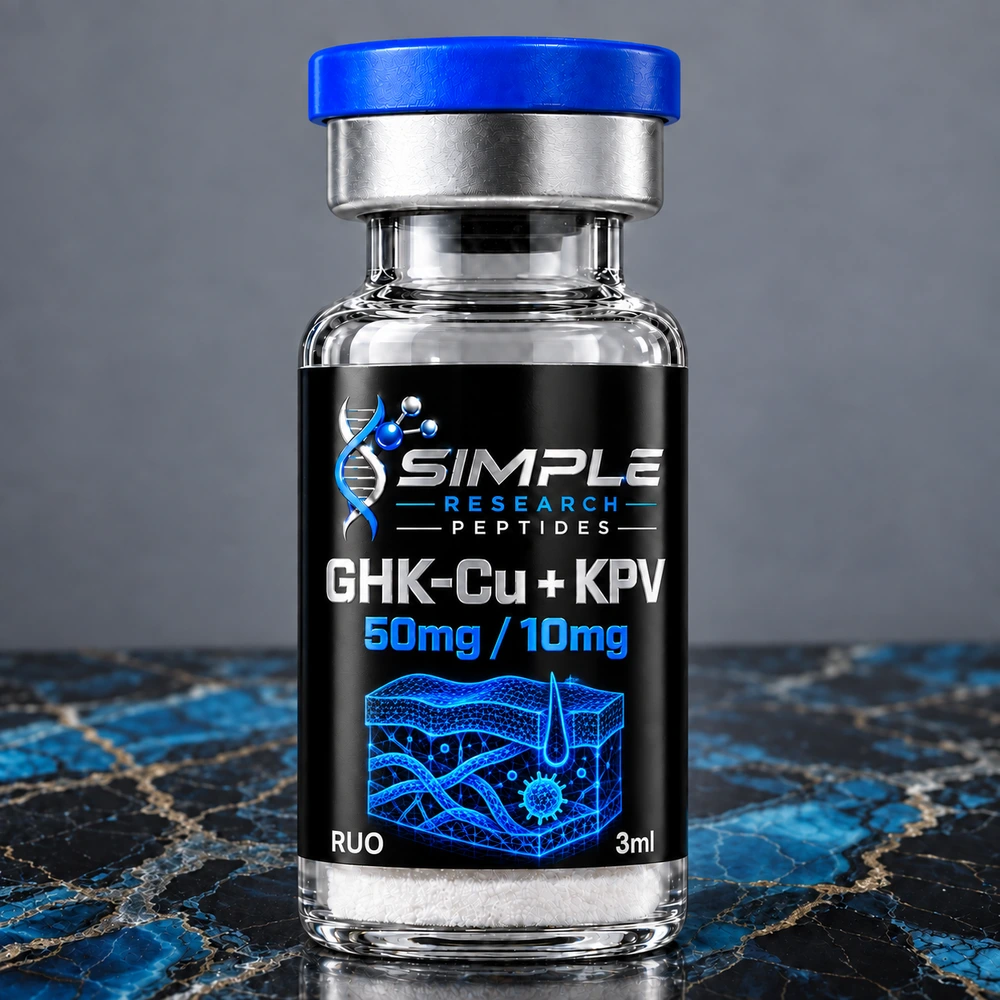
GHK-Cu + KPV — 50mg / 10mg research blend
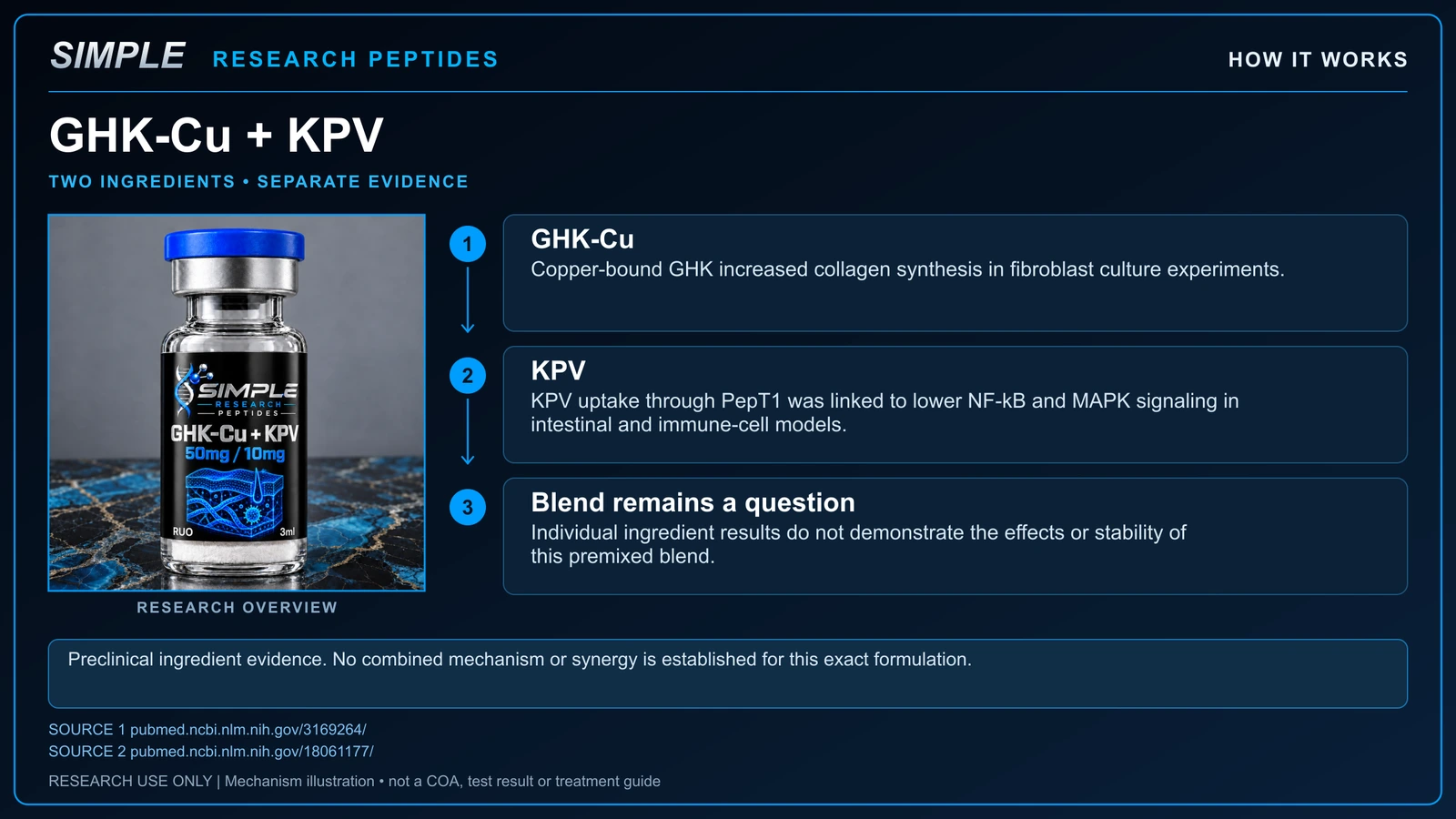
This blend contains the listed amounts of 50mg GHK-Cu and 10mg KPV per vial, totaling 60mg of labeled component content. One purchased unit is one vial. The two amounts should be read separately, and the nominal 3ml container capacity is not a prepared concentration. The SRP skin-and-cell graphic brings together the different research themes associated with the ingredients. It does not mean that both compounds have identical targets or that their combination has been shown to produce a particular result.
GHK-Cu is the copper complex of the tripeptide glycyl-histidyl-lysine. In a foundational fibroblast-culture study, researchers reported increased collagen synthesis after exposure to the complex, independent of a change in cell number. That observation helped establish a laboratory basis for investigating copper-peptide interactions with extracellular-matrix biology. It is a cell-culture finding, not a demonstration that this research vial improves skin, repairs an injury or produces a clinical outcome. The identity and conditions of the studied material matter when considering how to compare an experiment with a supplied blend. Read the GHK-Cu fibroblast study.
KPV is the tripeptide Lys-Pro-Val. A separate study investigated uptake through the PepT1 transporter in intestinal epithelial and immune-cell models, alongside experimental mouse colitis models. The authors reported changes in NF-kappaB and MAP-kinase signaling and inflammatory measurements under their study conditions. These findings provide a distinct line of ingredient-level research; they are not evidence that KPV and GHK-Cu together have been tested at this listing’s ratio. Nor does the use of intestinal cells establish an equivalent response in skin or other tissues. Read the KPV transport and signaling study.
The accompanying SRP chart separates GHK-Cu evidence from KPV evidence and leaves the combined formulation as an open research question. Adding two experimentally active ingredients does not establish compatibility, chemical stability or synergy. A copper-containing complex may also require characterization beyond the presence of the peptide name on a label. For meaningful comparisons, the amount and identity of each ingredient and the conditions of the experiment should be documented. This page summarizes published research themes and the offered vial’s labeled amounts; it does not claim that the exact premixed formulation has been validated by the cited papers.
Documentation and research use
The SRP COA review, chromatography, mass-spectrometry and lot-traceability graphics are educational examples, not analytical measurements from these vials. They do not establish purity, identity, sterility or clinical suitability. Match any report to the selected strength and the actual lot before drawing conclusions about the material. Follow supplier documentation for handling and storage. For research use only; not for human or veterinary use, diagnosis or treatment.
Reviews
There are no reviews yet.