






Research background: Read the 5-Amino-1MQ Research Guide.
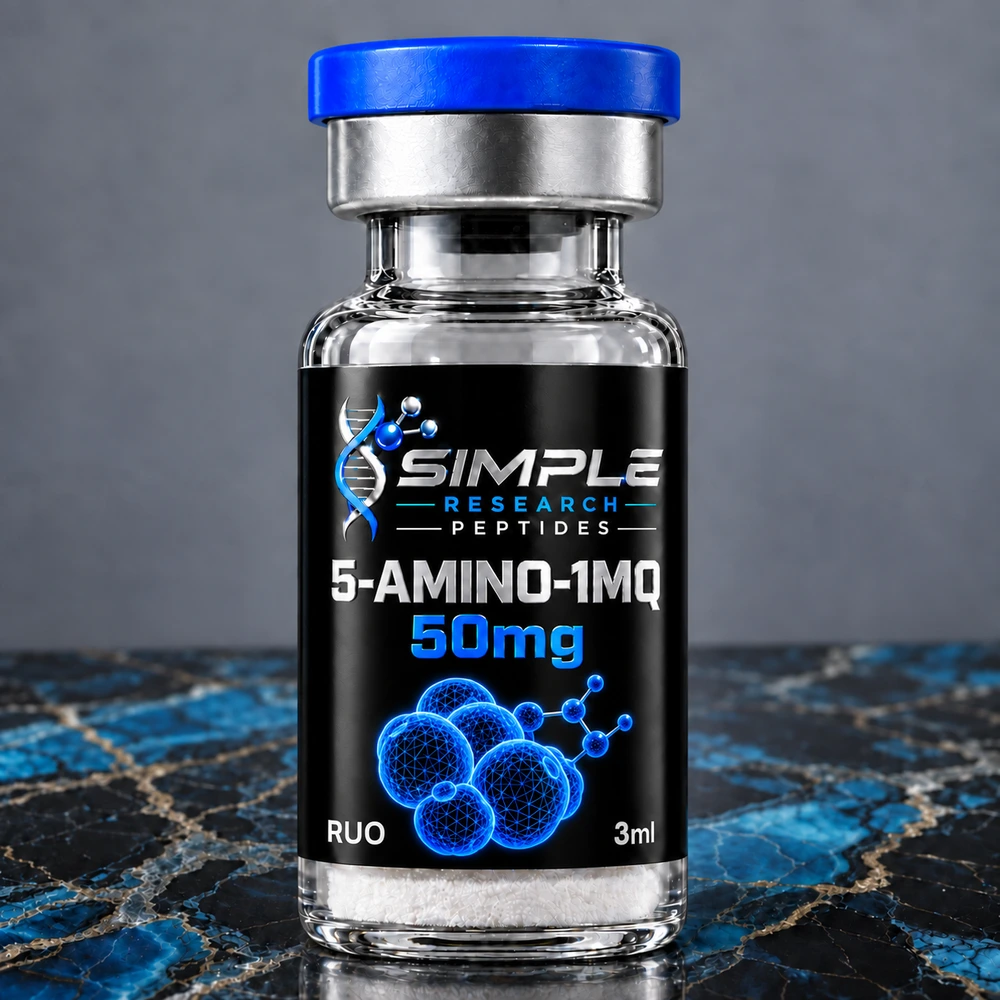
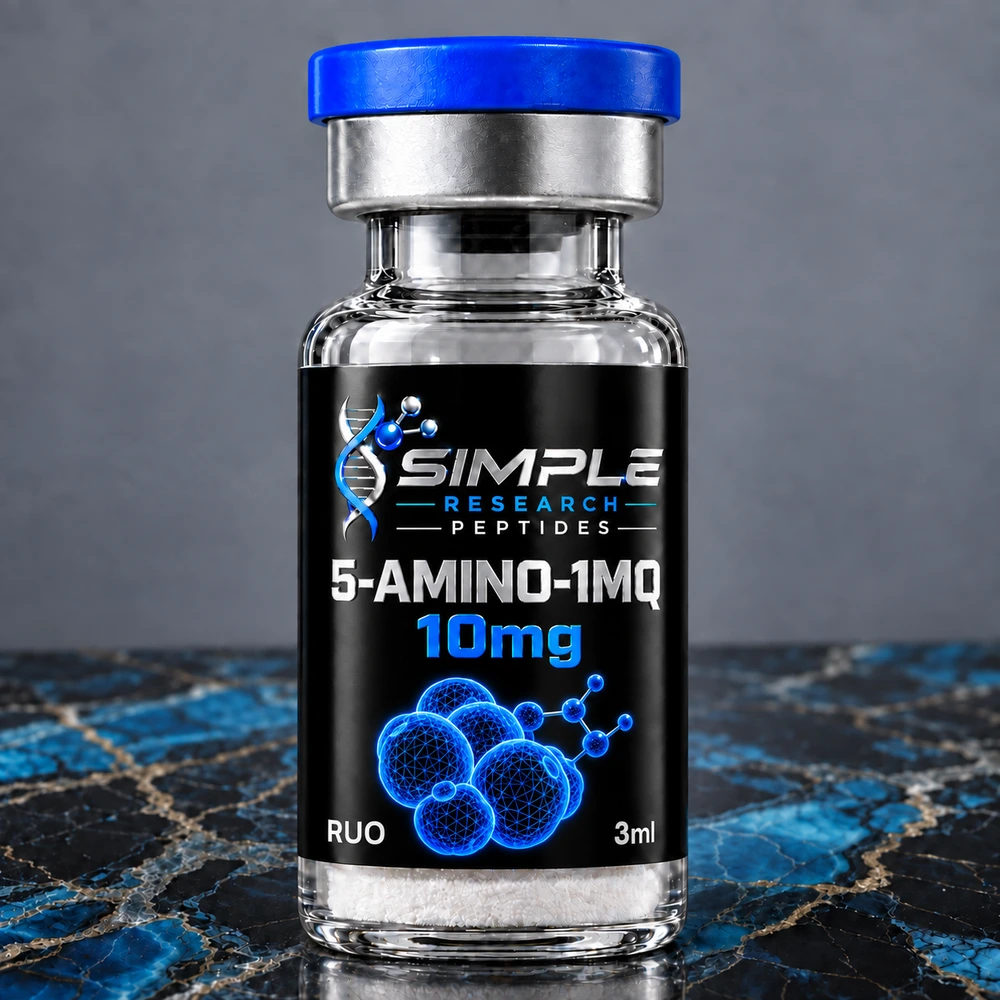
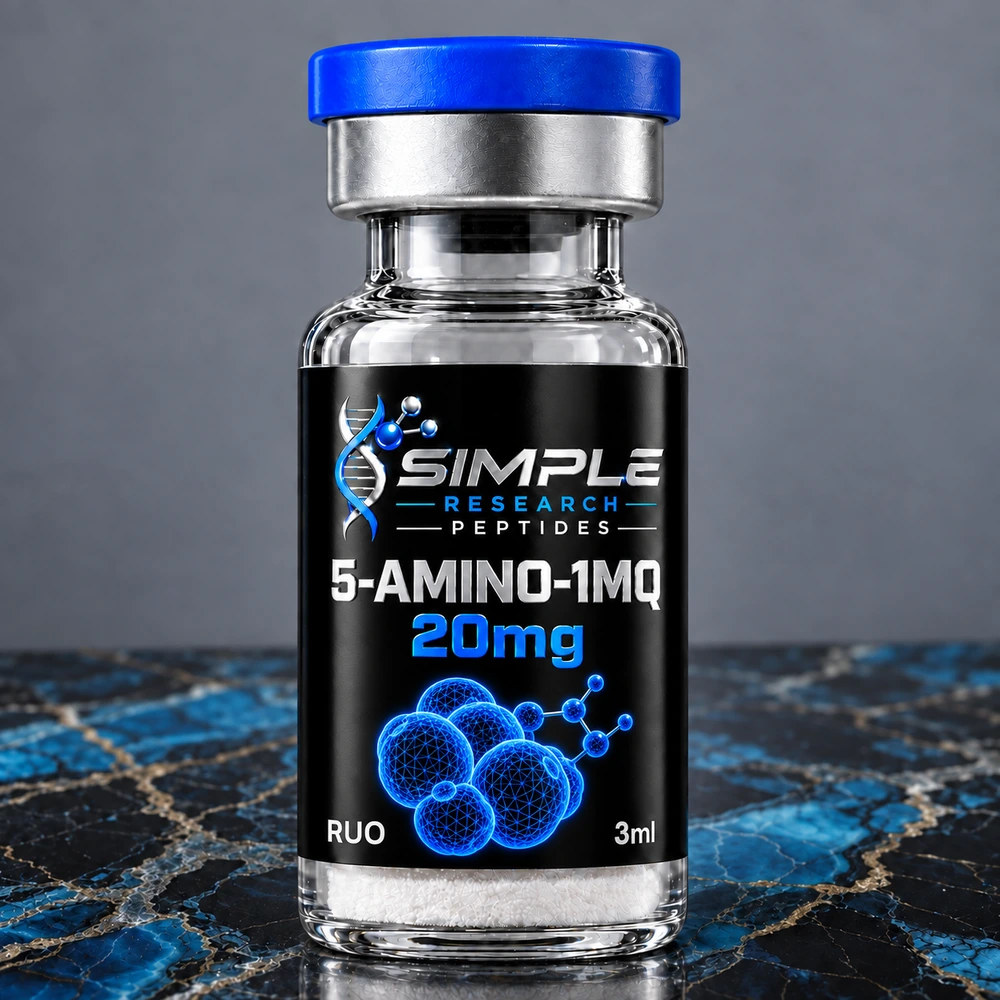
5-Amino-1MQ research vials — 10mg, 20mg and 50mg
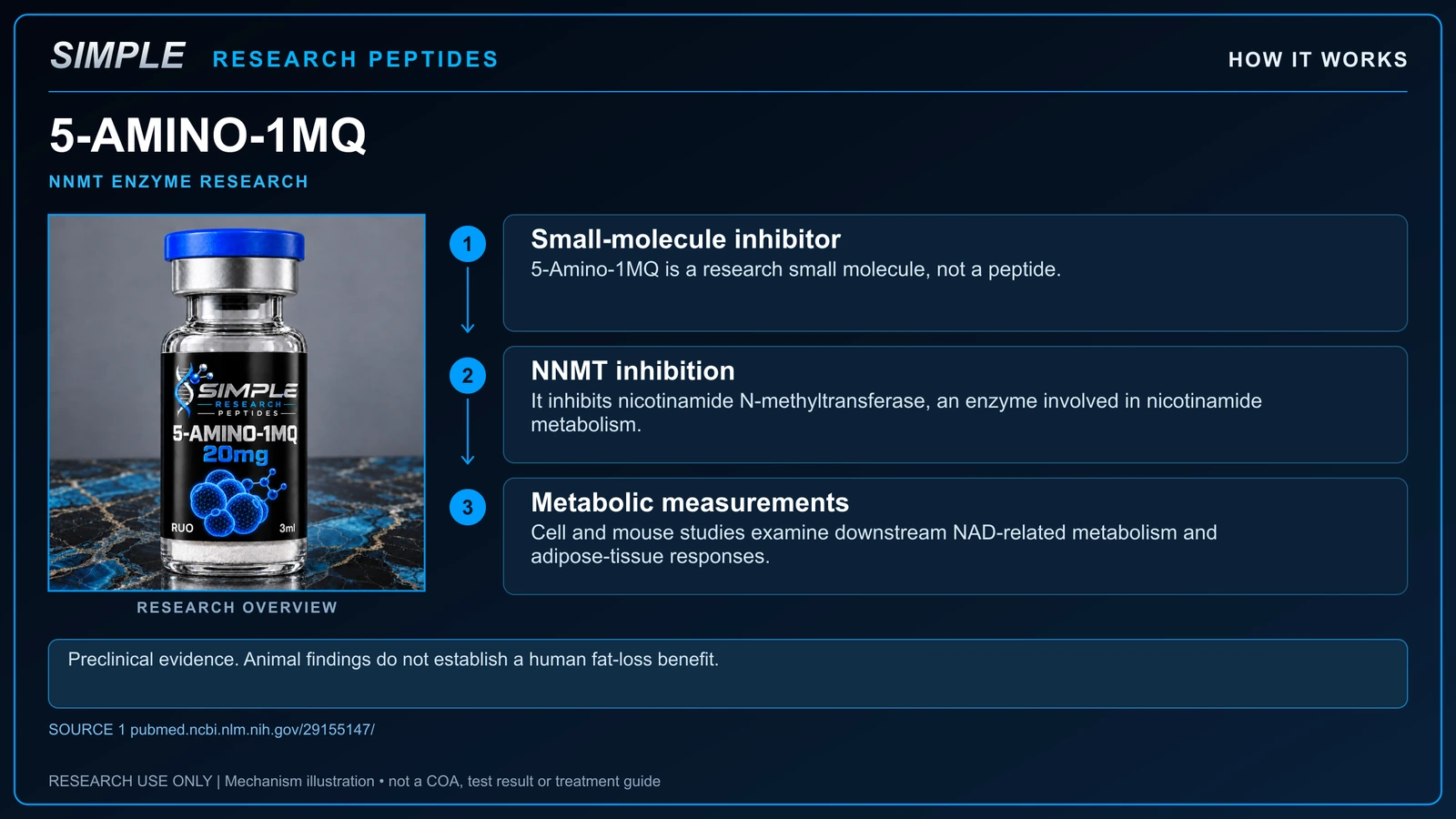
Choose 10mg, 20mg or 50mg from the strength selector on this product page. Each option represents one vial and has its own price, label image and stock count. The stated milligram amount is per vial; the 3ml marking refers to nominal container capacity. Although commonly grouped with research peptides in catalogues, 5-Amino-1MQ is a small molecule rather than a peptide. Its scientific context is inhibition of nicotinamide N-methyltransferase, abbreviated NNMT, an enzyme investigated in cellular metabolism. The SRP adipocyte graphic identifies this research theme without promising a physiological result.
NNMT is involved in the conversion of nicotinamide to its methylated metabolite, 1-methylnicotinamide. A primary study characterized a series of small-molecule inhibitors using biochemical, permeability and cell-based measurements, with 5-Amino-1MQ included in the experimental program. The researchers measured changes in intracellular metabolites and lipid-related responses in cultured adipocytes, then examined a selected inhibitor in diet-induced obese mice. This is useful evidence for understanding how enzyme inhibition can be linked to measurable metabolic endpoints, while keeping the experimental systems and compounds explicit. Read the NNMT-inhibitor characterization study.
A later mouse study investigated NNMT inhibition together with a dietary intervention and assessed metabolic measures and the gut microbiome. Its design illustrates why diet, treatment conditions and the choice of comparison group matter when interpreting changes in an animal model. Findings from that combination of interventions cannot be reduced to a guaranteed effect from a vial of 5-Amino-1MQ alone. They also do not establish that human outcomes, tolerability or exposures would match those observed in mice. The study is linked as research context, with the limitations of the model retained. Read the diet and NNMT-inhibition mouse study.
The mechanism chart shared by all three strengths focuses on the compound class, the NNMT target and downstream measurements being investigated. It does not assign a separate mechanism to each vial size or convert experimental findings into a human use protocol. Researchers should match the supplied chemical form, counterion and analytical identity to their experimental requirements; a catalogue name or milligram label alone does not establish those details. Existing documents retained from the earlier 50mg listing relate to that listing only and must not be assumed to cover the new 10mg or 20mg options or a different lot.
Documentation and research use
The SRP COA review, chromatography, mass-spectrometry and lot-traceability graphics are educational examples, not analytical measurements from these vials. They do not establish purity, identity, sterility or clinical suitability. Match any report to the selected strength and the actual lot before drawing conclusions about the material. Follow supplier documentation for handling and storage. For research use only; not for human or veterinary use, diagnosis or treatment.
Existing 50mg document
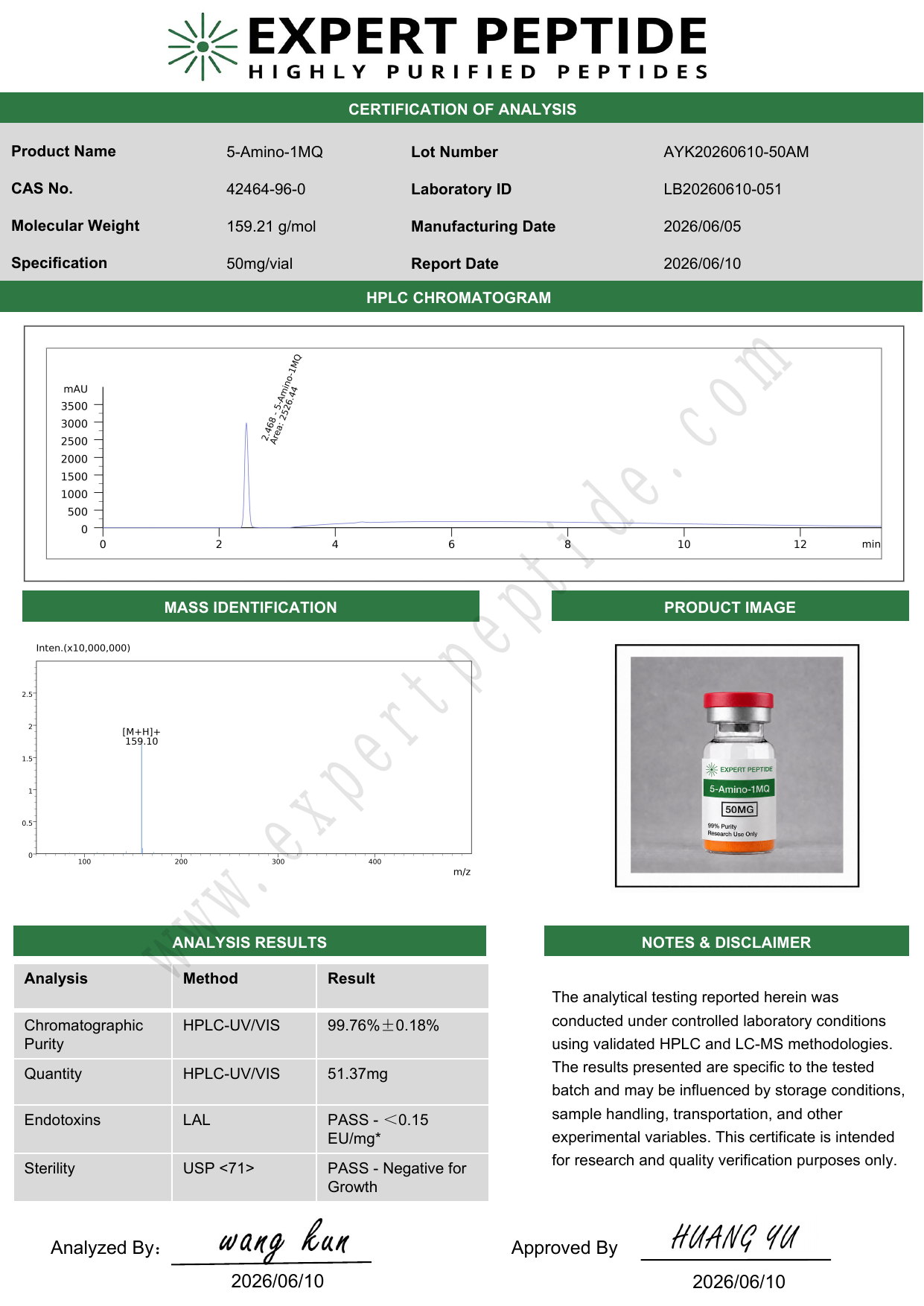
The retained supplier document is labeled 50mg/vial, lot AYK20260610-50AM, report date June 10, 2026. It is not a report for the 10mg or 20mg options. Verify that the lot on the supplied 50mg vial matches this report before relying on it. View the existing 50mg document.
Reviews
There are no reviews yet.