






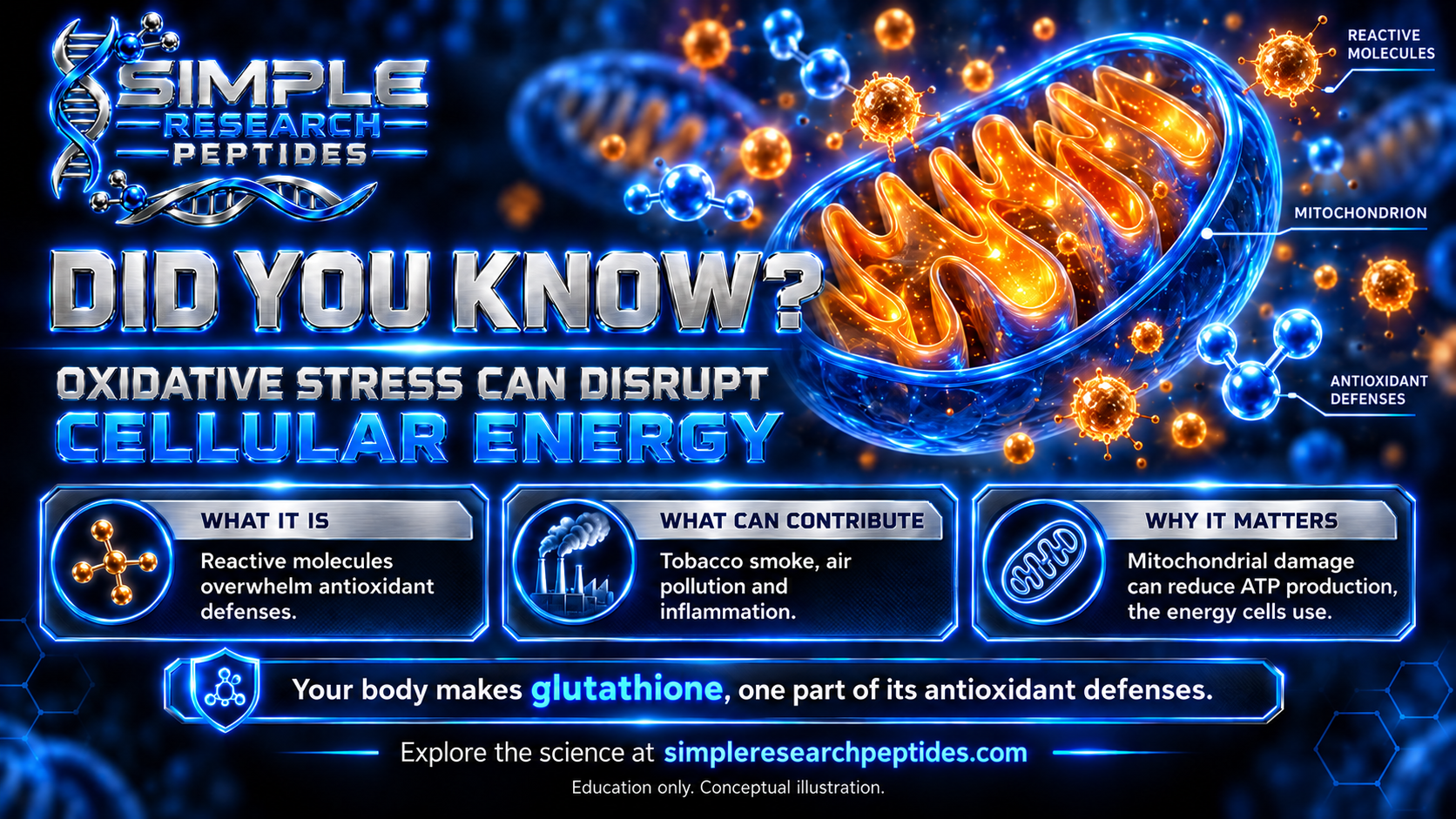
Your cells need a steady supply of usable energy. Oxidative stress can interfere with the machinery that helps produce it. Here is the connection between reactive molecules, mitochondria and your body’s antioxidant defenses.
What is oxidative stress?
Cells naturally produce reactive oxygen species during normal activity. The body also has systems that regulate them. Oxidative stress develops when that balance shifts toward more reactive activity than those defenses can manage, potentially damaging cells. The goal is balance, because normal cellular signaling also depends on these molecules. NIH overview of oxidative stress and antioxidant defenses.
How does this connect to cellular energy?
Mitochondria help convert the energy in nutrients into ATP, a molecule cells use to power their work. If oxidative damage disrupts mitochondrial function, ATP production can fall. Think of it as damage to part of a power plant: having fuel available does not guarantee that the equipment can turn it into usable power efficiently.
Researchers have tested this connection directly. In a laboratory experiment, hydrogen peroxide exposure caused mitochondrial DNA damage and reduced ATP-linked oxidative phosphorylation in cultured cells. That gives scientists a way to study how oxidative stress affects energy production. Read the original mitochondrial function study.
Reduced cellular ATP production and feeling tired are related questions, but they are not interchangeable measurements. This mechanism alone cannot tell you why a particular person feels low on energy or predict the effect of a product.
What can contribute?
Environmental exposures are one part of the picture. Tobacco smoke, vehicle exhaust and other pollution sources can expose the body to harmful particles and chemicals. NIEHS reports that air pollution exposure is associated with oxidative stress and inflammation in human cells. Exposure, duration and individual circumstances matter. NIEHS: Air Pollution and Your Health.
Where does glutathione fit?
Glutathione is a substance naturally present in tissues and part of the body’s antioxidant defenses. Its cellular roles include helping deal with toxic compounds and reactive oxygen-containing chemicals. It works within a larger system of protective molecules and enzymes. National Cancer Institute: Glutathione.
This makes glutathione an interesting subject for research into cellular balance. Understanding what a molecule does inside a cell is the starting point for asking better research questions about it.
Keep exploring the science
When you read a study, look for three things: what was tested, what was actually measured and whether the conclusion matches that measurement. ATP production, a laboratory marker and a person’s reported energy level each answer a different question.
Use our research reading checklist to work through the evidence, or browse our latest articles and videos.
Educational information only, not medical advice or a product efficacy claim. The accompanying AI-generated graphic is a conceptual illustration.