




BPC-157 + TB-500 Wolverine Blend Research Guide
An evidence-first analysis of the BPC-157 and TB-500 combination, separating component research from unproven synergy claims and identifying the major evidence gaps.
Fast Answer
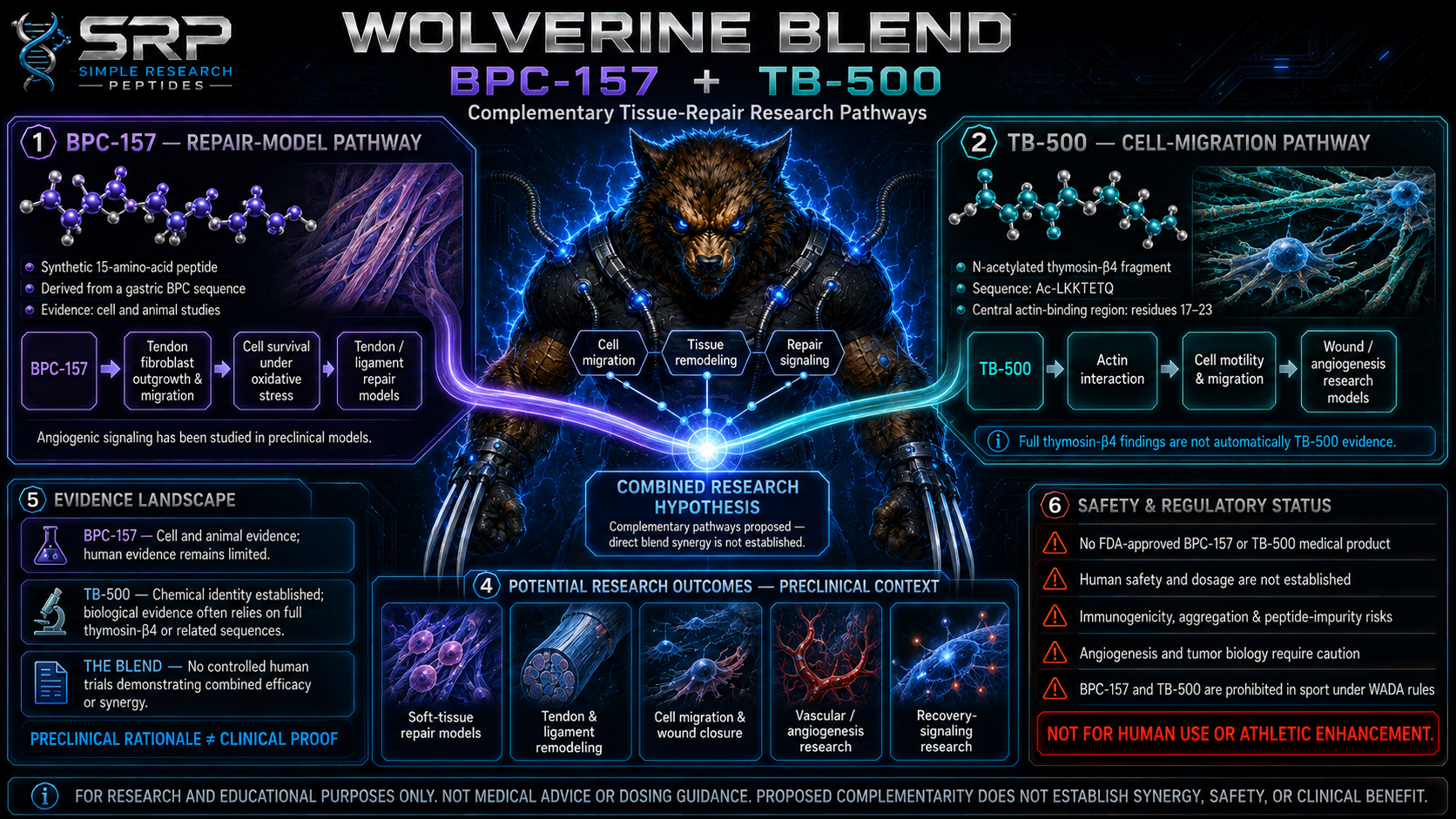
“Wolverine Blend” is a commercial name for research mixtures containing BPC-157 and TB-500. The name suggests broad recovery, but it is not a recognized therapeutic indication and does not represent a clinically validated combination.
BPC-157 research is predominantly preclinical. TB-500 is commonly identified as a thymosin beta-4 fragment, while much of the often-cited repair literature studies full-length thymosin beta-4. No controlled human evidence establishes that combining them creates synergy.
Why Combination Claims Need Separate Testing
Two compounds with individually interesting mechanisms do not automatically produce a superior result when mixed. A combination can create additive, neutral, antagonistic, or unexpected effects. Stability and compatibility may also differ in a mixed preparation.
A sound laboratory design includes component-only groups, a combination group, a vehicle control, prespecified endpoints, and analytical confirmation of identity and concentration.
Evidence Map
- BPC-157: preclinical studies explore gastrointestinal, vascular, tendon, and injury models, but robust human trial evidence is lacking.
- TB-500: fragment-specific human evidence is sparse; full-length thymosin beta-4 data should be labeled accurately.
- The blend: there is no established clinical evidence base, approved indication, or validated human safety profile.
- Research opportunity: interaction, stability, pathway overlap, and combination-specific toxicity remain open questions.
Responsible Interpretation
Personal stories and community reports can generate hypotheses, but they cannot establish causation, product identity, safety, or effectiveness. Advertising language should not convert preclinical observations into promises of healing or recovery.
SRP Wolverine Blend is labeled exclusively for laboratory research. It is not intended for human consumption, diagnosis, treatment, or injury rehabilitation.
Frequently Asked Questions
Is Wolverine Blend a medical treatment?
No. It is a commercial research-blend name and is not an FDA-approved therapy.
Has the BPC-157 and TB-500 combination been proven synergistic?
No controlled human evidence establishes synergy.
Why include component-only research groups?
They help determine whether an observed effect comes from one component, both components, or their interaction.