




Metabolism · Compound guide
Semaglutide
Explore the mechanisms, study findings and evidence limits behind this research topic.
Product artwork identifies the SRP listing. It does not demonstrate safety or clinical benefit. The evidence guide and its sources follow below.
View product label and documentation →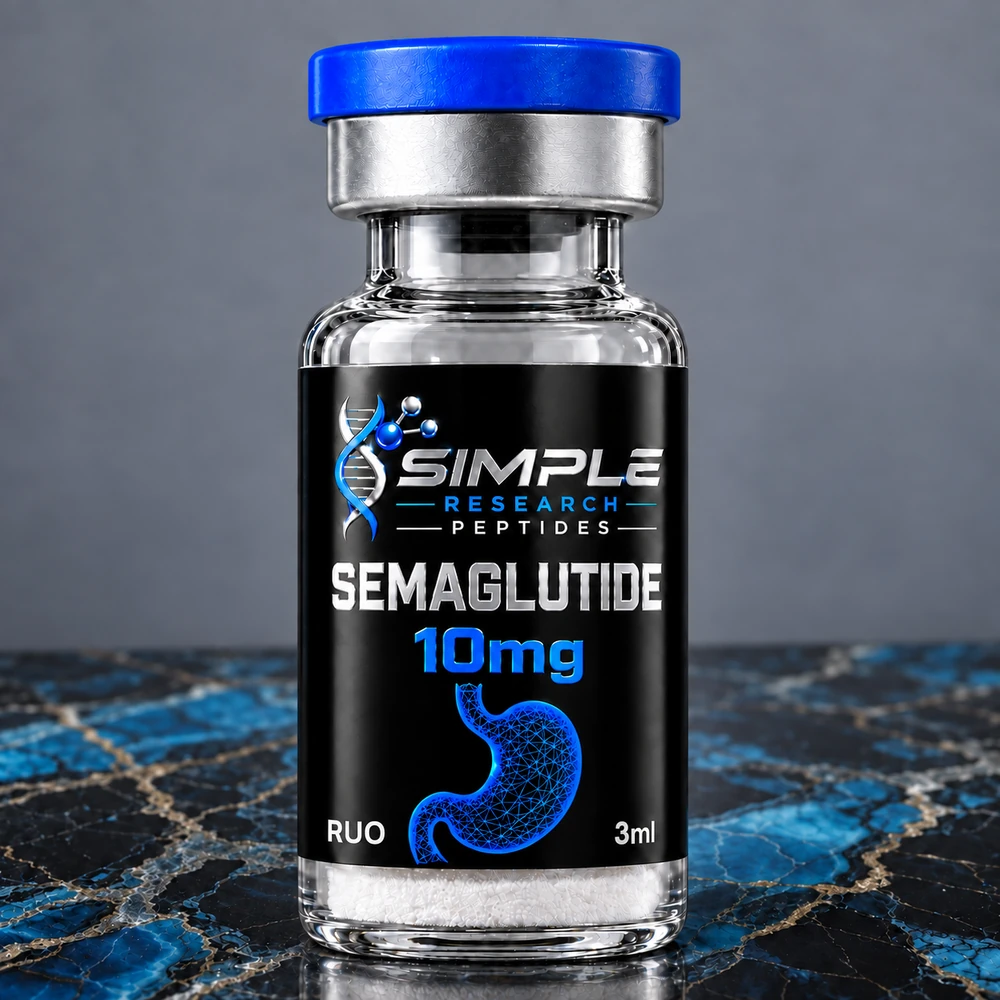
Semaglutide Research Guide
A clear scientific guide to semaglutide’s GLP-1 receptor pharmacology, major clinical evidence, regulatory status, formulation distinctions, and evidence limitations.
Fast Answer
Semaglutide is a modified peptide analog designed to activate the GLP-1 receptor. Approved finished medicines containing semaglutide have been evaluated for specific metabolic and cardiovascular indications, while separate research materials have not undergone that finished-product review.
This guide focuses on receptor biology, clinical evidence, and product distinctions. It does not provide personal dosing, reconstitution, injection, or treatment advice.
How GLP-1 Signaling Is Studied
GLP-1 receptor activation is studied in relation to glucose-dependent insulin secretion, glucagon signaling, appetite, energy intake, gastric motility, and central nervous system pathways. Semaglutide’s molecular modifications extend exposure compared with native GLP-1, enabling long-acting pharmacology in approved formulations.
Mechanism alone does not predict every outcome. Clinical benefits and risks depend on population, formulation, exposure, duration, and study design.
Evidence Map
- Metabolic research: extensive trials evaluate glucose regulation and weight-related outcomes.
- STEP program: randomized studies established clinically meaningful weight change in defined populations using approved semaglutide formulations.
- Cardiovascular research: outcome trials expanded understanding beyond body weight alone.
- Safety research: gastrointestinal effects are common, while pancreatitis, gallbladder events, dehydration, and other serious outcomes require careful clinical monitoring in approved use.
Formulation and Regulatory Limits
FDA has reported dosing errors and hospitalizations involving compounded injectable semaglutide, including confusion among milligrams, milliliters, and syringe units. FDA also distinguishes semaglutide base used in approved products from semaglutide salt forms.
Those warnings reinforce a core research principle: a molecule name alone does not establish formulation identity, concentration, quality, or equivalence. SRP research material is not Ozempic, Wegovy, Rybelsus, or Wegovy HD.
Frequently Asked Questions
What pathway does semaglutide target?
Semaglutide is designed primarily as a GLP-1 receptor agonist.
Can approved-drug results be applied to research vials?
No. Finished-drug evidence does not verify separately sourced material or establish equivalence.
Why avoid syringe-unit instructions?
Concentrations can differ, and FDA has documented serious measurement errors with unapproved or compounded injectable products.