






Cellular health · Compound guide
L-Carnitine Research Guide
Explore the mechanisms, study findings and evidence limits behind this research topic.
Product artwork identifies the SRP listing. It does not demonstrate safety or clinical benefit. The evidence guide and its sources follow below.
View product label and documentation →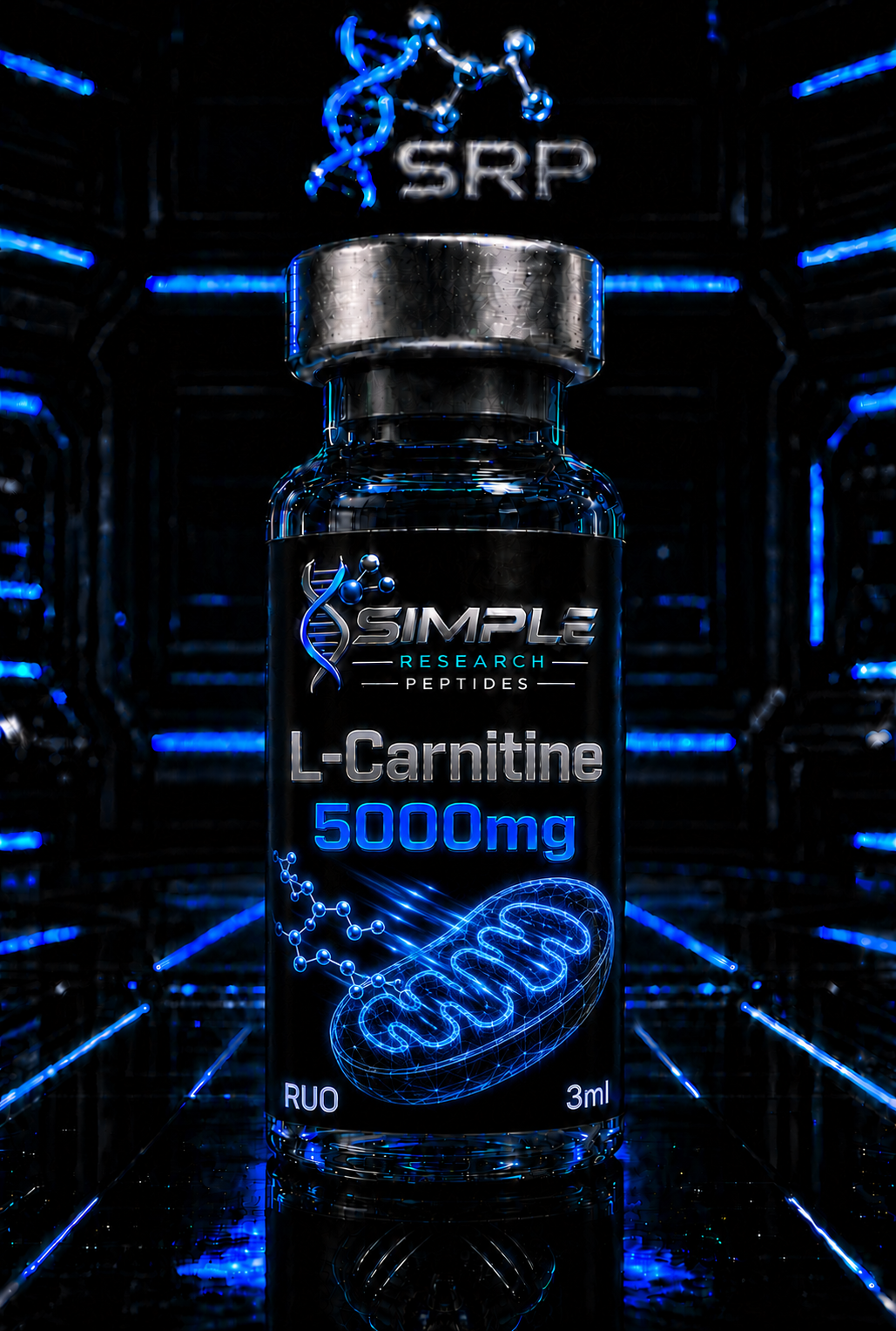
Back to the Research Compound Library
Established metabolic biology; context-specific human research
Evidence reviewed September 13, 2026.
Research overview and identity
L-Carnitine is a small molecule involved in fatty-acid metabolism, not a peptide. Its established physiological role should be separated from claims that a particular administered product necessarily improves fat loss or exercise performance.
Mechanism under investigation
Research examines muscle carnitine availability and changes in fuel use during exercise. Tissue uptake, nutritional context and study duration matter; a blood measurement alone does not establish the amount available in skeletal muscle.
What the studies report
A 2011 study in 14 men compared prolonged oral carnitine plus carbohydrate with carbohydrate alone. Muscle carnitine and exercise-metabolism measurements changed in the combined intervention group. The carbohydrate co-intervention and long study duration are important features of the experiment. [1]
Limits of the evidence
This small oral study does not validate a vial formulation or establish general weight-loss effects. Results should be interpreted within the tested population, nutritional setting and exercise measurements. Findings about carnitine’s normal biological role cannot substitute for product-specific evidence.
Matching research material to a paper
Check the material identity, formulation and analytical methods against the study methods. A product name or milligram amount alone does not demonstrate experimental equivalence. Published research does not establish the identity, purity or potency of a retail batch; batch-specific analytical documentation must be assessed separately.
For laboratory research only. Not for human or veterinary use. This guide is educational and contains no dosing, reconstitution or administration instructions.