SRP RESEARCH PULSE
HUGE SALE ON FEATURED ITEMSKLOW 80mgGLOW 70mgHumanin 10mgFOXO4-DRI 10mgACE-031 1mgWolverine 20/20SS-31 10mg5-Amino-1MQ 50mgMOTS-c 40mgBPC-157/TB-500 10mg/10mgSelank 10mgNAD+ 500mgGHK-Cu 100mgRTZ-GLP 30mgTirzepatide 30mgEpithalon 10mgKisspeptin 10mg

Kisspeptin-10 Research Guide

SRP COMPOUND INTELLIGENCE

Kisspeptin-10 Research Guide

An evidence-mapped overview of kisspeptin-10 (KP-10; human metastin 45–54; KISS1 112–121) covering compound identity, proposed KISS1R / GPR54 pathway only as far as opened papers support it, published human and animal studies that actually used kisspeptin-10, laboratory considerations, and current evidence limitations.

Receptor / cell + rodent HPG + small human physiology
Distinct from kisspeptin-54
Investigational compound
Research use only

Educational information only. Kisspeptin-10 is not an FDA-approved drug for human use. Laboratory research use only; not for human or animal use. Kisspeptin-10 is not kisspeptin-54. No human dosing, reconstitution, or administration protocol appears on this page.

01 / Identity

Quick Facts

Kisspeptin-10 is the C-terminal amidated decapeptide of the KISS1 gene product. Chan et al. (2011) administered “the C-terminal decapeptide of kisspeptin (amino acids 112–121 of the parent protein)” and later call the same material kisspeptin 112–121 / metastin 45–54 (PMID 21470997; PMC3100758, full text opened). George et al. (2011) state that kisspeptin-54 is cleaved from a 145-amino-acid KISS1 precursor and further processed to 14-, 13-, and 10-amino-acid sequences “all sharing the same C-terminal decapeptide RFAmide (arginine-amidated phenylalanine) sequence,” and that “Kisspeptin-10 is the minimal kisspeptin sequence with full intrinsic bioactivity” (PMID 21632807; PMC3380939, full text opened).

Kotani et al. (2001) isolated 54-, 14-, and 13-residue peptides with a common RF-amide C terminus from human placenta, named them kisspeptins, and showed they are natural ligands of the orphan GPCR GPR54 (later KISS1R) (PMID 11457843). That paper did not isolate the decapeptide as a native species in the opened abstract. Ohtaki et al. (2001) isolated the 54-residue amidated peptide (metastin) as the ligand of hOT7T175 (PMID 11385580). Muir et al. (2001) cloned human AXOR12 (81% homologous to rat GPR54) and showed high-potency agonism by KiSS-1-derived peptides (PMID 11387329).

FDA GSRS / PubChem / NCATS records opened for this page:

  • FDA UNII FS1N52VS3S. Preferred name KISSPEPTIN-10. Synonyms HUMAN METASTIN 45-54; KISSPEPTIN-10 (HUMAN); CAS 374675-21-5; systematic name L-TYROSYL-L-ASPARAGINYL-L-TRYPTOPHYL-L-ASPARAGINYL-L-SERYL-L-PHENYLALANYLGLYCYL-L-LEUCYL-L-ARGINYL-L-PHENYLALANINAMIDE. UNII availability does not imply regulatory review or approval (FDA GSRS page opened).
  • PubChem CID 25240297. Formula C63H83N17O14. Molecular weight 1302.4. InChIKey RITKWYDZSSQNJI-INXYWQKQSA-N. Synonyms on that record include Kisspeptin-10, Kisspeptin-10 (human), KP-10, Human metastin 45-54, Metastin (45-54), UNII-FS1N52VS3S, CAS 374675-21-5 (PubChem PUG REST property + synonym payloads).
  • NCATS Inxight FS1N52VS3S. Preferred name KISSPEPTIN-10; CAS 374675-21-5; EPA CompTox DTXSID70849544; approval year Unknown; status Investigational. The opened record lists NCT03286517 as a source pointer. That NCT number was not opened in this review, so no trial results from it are cited.

Opened identity records give the human amidated decapeptide Tyr-Asn-Trp-Asn-Ser-Phe-Gly-Leu-Arg-Phe-NH2 (YNWNSFGLRF-NH2). What those sources do not provide: a supplier-vial certificate for the SRP lot, a confirmed counter-ion on the SRP vial, or proof that a given research-market lot matches the Bachem GMP material used by George 2011 / Young 2013 or the PolyPeptide GMP material used by Chan 2011. Sequence confirmation, C-terminal amidation, and distinction from rodent KP-10 remain laboratory identity steps. A rodent-versus-human C-terminal difference was not independently verified from a primary sequence table opened in this review, so it is not stated as a fact here.

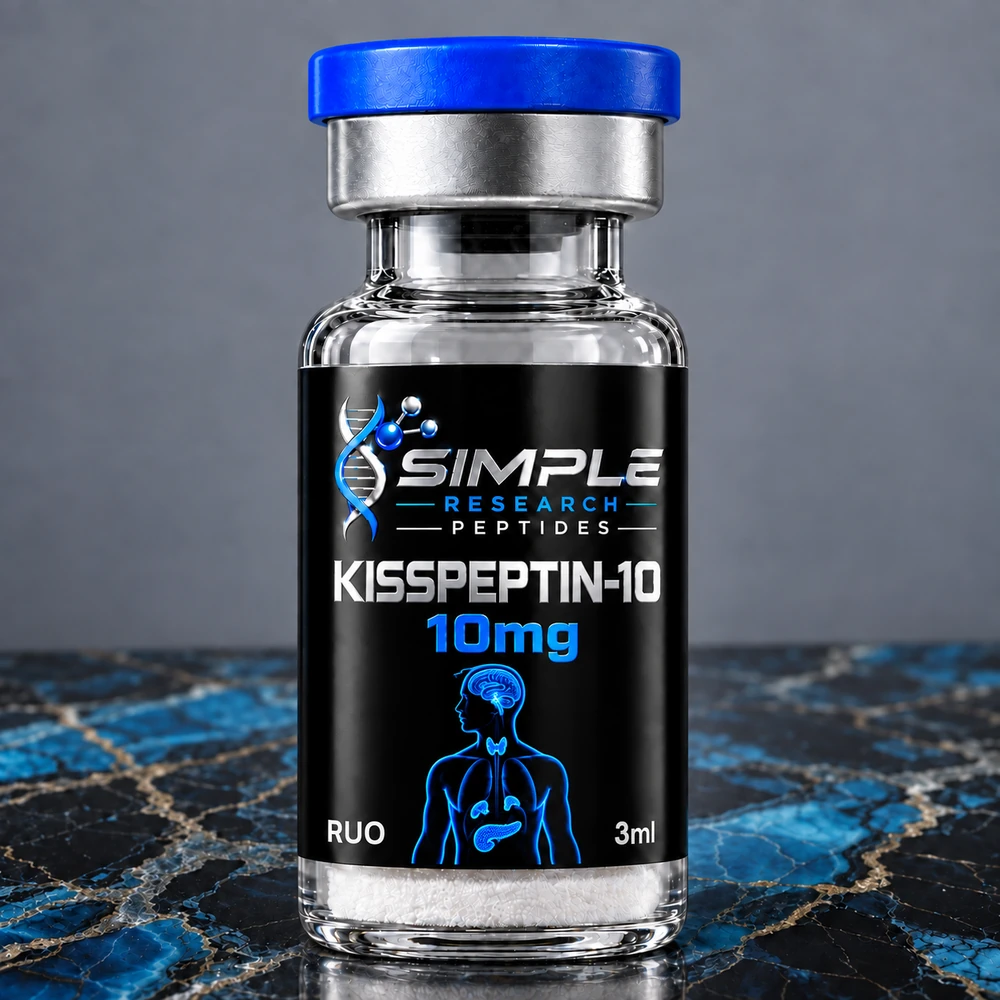
Marketplace nameKisspeptin-10SRP 10 mg vial page fetched
Also calledKP-10; metastin 45–54KISS1 112–121; Chan 2011; FDA UNII; PubChem
SequenceYNWNSFGLRF-NH2C-terminal phenylalaninamide
Length10 residuesDecapeptide; not KP-54, KP-14, or KP-13
Formula / massC63H83N17O14 / 1302.4Free-base record; PubChem CID 25240297
UNIIFS1N52VS3SFDA GSRS / NCATS
CAS374675-21-5FDA GSRS / PubChem / NCATS
Receptor (opened papers)GPR54 / KISS1RAlso AXOR12 / hOT7T175
Related but distinctKisspeptin-54Same C-terminal RF-amide; different length and human PK
ApprovalNone identifiedNCATS approval year unknown
Evidence basePreclinical + small human physiologyFirst-in-human KP-10: George 2011; Chan 2011
Not this peptideGnRH, hCG, clomipheneNot a testosterone ester either
Critical identity point: Kisspeptin-10 is the human C-terminal decapeptide amide. It is not kisspeptin-54. It is not a GnRH analogue, hCG, clomiphene, or a testosterone ester. A method, half-life, IVF-trigger protocol, or amenorrhea schedule written for KP-54 is not automatically valid for this decapeptide. Do not treat KP-14, KP-13, or a kisspeptin analogue (for example the analogue discussed by George 2011 citing Curtis 2010) as this decapeptide.

02 / Overview

What kisspeptin-10 is

KISS1 was first studied as a metastasis-suppressor gene. Ohtaki et al. isolated the 54-residue amidated product (metastin) as the ligand of an orphan GPCR (PMID 11385580). Kotani et al. isolated shorter RF-amide kisspeptins (54/14/13) as GPR54 agonists that bound with low-nanomolar affinities on rat and human GPR54 in CHO-K1 cells and stimulated PIP2 hydrolysis, Ca2+ mobilization, arachidonic-acid release, ERK1/2 and p38 phosphorylation, and stress-fiber formation, while inhibiting cell proliferation (PMID 11457843). Those cascade measurements are from the isolated 54/14/13 set, not from a KP-10-only binding table opened here.

George et al. (2011) treat kisspeptin-10 as the shared C-terminal RF-amide decapeptide and “the minimal kisspeptin sequence with full intrinsic bioactivity,” citing Kotani for similar intrinsic activity of the shorter fragments (PMID 21632807). Gottsch et al. (2004) call kisspeptin-10 “the biologically active C-terminal decapeptide” and showed that ICV kisspeptin-10 and kisspeptin-54 both stimulated LH in the mouse (PMID 15217982). Thompson et al. (2004) used kisspeptin-10 as “the active kisspeptin fragment” in adult male rats (PMID 15500545).

Human administration of kisspeptin-10 (not KP-54) begins in 2011: Chan et al. (IV bolus, men; NCT00914823) and George et al. (IV bolus and infusion, men). Later KP-10-only human work includes Jayasena 2011 (men vs women), George 2012 (women, steroid milieu), Young 2013 (NKB-pathway congenital hypogonadotropic hypogonadism), George 2013 (men with T2DM and low testosterone), Jayasena 2015 (KP-10 vs KP-54 vs GnRH), and Yeung 2026 (chronic subcutaneous KP-10 in healthy men).

Kisspeptin-10 is not kisspeptin-54. The first human kisspeptin trial used kisspeptin-54, not kisspeptin-10 (Dhillo et al., 2005, PMID 16174713). Papers that administered kisspeptin-54 — including that first infusion, hypothalamic-amenorrhea and IVF-trigger programmes, and most “kisspeptin libido / sexual-brain” work — are not kisspeptin-10 evidence unless the paper named KP-10 / metastin 45–54 / KISS1 112–121 as the test article. Jayasena et al. (2015) compared the two isoforms head-to-head in men; they are related but not interchangeable (PMID 26089302). Do not relabel Dhillo 2005, or later KP-54 amenorrhea / oocyte-maturation papers, as KP-10.
03 / Mechanism

Only as far as sources support

The mechanism literature is class-consistent and context-dependent. Observed means kisspeptin-10 / KP-10 / metastin 45–54 / KISS1 112–121 as the test article. Proposed means a compiled or hypothesized mechanism. Family / KP-54 means a related isoform, not this decapeptide. Not shown means this review did not open such a paper. There is no invented receptor diagram and no fake chart on this page.

Observed — sequence

Minimal C-terminal RF-amide

George 2011: KP-10 is the minimal kisspeptin sequence with full intrinsic bioactivity and shares the C-terminal RF-amide of the longer fragments (PMID 21632807). Gottsch 2004: “biologically active C-terminal decapeptide” (PMID 15217982).

Family identity — not a KP-10 isolation

GPR54 / KISS1R class

Kotani 2001 established kisspeptins as GPR54 ligands (54/14/13 isolated; common RF-amide C terminus; low-nM binding on rat and human GPR54 in CHO-K1 cells; PIP2, Ca2+, AA, ERK1/2, p38) (PMID 11457843). Muir 2001: AXOR12 activated by KiSS-1-derived peptides (PMID 11387329). Later KP-10 human papers call the receptor KISS1R / GPR54 (George 2011; Chan 2011; Young 2013). A KP-10-only human KISS1R Ki / Bmax table was not in a paper opened here. George 2011 cites Kotani for equal in-vitro affinity of KP-10 and longer fragments; that affinity number is Kotani’s, not a new isotherm measured in George.

Observed — rat

Hypothalamic LHRH, not a pituitary dump

Thompson et al. (2004): ICV and peripheral kisspeptin-10 raised plasma LH, FSH, and total testosterone in adult male rats; kisspeptin-10 released LHRH from hypothalamic explants; 100–1000 nM kisspeptin-10 did not release LH or FSH from anterior-pituitary fragments in vitro (PMID 15500545).

Observed — mouse

ICV LH with KP-10 and KP-54

Gottsch et al. (2004): ICV kisspeptin-10 and kisspeptin-54 both stimulated LH; further work on KP-54 showed LH+FSH stimulation blocked by the GnRH antagonist acyline (PMID 15217982). The antagonist block in that paper is reported for kisspeptin-54 characterization, not as a separate KP-10 antagonist arm in the opened abstract.

Observed — human men

LH pulse and GnRH-clock reset

Chan et al. (2011): a single IV bolus of the C-terminal decapeptide induced an immediate LH pulse (amplitude 5.0 ± 1.0 vs endogenous 2.1 ± 0.3 mIU/ml), delayed the next endogenous pulse by about a normal interpulse interval, and, by pulse-shape comparison with GnRH infusions in GnRH-deficient men, was consistent with ~17 min of GnRH release. In-vitro plasma half-life of kisspeptin 112–121 at 37 °C was 55 seconds (PMID 21470997).

Observed — human men

Bolus dose-response and infusion pulsatility

George et al. (2011): IV boluses produced a rapid, dose-dependent LH rise, maximal at the mid-range dose tested; the highest bolus was less effective than the mid-range dose. Continuous IV infusion raised mean LH, LH pulse frequency and burst mass, and testosterone over hours; a GnRH bolus at the end of infusion still produced a much larger LH peak than kisspeptin-10. No tachyphylaxis was seen over 22.5 h at the infusion rate used (PMID 21632807).

Observed — women; papers disagree

Sexual dimorphism / cycle dependence

Jayasena et al. (2011): IV KP-10 raised LH/FSH in healthy men and in women in the preovulatory phase, but not in follicular-phase women after IV bolus, SC bolus, or IV infusion at the maximal doses tested in that study (PMID 21976724). George et al. (2012): IV KP-10 stimulated LH in early-follicular and postmenopausal women and in women with progestogen implants, but not in women on a combined oral contraceptive; the LH and FSH responses were largest after menopause (PMID 22956346). Those two women papers do not fully agree on the early-follicular response. Report both.

Observed — n=4 CHH

Downstream of NKB

Young et al. (2013): continuous IV kisspeptin-10 restored LH pulsatility in four patients with TAC3 or TACR3 loss-of-function mutations (PMID 22377698; PMC3902960, full text opened).

Observed — in vitro

Trophoblast motility

Bilban et al. (2004): identified Kp-10 in first-trimester trophoblast conditioned medium; Kp-10 raised intracellular Ca2+ in isolated first-trimester trophoblasts and inhibited migration without affecting proliferation (PMID 15020672). Cell / explant work, not a pregnancy trial.

Proposed / class-level

Kotani cascade; GPR147 hypothesis

Kotani’s PIP2 / Ca2+ / ERK cascade is from isolated kisspeptins 54/14/13 on GPR54-expressing CHO cells (PMID 11457843). Marketing pages often paste that cascade onto KP-10. The cascade is class-consistent; it is not a KP-10-only isotherm opened here. George 2011 discusses possible high-dose KP-10 action at the GnIH / NPFF receptor (GPR147) as one explanation for a reduced LH response at the highest bolus. That is a cited hypothesis in the discussion, not a new binding study in that paper.

Not shown in a paper opened here

Gaps that matter

No human KISS1R crystal structure or a KP-10 Ki table generated in this review. No proof that marketplace vials reproduce George / Chan / Young GMP lots. No human fertility, live-birth, sperm, or oocyte-maturation outcomes with kisspeptin-10 (opened IVF / amenorrhea programmes used KP-54). No human libido, sexual-desire, HSDD, or fMRI sexual-brain outcomes with kisspeptin-10. No oral human bioavailability study. No research-vial subcutaneous PK curve that matches Chan’s 55-second in-vitro plasma half-life or Dhillo’s 27.6-minute KP-54 half-life.

Do not paste Kotani’s 54/14/13 cascade, Dhillo’s KP-54 half-life, or an unopened vendor “libido / IVF / TRT” claim onto this decapeptide. IVF / libido / HSDD / TRT-alternative marketing is unsourced for KP-10.
04 / Research Map

Where the literature actually sits

Label every cluster. Kisspeptin-10-only means the test article was kisspeptin-10 / KP-10 / metastin 45–54 / KISS1 112–121. KP-54 means kisspeptin-54 / metastin. Not found means this review did not open such a paper.

Identity / receptor — family, not all KP-10 isolations

Metastin, GPR54, AXOR12, registry

Ohtaki 2001: isolated 54-aa metastin (PMID 11385580). Not a KP-10 isolation. Kotani 2001: isolated kisspeptins 54/14/13; GPR54 ligands; common RF-amide C terminus (PMID 11457843). Muir 2001: AXOR12 / KiSS-1 peptides (PMID 11387329). Registry: UNII FS1N52VS3S; CAS 374675-21-5; C63H83N17O14; MW 1302.4 (FDA GSRS; PubChem CID 25240297; NCATS).

Kisspeptin-10-only — rodent / cell

Mouse ICV LH; rat HPG; trophoblast

Gottsch 2004: ICV KP-10 and KP-54 both raised LH in mice (PMID 15217982). Thompson 2004: ICV and peripheral KP-10 raised LH/FSH/testosterone in adult male rats; LHRH from hypothalamic explants; no LH/FSH from pituitary fragments (PMID 15500545). Bilban 2004: Kp-10 in first-trimester trophoblast medium; Ca2+ up; migration down (PMID 15020672).

Kisspeptin-10-only — human physiology

Men, women, CHH, T2DM, chronic SC

Chan 2011: 13 healthy men; single IV bolus of the C-terminal decapeptide; immediate larger LH pulse; pulse-generator reset; in-vitro t½ 55 s (PMID 21470997; NCT00914823). George 2011: first-in-human KP-10; healthy men; IV bolus dose-response and infusions up to 22.5 h; LH, pulse frequency, testosterone; GnRH still more potent (PMID 21632807). Jayasena 2011: men vs women; follicular-phase women did not respond at the doses/routes tested; preovulatory women did (PMID 21976724). George 2012: women; LH response modulated by sex-steroid milieu (PMID 22956346). Young 2013: 4 patients with TAC3/TACR3 mutations; 12 h IV KP-10 restored LH pulses (PMID 22377698). George 2013: 5 hypotestosteronaemic men with T2DM vs 7 controls; IV bolus and 11 h infusion raised LH and testosterone (PMID 23153270). Proof-of-concept, not a treatment trial. Jayasena 2015: healthy men; 3 h IV KP-10 vs KP-54 vs GnRH at matched molar infusion rates; the two kisspeptin isoforms gave similar gonadotrophin output; GnRH was more potent (PMID 26089302). Yeung 2026: healthy men; randomized, single-blind, placebo-controlled; acute SC infusions dose-dependently raised LH/FSH/testosterone; 5-day continuous SC infusion left gonadotropins similar to vehicle while testosterone stayed elevated; daily 8 h-on / 16 h-off SC infusions for 12 days sustained gonadotropin increases; a KP-10 bolus still worked on day 12 (PMID 42549827).

KP-54 — do not relabel as kisspeptin-10

First human trial, amenorrhea, IVF

Dhillo 2005: first human kisspeptin study; 90-min IV kisspeptin-54; t½ 27.6 ± 1.1 min (PMID 16174713). George 2011 and Chan 2011 cite later KP-54 papers in women and in hypothalamic amenorrhea (Dhillo 2007; Jayasena 2009, 2010) as background. Those citations were not re-opened as primary KP-10 evidence. Jayasena 2015 similar-articles list includes Abbara oocyte-maturation work with kisspeptin-54. Not opened as a KP-10 trial. Opened IVF / amenorrhea programmes in this field used KP-54.

Combination / “stacks” — not found

No opened combination product

Not found. No opened paper administered kisspeptin-10 together with a research-market GHRH analogue, ipamorelin, or another secretagogue as a combination product.

Libido / HSDD / IVF / TRT-alternative — not found for KP-10

Unsourced marketing for this decapeptide

Opened KP-10 human papers measure LH, FSH, testosterone, and pulse timing. They do not report live births, semen parameters, pregnancy, sexual-desire scores, HSDD endpoints, or a testosterone-replacement outcome trial. Fertility-style programmes in this field have used KP-54. Comninos sexual-brain / fMRI kisspeptin papers were not opened; isoform was not confirmed here as KP-10.

05 / Evidence Snapshot

What was studied, in what system

Read the “compound actually studied” column first. Published study designs are historical facts from those papers. They are not a protocol.

Domain Compound actually studied System Status Source
Native kisspeptin isolation Metastin / kisspeptin-54 Human placenta; hOT7T175-CHO; mouse melanoma KP-54, not KP-10 PMID 11385580
GPR54 ligands; RF-amide family Kisspeptins 54, 14, 13 Rat/human GPR54 in CHO-K1; rat oxytocin Family identity; KP-10 not isolated in the opened abstract PMID 11457843
AXOR12 / KiSS-1 KiSS-1-derived peptides Cloned human receptor; tissue mRNA Receptor identity PMID 11387329
Sequence / registry Human KP-10 amide FDA GSRS / PubChem / NCATS Identity only UNII FS1N52VS3S; CID 25240297; CAS 374675-21-5
Mouse ICV LH KP-10 and KP-54 (separate) Mouse lateral ventricle KP-10-only arm present PMID 15217982
Rat HPG; explants Kisspeptin-10 Adult male rats; hypothalamic explants; pituitary fragments KP-10-only PMID 15500545
Trophoblast invasion Kp-10 First-trimester human trophoblast / explants In vitro PMID 15020672
Human men, pulse reset C-terminal decapeptide (112–121) 13 healthy men; IV bolus KP-10-only PMID 21470997
Human men, first-in-human KP-10 Kisspeptin-10 (Bachem GMP) Healthy men; IV bolus + infusion KP-10-only PMID 21632807
Human sexual dimorphism Kisspeptin-10 Healthy men and women; IV/SC KP-10-only PMID 21976724
Human women, steroid feedback Kisspeptin-10 Follicular, postmenopausal, contraceptive users KP-10-only PMID 22956346
Human NKB-pathway CHH Kisspeptin-10 (Bachem GMP) 4 patients; 12 h IV infusion KP-10-only; n=4 PMID 22377698
Human T2DM low T Kisspeptin-10 5 men with T2DM + 7 controls; IV KP-10-only; proof-of-concept PMID 23153270
Human KP-10 vs KP-54 vs GnRH KP-10, KP-54, GnRH (separate days) Healthy men; 3 h IV Head-to-head; isoforms similar; GnRH stronger PMID 26089302
Human chronic SC Kisspeptin-10 Healthy men; up to 12 days SC KP-10-only PMID 42549827
First human kisspeptin trial Kisspeptin-54 Healthy men; 90-min IV Not KP-10 PMID 16174713
06 / Timeline

How the record accumulated

Metastin, kisspeptins 54/14/13, AXOR12

Ohtaki et al.: 54-aa metastin isolated as hOT7T175 ligand (PMID 11385580). Kotani et al.: kisspeptins 54/14/13, common RF-amide C terminus, GPR54 agonists, low-nM binding, PIP2/Ca2+/ERK cascade (PMID 11457843). Muir et al.: human AXOR12 activated by KiSS-1 peptides (PMID 11387329).

Rodent HPG and trophoblast

Gottsch et al.: ICV KP-10 and KP-54 both raise LH in the mouse (PMID 15217982). Thompson et al.: central and peripheral KP-10 stimulate the male-rat HPG axis via hypothalamic LHRH, not pituitary fragments (PMID 15500545). Bilban et al.: Kp-10 identified in trophoblast medium; inhibits invasion in vitro (PMID 15020672).

Do not relabel as kisspeptin-10

Dhillo et al.: IV kisspeptin-54 raises LH, FSH, and testosterone in healthy men; plasma t½ 27.6 min (PMID 16174713). Not KP-10.

Chan, George, Jayasena

Chan et al.: IV C-terminal decapeptide resets the GnRH clock in men; in-vitro t½ 55 s (PMID 21470997). George et al.: IV KP-10 dose-response and infusion in men; LH pulse frequency and testosterone rise; highest bolus less effective than mid-range (PMID 21632807). Jayasena et al.: men respond; follicular-phase women did not at the doses tested; preovulatory women did (PMID 21976724).

Steroid milieu; n=4 CHH; proof-of-concept low T

George et al.: women’s LH response to IV KP-10 depends on sex-steroid milieu (PMID 22956346). Young et al.: continuous IV KP-10 restores LH pulses in TAC3/TACR3 CHH (PMID 22377698). George et al.: IV KP-10 raises LH and testosterone in hypotestosteronaemic men with T2DM (PMID 23153270).

Related, not interchangeable

Jayasena et al.: matched-molar IV infusions in healthy men; KP-10 and KP-54 produced similar gonadotrophin output; GnRH was more potent (PMID 26089302).

Intermittent vs continuous

Yeung et al.: 12-day intermittent SC KP-10 sustained gonadotropin secretion; continuous 5-day SC infusion did not keep gonadotropins above vehicle (PMID 42549827).

07 / Limits

What is not established

These are gaps in the opened record. Treating any of them as settled is incorrect.

No approved therapeutic use

Kisspeptin-10 is not an FDA-approved finished drug in the sources opened here (NCATS approval year unknown; SRP page is research-use). Opened human studies are physiology / proof-of-concept, not approved indications.

KP-54 trials are not KP-10 trials

Dhillo 2005 (first human kisspeptin study), the 27.6-minute half-life, hypothalamic-amenorrhea schedules, and oocyte-maturation / IVF-trigger programmes cited around this field used kisspeptin-54 unless a paper explicitly says otherwise. Jayasena 2015 is the opened head-to-head: similar IV gonadotrophin output at the doses tested, not proof the two peptides are clinically interchangeable.

Fertility, IVF, libido, HSDD, and “TRT alternative” are unsourced for KP-10

Opened KP-10 human papers measure LH, FSH, testosterone, and pulse timing. They do not report live births, semen parameters, pregnancy, sexual-desire scores, HSDD endpoints, or a testosterone-replacement outcome trial. George 2013 is a 5-person IV proof-of-concept in T2DM, not a therapy. Vendor copy that calls a research vial a fertility drug, IVF trigger, libido peptide, HSDD treatment, or testosterone booster is unsourced marketing. Opened IVF / amenorrhea work in this field often used KP-54.

Women do not show a uniform LH response

Jayasena 2011 found no follicular-phase gonadotropin rise at the IV/SC doses tested. George 2012 found an early-follicular LH rise and a larger postmenopausal rise, and no rise on a combined oral contraceptive. Do not state “works in women” as a blanket fact.

Half-life is not a research-vial SC number

Chan 2011: kisspeptin 112–121 t½ 55 seconds in human plasma in vitro. Dhillo 2005: kisspeptin-54 t½ 27.6 minutes in vivo. George 2011 could not reliably quantify KP-10 in infusion plasma (below 1 ng/ml by MS at almost all time points). Yeung 2026 is a 12-day SC physiology study, not a PK package for a 10 mg marketplace vial.

Tachyphylaxis is context-dependent

George 2011: no tachyphylaxis over 22.5 h IV in healthy men at the rate used; the highest bolus was less effective than the mid-range dose. Young 2013: no tachyphylaxis over 12 h IV in four CHH patients. Yeung 2026: 5-day continuous SC infusion did not keep gonadotropins above vehicle; intermittent 8 h/day SC for 12 days did. Primate continuous metastin 45–54 desensitization is cited by George 2011 (Seminara 2006; Ramaswamy 2007) as background, not as a human KP-10 result opened here. Jayasena 2009 tachyphylaxis after repeated KP-54 in hypothalamic amenorrhea is a KP-54 finding.

Receptor genetics ≠ vial efficacy

George 2011, Chan 2011, and Young 2013 discuss KISS1R / GPR54 loss-of-function as the reason kisspeptin signalling is required for puberty. That is human genetics and mouse knockout context. It is not evidence that a research vial induces puberty or treats congenital hypogonadotropic hypogonadism outside a supervised protocol. Young 2013 restored LH pulses for 12 hours in four NKB-pathway patients; it did not treat KISS1R-null disease (the receptor itself is the defect).

Marketplace vial ≠ clinical GMP lot

George 2011 and Young 2013 used Bachem GMP kisspeptin-10. Chan 2011 used PolyPeptide GMP kisspeptin 112–121. Independently sourced research peptides are not established as equivalent.

No human dosing on this page

There is no human dosing, reconstitution, or administration protocol here. Research-use only; not an FDA-approved drug for human use.

Popular claim Status after this review
“Same thing as kisspeptin-54 / metastin” Shared C-terminal RF-amide. Different length. Dhillo 2005 and most amenorrhea/IVF papers used KP-54. Jayasena 2015: similar IV gonadotrophin output in men at matched molar rates; not identity.
“Fertility peptide / IVF trigger / treats infertility” Not found for KP-10. Unsourced. Opened IVF / HA programmes in this field used KP-54. KP-10 papers measure hormones, not fertility endpoints.
“Libido / sexual desire / HSDD peptide” Not found in a KP-10 paper opened here. Unsourced for this decapeptide. Most sexual-brain work in the field was not confirmed as KP-10.
“Testosterone booster / TRT alternative” Unsourced as a therapy. IV/SC research protocols raised testosterone in men (George 2011, 2013; Chan 2011; Yeung 2026). Not a replacement-therapy trial. Not body-composition data.
“Works in all women” Jayasena 2011: no follicular-phase response at doses tested. George 2012: response depends on steroid milieu.
“Long-acting peptide” Chan: 55 s in-vitro plasma t½ for KP-10. Dhillo: 27.6 min in-vivo t½ for KP-54.
“No tachyphylaxis” / “always desensitizes” Both overstated. Depends on dose, route, continuous vs intermittent, species, and isoform.
“Published human KISS1R Ki for KP-10” Kotani: low-nM kisspeptin family on GPR54 (54/14/13 isolated). A KP-10-only Ki table was not in papers opened here.
Marketplace vial = Bachem/PolyPeptide clinical lot Not established. Sequence and amidation must be confirmed analytically.
If a claim requires swapping kisspeptin-54, GnRH, hCG, or an unopened vendor “libido stack” article for kisspeptin-10-only data, it is not established on this page. IVF / libido / HSDD / TRT-alternative claims are unsourced for KP-10.
08 / Selected studies

Primary papers in this map

Every PMID below is from the verified set used to build this page. Family-identity and KP-54 papers are flagged so they are not silently re-labeled as kisspeptin-10 evidence.

Family identity (not a KP-10 isolation)

Kotani et al., 2001 — J Biol Chem

Isolated kisspeptins 54, 14, and 13 with a common RF-amide C terminus as GPR54 ligands; low-nM binding on rat and human GPR54; PIP2, Ca2+, AA, ERK1/2, p38. PMID 11457843.

Kisspeptin-10-only — mouse

Gottsch et al., 2004 — Endocrinology

ICV kisspeptin-10 (the biologically active C-terminal decapeptide) and kisspeptin-54 both stimulated LH in the mouse. PMID 15217982.

Kisspeptin-10-only — rat

Thompson, Patterson, Murphy, Smith, Dhillo, Todd, Ghatei, Bloom, 2004 — J Neuroendocrinol

Adult male rats; ICV and peripheral kisspeptin-10 raised LH, FSH, and total testosterone; LHRH from hypothalamic explants; no LH/FSH from pituitary fragments at 100–1000 nM. PMID 15500545.

Kisspeptin-10-only — human men, pulse reset (full text opened)

Chan, Butler, Pinnell, Pralong, Crowley, Ren, Chan, Seminara, 2011 — J Clin Endocrinol Metab

13 healthy men; IV C-terminal decapeptide (aa 112–121); immediate larger LH pulse; ~17 min inferred GnRH release; reset of the next endogenous pulse; in-vitro plasma t½ 55 s. PMID 21470997. PMCID PMC3100758. NCT00914823.

Kisspeptin-10-only — first-in-human KP-10 (full text opened)

George, Veldhuis, Roseweir, Newton, Faccenda, Millar, Anderson, 2011 — J Clin Endocrinol Metab

Healthy men; IV boluses and infusions; maximal LH at mid-range bolus; infusion raised LH pulse frequency, burst mass, and testosterone; GnRH still more potent; no 22.5 h tachyphylaxis at the rate used. PMID 21632807. PMCID PMC3380939.

Kisspeptin-10-only — men vs women

Jayasena et al., 2011 — J Clin Endocrinol Metab

IV KP-10 raised LH/FSH in men and in preovulatory women; follicular-phase women showed no gonadotropin change after IV bolus, SC bolus, or IV infusion at the maximal doses tested. PMID 21976724.

Kisspeptin-10-only — women, steroid feedback

George, Anderson, Millar, 2012 — Hum Reprod

IV KP-10 stimulated LH in early-follicular, postmenopausal, and progestogen-implant groups, not on a combined oral contraceptive; largest LH/FSH responses after menopause. PMID 22956346.

Kisspeptin-10-only — NKB-pathway CHH (full text opened)

Young, George, Tello, Francou, Bouligand, Guiochon-Mantel, Brailly-Tabard, Anderson, Millar, 2013 — Neuroendocrinology

Four patients with TAC3 or TACR3 mutations; 12 h IV kisspeptin-10 restored LH pulsatility and raised gonadal steroids/inhibin B. PMID 22377698. PMCID PMC3902960.

Kisspeptin-10 vs KP-54 vs GnRH

Jayasena et al., 2015 — Hum Reprod

Healthy men; 3 h IV KP-10, KP-54, or GnRH at matched molar infusion rates; the two kisspeptin isoforms gave similar gonadotrophin output; GnRH was more potent. PMID 26089302.

Kisspeptin-10-only — chronic SC

Yeung et al., 2026 — Eur J Endocrinol

Healthy men; intermittent daily SC kisspeptin-10 for 12 days sustained gonadotropin increases; 5-day continuous SC infusion did not keep gonadotropins above vehicle. PMID 42549827.

09 / Laboratory

Research-only caution

Kisspeptin-10 is an investigational research compound. It is not an FDA-approved drug for human use. This page is educational. It does not provide dosing, reconstitution, administration, or any human-use instructions.

SRP material is for laboratory research only. It is not for human or animal use, consumption, administration, diagnosis, treatment, or therapeutic application.

Laboratory identity is the first practical issue. Opened analytical/registry records treat human kisspeptin-10 as the amidated decapeptide Tyr-Asn-Trp-Asn-Ser-Phe-Gly-Leu-Arg-Phe-NH2 (UNII FS1N52VS3S; CAS 374675-21-5; ~1302.4 Da free base). A method or protocol written for kisspeptin-54, GnRH, hCG, or a rodent KP-10 sequence is not automatically valid for this monomer. C-terminal amidation is part of the registered structure.

Biological inference has the same problem. Acute IV LH pulses in healthy men, a 12-hour rescue of pulses in four NKB-pathway patients, and a 12-day intermittent SC physiology study are not interchangeable with marketplace claims about fertility, libido, HSDD, or testosterone replacement. Jayasena 2011 is a reminder that follicular-phase women did not respond at the doses tested in that study; George 2012 found an early-follicular response. Report both.

Independently sourced research peptides are not established as equivalent to the Bachem or PolyPeptide GMP lots used in the opened human papers. Confirm sequence, C-terminal amidation, counter-ion, purity, and identity before treating a vial as the literature compound.

No reconstitution scheme, no administration route, and no human or veterinary use protocol appears on this page. Research use only.
10 / FAQ

Common questions

What is kisspeptin-10?

The human C-terminal amidated decapeptide of the KISS1 product (Tyr-Asn-Trp-Asn-Ser-Phe-Gly-Leu-Arg-Phe-NH2; YNWNSFGLRF-NH2; metastin 45–54; KISS1 112–121). Opened papers treat it as the minimal kisspeptin sequence with full intrinsic bioactivity at GPR54 / KISS1R (George 2011, PMID 21632807; Chan 2011, PMID 21470997; FDA UNII FS1N52VS3S).

Is it the same as kisspeptin-54?

No. KP-54 is the 54-residue peptide (metastin). They share a C-terminal RF-amide. Dhillo 2005 and most amenorrhea/IVF papers used KP-54. Jayasena 2015 compared IV KP-10 and KP-54 in men and found similar gonadotrophin output at the doses tested; that is not identity. Do not treat KP-54 as KP-10.

What sequence is reported?

YNWNSFGLRF-NH2 (FDA UNII systematic name; PubChem CID 25240297). Chan 2011: amino acids 112–121 of the parent protein.

Did human studies use kisspeptin-10?

Yes. Opened KP-10 human papers include Chan 2011, George 2011, Jayasena 2011, George 2012, Young 2013, George 2013, Jayasena 2015, and Yeung 2026. The 2005 first-in-human kisspeptin paper used KP-54.

Does it raise testosterone?

In opened IV/SC research protocols in men, yes as a hormone-output finding (George 2011 infusion; Chan 2011 2–4 h pools; George 2013 T2DM; Yeung 2026). That is not a testosterone-replacement trial and not a body-composition study.

Does it treat infertility, raise libido, or treat HSDD?

Not established in a KP-10 paper opened here. Those marketing claims are unsourced for this decapeptide. Opened IVF-trigger, amenorrhea, and libido / HSDD / sexual-brain programmes in this field used KP-54.

Does it work in women?

It depends on the paper and the cycle/steroid milieu. Jayasena 2011: no follicular-phase response at the doses tested (non-responders); preovulatory response present. George 2012: LH response present in early follicular and postmenopausal women (responders in that early-follicular arm), absent on a combined oral contraceptive.

Is kisspeptin-10 FDA-approved?

No. Educational information only. Not an FDA-approved drug for human use. Investigational research compound.

Does this page include human dosing?

No. There is no human dosing, reconstitution, or administration protocol on this page.

11 / References

Citations used on this page

Full citations for the verified set. Each line is a paper (or registry record) actually opened for this draft. One-line findings are from those opened abstracts or, where noted, opened PMC / PDF full text.

  1. Kotani M, Detheux M, Vandenbogaerde A, Communi D, Vanderwinden JM, Le Poul E, Brézillon S, Tyldesley R, Suarez-Huerta N, Vandeput F, Blanpain C, Schiffmann SN, Vassart G, Parmentier M. The metastasis suppressor gene KiSS-1 encodes kisspeptins, the natural ligands of the orphan G protein-coupled receptor GPR54. J Biol Chem. 2001;276(37):34631-34636. doi: 10.1074/jbc.M104847200. PMID 11457843. Isolated kisspeptins 54/14/13 with a common RF-amide C terminus; low-nM GPR54 binding; PIP2, Ca2+, AA, ERK1/2, p38.
  2. Gottsch ML, Cunningham MJ, Smith JT, Popa SM, Acohido BV, Crowley WF, Seminara S, Clifton DK, Steiner RA. A role for kisspeptins in the regulation of gonadotropin secretion in the mouse. Endocrinology. 2004;145(9):4073-4077. doi: 10.1210/en.2004-0431. PMID 15217982. ICV kisspeptin-10 (biologically active C-terminal decapeptide) and kisspeptin-54 both stimulated LH in the mouse.
  3. Thompson EL, Patterson M, Murphy KG, Smith KL, Dhillo WS, Todd JF, Ghatei MA, Bloom SR. Central and peripheral administration of kisspeptin-10 stimulates the hypothalamic-pituitary-gonadal axis. J Neuroendocrinol. 2004;16(10):850-858. doi: 10.1111/j.1365-2826.2004.01240.x. PMID 15500545. Adult male rats: ICV and peripheral KP-10 raised LH, FSH, and testosterone; LHRH from hypothalamic explants; no LH/FSH from pituitary fragments.
  4. Chan YM, Butler JP, Pinnell NE, Pralong FP, Crowley WF Jr, Ren C, Chan KK, Seminara SB. Kisspeptin resets the hypothalamic GnRH clock in men. J Clin Endocrinol Metab. 2011;96(6):E908-E915. doi: 10.1210/jc.2010-3046. PMID 21470997. PMCID PMC3100758. 13 healthy men; IV C-terminal decapeptide (aa 112–121); immediate larger LH pulse and pulse-generator reset; in-vitro plasma t½ 55 s.
  5. George JT, Veldhuis JD, Roseweir AK, Newton CL, Faccenda E, Millar RP, Anderson RA. Kisspeptin-10 is a potent stimulator of LH and increases pulse frequency in men. J Clin Endocrinol Metab. 2011;96(8):E1228-E1236. doi: 10.1210/jc.2011-0089. PMID 21632807. PMCID PMC3380939. First-in-human KP-10; IV boluses and infusions in healthy men; LH pulse frequency and testosterone rose; highest bolus less effective than mid-range; GnRH still more potent.
  6. Jayasena CN, Nijher GM, Comninos AN, Abbara A, Januszewki A, Vaal ML, Sriskandarajah L, Murphy KG, Farzad Z, Ghatei MA, Bloom SR, Dhillo WS. The effects of kisspeptin-10 on reproductive hormone release show sexual dimorphism in humans. J Clin Endocrinol Metab. 2011;96(12):E1963-E1972. doi: 10.1210/jc.2011-1408. PMID 21976724. Men and preovulatory women responded; follicular-phase women did not at the IV/SC doses tested.
  7. George JT, Anderson RA, Millar RP. Kisspeptin-10 stimulation of gonadotrophin secretion in women is modulated by sex steroid feedback. Hum Reprod. 2012;27(12):3552-3559. doi: 10.1093/humrep/des326. PMID 22956346. IV KP-10 LH response present in early-follicular, postmenopausal, and progestogen-implant groups; absent on combined oral contraceptive; largest after menopause.
  8. Young J, George JT, Tello JA, Francou B, Bouligand J, Guiochon-Mantel A, Brailly-Tabard S, Anderson RA, Millar RP. Kisspeptin restores pulsatile LH secretion in patients with neurokinin B signaling deficiencies: physiological, pathophysiological and therapeutic implications. Neuroendocrinology. 2013;97(2):193-202. doi: 10.1159/000336376. PMID 22377698. PMCID PMC3902960. Four TAC3/TACR3 patients; 12 h IV kisspeptin-10 restored LH pulsatility.
  9. Jayasena CN, Abbara A, Narayanaswamy S, Comninos AN, Ratnasabapathy R, Bassett P, Mogford JT, Malik Z, Calley J, Ghatei MA, Bloom SR, Dhillo WS. Direct comparison of the effects of intravenous kisspeptin-10, kisspeptin-54 and GnRH on gonadotrophin secretion in healthy men. Hum Reprod. 2015;30(8):1934-1941. doi: 10.1093/humrep/dev143. PMID 26089302. Matched-molar 3 h IV infusions: KP-10 and KP-54 similar; GnRH more potent.
  10. Yeung AC, Phylactou M, Koysombat K, Tsoutsouki J, Nyunt SW, Young M, Patel AH, Daniels E, Pierret ACS, Mills EG, Comninos AN, Abbara A, Dhillo WS. Chronic subcutaneous kisspeptin-10 stimulates gonadotropin secretion for 12 days in healthy men. Eur J Endocrinol. 2026;195(2):206-216. doi: 10.1093/ejendo/lvag134. PMID 42549827. Intermittent daily SC KP-10 for 12 days sustained gonadotropins; 5-day continuous SC did not keep gonadotropins above vehicle.
  11. Ohtaki et al., 2001, Nature, PMID 11385580 — isolated 54-aa metastin. Flagged as not KP-10.
  12. Muir et al., 2001, J Biol Chem, PMID 11387329 — AXOR12 / KiSS-1 peptides.
  13. Bilban et al., 2004, J Cell Sci, PMID 15020672 — Kp-10 in trophoblast medium; invasion inhibitor in vitro.
  14. Dhillo et al., 2005, J Clin Endocrinol Metab, PMID 16174713 — first human kisspeptin study; kisspeptin-54; t½ 27.6 min. Flagged as not KP-10.
  15. George, Veldhuis, Tena-Sempere, Millar, Anderson, 2013, Clin Endocrinol (Oxf), PMID 23153270 — IV KP-10 in 5 hypotestosteronaemic men with T2DM; proof-of-concept.
  16. FDA UNII / GSRS: Kisspeptin-10, UNII FS1N52VS3S; CAS 374675-21-5; systematic name L-tyrosyl-L-asparaginyl-L-tryptophyl-L-asparaginyl-L-seryl-L-phenylalanylglycyl-L-leucyl-L-arginyl-L-phenylalaninamide. https://precision.fda.gov/uniisearch/srs/unii/FS1N52VS3S
  17. PubChem CID 25240297: C63H83N17O14; MW 1302.4; InChIKey RITKWYDZSSQNJI-INXYWQKQSA-N. https://pubchem.ncbi.nlm.nih.gov/compound/25240297
  18. NCATS Inxight: same UNII; CAS 374675-21-5; approval year unknown; investigational. https://drugs.ncats.io/drug/FS1N52VS3S
  19. ClinicalTrials.gov NCT00914823 (Chan 2011 kisspeptin study; registered on the opened Chan full text). No efficacy numbers beyond the published paper were taken from the registry.
  20. Simple Research Peptides. Kisspeptin-10 (10 mg Vial) product page. http://simpleresearchpeptides.com/product/kisspeptin-10-10-mg-vial/ Fetched 16 August 2026. Research use only.
  21. Simple Research Peptides. Compound Research Guides directory. http://simpleresearchpeptides.com/research-compound-directory/compound-research-guides/

Sources searched but not used as evidence: peptide-vendor pages stating a human KISS1R Ki (1.59 / 2.33 nM), “picomolar affinity,” fertility/libido claims, or reconstitution / human-use protocols (those numbers and claims were not taken from a primary paper opened here); Cayman / Tocris catalogue pages (search hits only; not used as primary affinity sources); Abbara / Jayasena oocyte-maturation and hypothalamic-amenorrhea papers that used kisspeptin-54 (similar-article hits; not opened as KP-10 evidence); Comninos sexual-brain / fMRI kisspeptin papers (not opened; isoform not confirmed here as KP-10); NCT03286517 (listed on the opened NCATS record): registry page not opened; no results cited; Seminara 2003 / de Roux 2003 GPR54-mutation papers: discussed as background inside opened George 2011, Chan 2011, and Young 2013 full texts; the 2003 papers themselves were not successfully retrieved as standalone records in this review, so they are not numbered as primary citations.

Educational information only. Kisspeptin-10 is not an FDA-approved drug for human use. Investigational compound. Laboratory research use only; not for human or animal use. Last source review: 16 August 2026 (America/Indianapolis). PMIDs above were opened on Europe PMC and/or PMC (Chan 2011, George 2011, and Young 2013 full texts). Product URL fetched the same day.

Scroll to Top
View Cart