




Not this peptide
Not recombinant human EPO
Not darbepoetin. Not CEPO. ARA-290 is an 11-residue synthetic peptide, not a glycoprotein hormone.
Products are color coded by category
Peptide research · Compound guide
Explore the mechanisms, study findings and evidence limits behind this research topic.
Product artwork identifies the SRP listing. It does not demonstrate safety or clinical benefit. The evidence guide and its sources follow below.
View product label and documentation →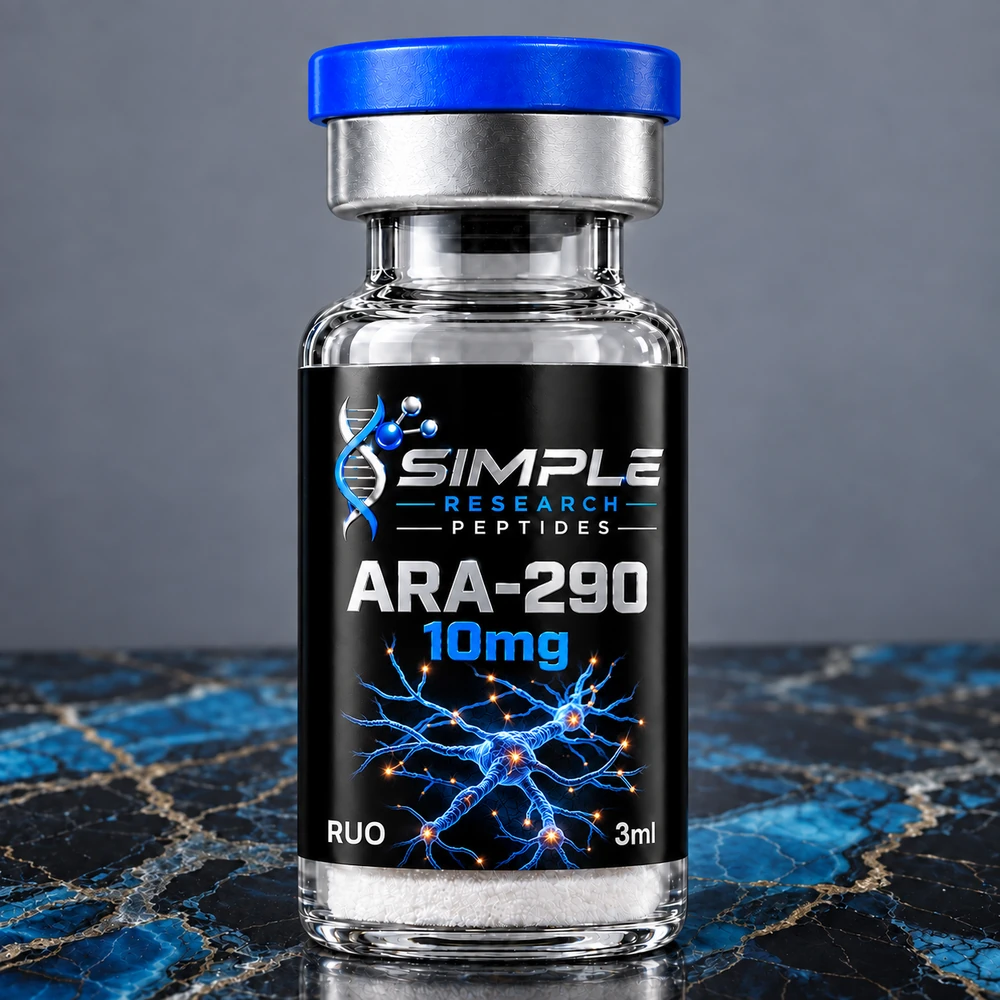
An evidence-mapped overview of ARA-290 (INN/USAN: cibinetide; also called PHBSP / pHBSP / pyroglutamate helix B surface peptide): an investigational 11-residue synthetic peptide modeled on the aqueous face of helix B of erythropoietin. It is not erythropoietin, not an ESA, and not FDA-approved. This page summarizes opened laboratory, animal, and Phase 1–2 investigational research. Research use only.
Educational information only. ARA-290 sold as a research peptide is a laboratory reagent. It is not an approved drug, not a dietary supplement, and is not for human or veterinary use, consumption, administration, diagnosis, or treatment. No human dosing, reconstitution, or administration protocol appears on this page.
ARA-290 (INN/USAN: cibinetide; INN number 10264; also called PHBSP / pHBSP / pyroglutamate helix B surface peptide) is an investigational 11-residue synthetic peptide modeled on the aqueous face of helix B of erythropoietin. It is not erythropoietin, not an ESA (erythropoiesis-stimulating agent), and not FDA-approved. Identity below is taken from pages that were opened: NCATS Inxight Drugs (UNII 9W5677JKDA), PubChem CID 91810664 (PUG REST properties and synonyms), and IUPHAR/BPS Guide to Pharmacology ligand 9677.
Registered cibinetide is the pyroglutamate form. Three-letter sequence from NCATS systematic names and PubChem synonyms: Pyr-Glu-Gln-Leu-Glu-Arg-Ala-Leu-Asn-Ser-Ser-OH (N-terminus is pyroglutamate / 5-oxo-L-proline). One-letter forms used on opened registry pages: XEQLERALNSS / UEQLERALNSS, with X = pyroglutamate. PubChem synonyms list UEQLERALNSS; the IUPHAR structure tab listed XEQLERALNSS.
The 2008 design paper described an 11-mer helix B surface peptide (HBSP) as QEQLERALNSS (N-terminal glutamine), assembled from aqueous-face residues of EPO helix B plus three proximal BC-loop residues (PMID 18676614). Literature and vendor pages sometimes use HBSP, pHBSP, PHBSP, and ARA-290 interchangeably. The research peptide on a vendor vial is not independently confirmed here to match the registered cibinetide salt/form or the clinical-trial material (Bachem-manufactured peptide was used in the opened type 2 diabetes trial).
No UniProt accession applies. This is a synthetic peptide, not a natural gene product. The FDA GSRS HTML page for UNII 9W5677JKDA was requested but returned no usable body text; UNII and CAS were taken from the opened NCATS Inxight record and PubChem synonyms. DrugBank DB13006 was requested; the page was blocked by Cloudflare and was not used as a source of facts.
| Field | Value from opened registries | Source opened |
|---|---|---|
| INN / USAN / WHO-DD | cibinetide (INN number 10264) | NCATS; IUPHAR; PubChem synonyms |
| Developmental codes / synonyms | ARA-290, ARA 290, ARA290, PHBSP, PH-BSP, pHBSP peptide, pyroglutamate helix B surface peptide | NCATS; IUPHAR; PubChem |
| Sequence (3-letter) | Pyr-Glu-Gln-Leu-Glu-Arg-Ala-Leu-Asn-Ser-Ser-OH (N-terminus is pyroglutamate / 5-oxo-L-proline) | NCATS systematic names; PubChem synonyms |
| Sequence (1-letter, X = pyroglutamate) | XEQLERALNSS / UEQLERALNSS | PubChem synonyms (UEQLERALNSS); IUPHAR structure tab (XEQLERALNSS) |
| HBSP parent (Gln, not pyroglutamate) | QEQLERALNSS | Brines et al., 2008, PMID 18676614 |
| Length | 11 amino acids (linear peptide) | NCATS; Brines et al. 2008, 2015 |
| CAS | 1208243-50-8 | NCATS; IUPHAR (WHO INN record); PubChem synonyms |
| UNII | 9W5677JKDA | NCATS; PubChem |
| PubChem CID | 91810664 | PubChem PUG REST; IUPHAR; NCATS |
| Molecular formula | C51H84N16O21 | PubChem; NCATS; IUPHAR |
| Molecular weight | 1257.3 (PubChem); 1257.3093 (NCATS) | PubChem; NCATS |
| InChIKey | WZTIQQBMSJTRBR-WYKNNRPVSA-N | PubChem; NCATS; IUPHAR |
| Stereochemistry | Absolute; 11/11 defined stereocenters | NCATS |
| Other registry IDs | DrugBank DB13006; ChEMBL CHEMBL3545305; KEGG D11218; GtoPdb 9677; NCI Thesaurus C171683 | NCATS; IUPHAR; PubChem |
| Originator (registry) | Araim Pharmaceuticals | NCATS |
| Approval year (registry) | Unknown | NCATS |
| Clinical development (opened sources) | Phase 2 candidate for neuropathic and retinal diseases; not described as approved | IUPHAR clinical tab; NCATS “Investigational” |
Erythropoietin (EPO) is a type 1 cytokine best known as the hormonal regulator of red-cell production. That hematopoietic activity is mediated by the classical EPOR homodimer (Brines et al., 2004, PMID 15456912; Brines et al., 2008, PMID 18676614).
Separately, EPO and some EPO derivatives have been studied for tissue-protective, anti-inflammatory, and anti-apoptotic effects in injured or metabolically stressed tissues. Leist et al. (2004, PMID 15247477) reported that carbamylated EPO (CEPO) and certain EPO mutants did not bind classical EPOR, did not stimulate hematopoiesis, and were still cytoprotective in animal models of stroke, spinal-cord compression, diabetic neuropathy, and experimental autoimmune encephalomyelitis. CEPO is a chemically modified full-length EPO protein. It is related in concept (non-hematopoietic tissue protection) but chemically distinct from ARA-290.
Brines et al. (2008, PMID 18676614) then delimited tissue-protective activity to short peptides from EPO helix B (residues 58–82), which faces solvent when EPO is bound to the EPOR homodimer. An 11-aa peptide simulating that aqueous face (HBSP: QEQLERALNSS) was tissue-protective in rodent models of ischemic stroke and renal ischemia–reperfusion, accelerated wound healing, and augmented cognitive function in rodents, and was not erythropoietic in vitro or in vivo. ARA-290 / cibinetide is the later pyroglutamate-stabilized clinical-development peptide built on that helix-B-surface idea (Brines et al., 2015, PMID 25387363, describe ARA 290 as “an 11-amino acid peptide modeled from the three dimensional structure of helix B of the EPO molecule,” MW 1257 Da).
Not darbepoetin. Not CEPO. ARA-290 is an 11-residue synthetic peptide, not a glycoprotein hormone.
HBSP was not erythropoietic in the opened 2008 peptide paper. Opened human trials (Heij 2012; Dahan 2013; Brines 2015; Culver 2017 abstract) reported no hematologic safety signal of the EPO type. Those trials were small and short; they do not prove long-term hematologic neutrality.
NCATS lists approval year as unknown / investigational. IUPHAR calls it a phase 2 clinical candidate. No opened registry described marketing authorization. Orphan designation is not approval.
The mechanism literature is a working hypothesis with conflicting biochemistry. Hypothesis means the innate repair receptor (IRR) / tissue-protective receptor as proposed in opened papers. Observed means a functional result in an opened model. Contrary means opened biophysics that did not detect the proposed extracellular complex. There is no invented receptor diagram on this page.
The hypothesis (opened primary papers and reviews). Brines et al. (2004, PMID 15456912) proposed that EPO’s tissue-protective actions use a heteroreceptor of EPOR plus the common β subunit (βc / CD131; shared by GM-CSF, IL-3, and IL-5 receptors), because: (i) CEPO was tissue-protective without binding classical EPOR; (ii) EPOR and βc co-purified / co-immunoprecipitated from rat organ membranes and P19 cells; (iii) the two subunits colocalized on protected neurons and cardiomyocytes; and (iv) neither EPO nor CEPO was active in cardiomyocyte or spinal-cord injury models in βc knockout mice. βc is not required for erythropoiesis (βc knockout mice have normal erythrocyte maturation).
Brines and Cerami (2012, PMID 22183892) later called this the tissue-protective receptor / innate repair receptor (IRR): generally not expressed on normal tissue, upregulated after injury, hypoxia, or metabolic stress, and composed of CD131 plus the same EPOR subunit used in erythropoiesis (with VEGF receptor also discussed as a possible component in endothelium). They argued that locally produced EPO is delayed and weak relative to the injury response, creating a window for exogenous ligands that prefer the tissue-protective receptor over the hematopoietic homodimer.
ARA-290 is described in later opened papers as a selective IRR / EPOR–CD131 agonist that does not stimulate the hematopoietic EPOR homodimer (Heij 2012; Dahan 2013; Brines 2015; Nairz 2017; Bitto 2017). Swartjes et al. (2011, PMID 21873879) reported that ARA290 relieved tactile and cold allodynia after spared-nerve injury in rats and in wild-type mice, but not in β-common-receptor knockout mice — a functional genetic argument that βc is required for that preclinical analgesia signal.
Nairz et al. (2017, PMID 29026145) reported that cibinetide’s anti-inflammatory effects on LPS-activated primary macrophages were dependent on CD131 and JAK2 and involved inhibition of NF-κB p65, in a mouse DSS-colitis model.
Brines 2004 proposed the heteroreceptor (PMID 15456912). Brines & Cerami 2012 named it the innate repair receptor (PMID 22183892). This is a compiled hypothesis, not a solved structure.
Swartjes 2011: ARA290 allodynia relief absent in βcR knockout mice (PMID 21873879). Nairz 2017: macrophage effects CD131/JAK2-dependent (PMID 29026145).
Cheung Tung Shing et al. (2018, DOI 10.1038/s41598-018-29865-x; Scientific Reports; opened full text) found no direct association of the extracellular domains of EPOR and βc in vitro by SEC, pull-down, MST, SPR, or AUC, with or without EPO or ARA290. They also found no requirement for Csf2rb (βc) in recovery from phenylhydrazine anemia in mice. They conclude that the extracellular regions do not specifically associate and that the IRR is not involved in anaemic stress. They leave open intracellular/transmembrane association or indirect linkage.
Opened work falls into three layers. None of it is a substitute for controlled laboratory characterization of a specific vial. Opened human research is Phase 1–2 only, mostly small, often single-center, often with Araim employees as authors, and without an opened Phase 3 program. Several symptom scales moved in placebo arms. That is the evidence map, not a proof of clinical effectiveness.
Brines 2008: HBSP QEQLERALNSS tissue-protective and not erythropoietic (PMID 18676614). Leist 2004: CEPO / EPO mutants — related concept, chemically distinct (PMID 15247477). Swartjes 2011: rat SNI + βcR knockout (PMID 21873879). Nairz 2017: mouse DSS colitis; CD131/JAK2 (PMID 29026145). Bitto 2017: diabetic mouse wounds (PMID 29223734). O’Leary 2019: ECFCs + mouse OIR (PMID 30876881).
Sarcoidosis SFN: Heij 2012 IV pilot n=22 (PMID 23168581); Dahan 2013 + 2016 erratum (PMID 24136731); Culver 2017 / NCT02039687 (PMID 28475703). T2D neuropathy: Brines 2015 (PMID 25387363); Karolinska NCT01933529 (no results). DME: Lois 2020 (PMID 32674280) / NCT06626971 terminated for expired drug. Emotion: Cerit 2015 (PMID 26431906) / NCT02070783 did not support an antidepressant-like profile. van Velzen 2014 is a review (PMID 24555851).
NCATS: investigational; approval year unknown; lists FDA orphan-drug codes and EU orphan EU/3/16/1721. IUPHAR clinical tab: “phase 2 clinical candidate [f]or neuropathic and retinal diseases.” Orphan designations noted for US FDA (neuropathic pain in sarcoidosis; sarcoidosis) and EMA (prevention of graft loss in pancreatic islet transplantation; sarcoidosis). Orphan designation is not approval. No opened source described an NDA/BLA or marketing authorization.
Search API for ARA-290 OR cibinetide OR ARA290 returned four records: NCT02039687, NCT01933529, NCT02070783, NCT06626971. No Phase 3 study appeared in that opened result set.
Brines et al. (2015, PMID 25387363) additionally cite (but this page does not treat as opened primary evidence) preclinical work in diet-induced insulin resistance, diabetic retinopathy, diabetic autonomic neuropathy, myocardial infarction, heart failure, burns, traumatic brain injury, and shock. Those cited papers were not all opened here and are not listed in the allowed PMID set.
Simple Research Peptides lists “ARA-290 (10 mg Vial)” as a 10 mg lyophilized peptide under Recovery / Inflammation Research. Category label on a store page. Not a finding from a paper. Opened product page did not list a sequence, CAS number, UNII, or purity certificate.
Read the “what was actually studied” column first. Published study designs are historical facts from those papers. They are not a protocol. Clinical-trial doses appear only as historical study conditions. They are not use instructions for a research peptide and are not a recommended human dose.
| Study (opened) | Species / model | What was actually studied | What it did not show |
|---|---|---|---|
| Brines 2008 PMID 18676614 | In vitro neuroprotection; rodent ischemic stroke, diabetes-induced retinal edema, peripheral nerve trauma, renal ischemia–reperfusion, wound healing, rodent cognition | Helix B and 11-aa HBSP (QEQLERALNSS) were tissue-protective and not erythropoietic | Did not study the pyroglutamate clinical peptide in humans; did not prove IRR binding structurally |
| Leist 2004 PMID 15247477 | Cells and multiple animal species | CEPO / EPO mutants: tissue-protective, not hematopoietic | CEPO is not ARA-290 |
| Swartjes 2011 PMID 21873879 | Rat spared-nerve injury; wild-type vs βcR knockout mice | Repeated i.p. ARA290 reduced tactile and cold allodynia for weeks; effect absent in βcR knockouts | Not a human analgesia trial; authors’ “promising new drug” language is opinion, not evidence of clinical efficacy |
| Nairz 2017 PMID 29026145 | DSS colitis in C57BL/6N mice; LPS-activated macrophages | Cibinetide or EPO improved weight gain, survival, tissue integrity; reduced myeloid infiltration and proinflammatory mediators; macrophage effects CD131/JAK2-dependent | Mouse IBD model only; last sentence of the abstract (“holds promise as … therapeutic of IBD”) is not a human result |
| Bitto 2017 PMID 29223734 | Incisional wounds in db+/db+ diabetic mice vs wild-type | Daily cibinetide 30 µg/kg s.c. improved VEGF, pAkt, p-eNOS, nitrites, histology, angiogenesis, scar strength, and closure vs vehicle in diabetic mice | Not a human wound trial |
| O’Leary 2019 PMID 30876881 | Human ECFCs in vitro; oxygen-induced retinopathy (OIR) mice | ARA290 supported ECFC survival under oxidative stress; systemic ARA290 reduced retinal IL-1β and TNF-α; ECFC transplant + ARA290 reduced avascular area more than ECFCs alone; EPO did not enhance that function | Not a human retinopathy outcome trial |
| Heij 2012 PMID 23168581 | Sarcoidosis SFN; IV pilot n=22 | SFNSL improved vs placebo; SF-36 pain/physical functioning improved from baseline in ARA 290; BPI and FAS improved equivalently in both groups | No disease modification of sarcoidosis; no structural nerve-fiber endpoint; no BPI pain-intensity superiority |
| Dahan 2013 + 2016 erratum PMID 24136731 | Sarcoidosis SNFLD; n=38; SC | Corneal nerve-fiber area +14.5% vs placebo −5.3%; SFNSL and 6MWT signals; BPI interference (not intensity) | IENFD did not change significantly; BPI pain intensity improved equally in both arms |
| Culver 2017 PMID 28475703 / NCT02039687 | Phase 2b sarcoid SNFL; n=64; dose-ranging | Primary CNFA at 28 days: 4 mg CNFA p=0.012; 1 mg and 8 mg not significant; GAP-43+ up at 4 mg | Pain also improved on placebo; placebo-corrected pain at 4 mg not significant (p=0.157); no Phase 3 |
| Brines 2015 T2D Phase 2 PMID 25387363 | T2D + painful neuropathy; n=48 analyzed | Small HbA1c / lipid signals; PainDetect vs placebo; NPSI improved ~20% in both groups | SFNSL (power instrument) did not change; whole-cohort CNFD ns; QST did not change |
| Cerit 2015 PMID 26431906 / NCT02070783 | 36 healthy volunteers; single IV | Some emotional-processing shifts; no effects on mood | Did not support an antidepressant-like profile |
| Lois 2020 PMID 32674280 / NCT06626971 | DME Phase 2 pilot; n=9/8; open-label | Primary BCVA not improved (change −2.9 ± 5.0) | No controlled drying of DME; registry later TERMINATED for expired drug |
| Cheung Tung Shing 2018 DOI 10.1038/s41598-018-29865-x | In vitro extracellular EPOR / βc; mouse anemia | No extracellular EPOR–βc association ± EPO or ARA290 | Does not erase βc-dependent in-vivo pharmacology; leaves intracellular/indirect linkage open |
| Claim often seen on peptide-vendor or blog pages | What opened evidence actually supports | Flag |
|---|---|---|
| “ARA-290 is a tissue-protective / nerve-regenerating peptide that works in people” | Some Phase 2 sarcoidosis and T2D studies reported corneal-nerve or symptom changes; several key endpoints were null; pain often improved on placebo; no Phase 3 in the opened registry search | Overclaim |
| “Increases small-nerve fibers / regenerates nerves” | Dahan 2013: corneal area up, skin IENFD not significant. Culver 2017: CNFA primary met at 4 mg only; GAP-43+ up at 4 mg. Brines 2015: whole-cohort CNFD ns; post-hoc abnormal-CNFD subgroup only | Partial, mixed |
| “Treats sarcoidosis neuropathy” | Two small Leiden-centered RCTs plus a 64-person dose-ranging study. Not approved. Pain not consistently placebo-corrected | Investigational only |
| “Improves diabetes / HbA1c / lipids” | One 28-day Phase 2 in already well-controlled T2D (Brines 2015); small A1c change; Karolinska OGTT trial has no opened results | Limited, unreplicated |
| “Treats diabetic macular edema / protects the retina” | Lois 2020 open-label n=9: primary vision endpoint not met. Preclinical OIR/ECFC work is mouse/cell only | Failed / preclinical |
| “Antidepressant / mood peptide” (EPO analogy) | Cerit 2015: did not support an antidepressant-like profile; no mood effect | Contradicted |
| “No side effects because it is not EPO” | Opened trials reported generally similar AE rates vs placebo and no anti-drug antibodies in those short studies; they also reported SAEs, a possible renal-function case, and one death judged unrelated. Short t½ and small n do not equal proven safety | Oversimplified |
| “Selective IRR agonist — mechanism is proven” | Working hypothesis with supporting knockout/pharmacology papers and a 2018 biophysical paper that could not detect extracellular EPOR–βc binding ± ARA290 | Contested |
| SRP or other vendor “Recovery / Inflammation Research” category | Category label on a store page. Not a finding from a paper | Vendor-only |
| Sequence/CAS implied by a 10 mg vial listing | Opened SRP page does not list sequence or CAS | Vendor-only / unknown lot identity |
EPOR + common β-subunit hypothesis (PMID 15456912). CEPO / non-erythropoietic EPO derivatives (PMID 15247477). Related concept; not ARA-290.
11-aa HBSP tissue-protective and not erythropoietic (PMID 18676614).
ARA290 allodynia relief required βc (PMID 21873879).
Brines & Cerami name the innate repair receptor (PMID 22183892). Heij et al.: 22 patients, 2 mg IV three times weekly for 4 weeks (PMID 23168581).
n=38; corneal area signal; IENFD null; pain intensity moved in both arms (PMID 24136731). Europe PMC notes a later erratum (Mol Med 2016;22:674).
Expert-opinion review of the early sarcoidosis SFN program (PMID 24555851).
Brines 2015 Phase 2 in type 2 diabetes (PMID 25387363). Cerit 2015 / NCT02070783 did not support an antidepressant-like profile (PMID 26431906). Karolinska NCT01933529 last update 2015-09; outcomes unknown.
Culver 2017 / NCT02039687: 4 mg CNFA p=0.012; pain also improved on placebo (PMID 28475703). Nairz DSS colitis (PMID 29026145). Bitto diabetic-mouse wounds (PMID 29223734).
No direct association of extracellular EPOR and βc ± EPO or ARA290 (DOI 10.1038/s41598-018-29865-x).
Mouse/cell retina work, not a human retinopathy outcome trial (PMID 30876881).
Primary BCVA not improved (PMID 32674280). NCT06626971 later TERMINATED — “Expiry of study drug – no replacement available.” No Phase 3 in the opened 2026 search.
Opened NCATS and IUPHAR records describe investigational / Phase 2 status. Orphan designations are not approvals. No opened source documented FDA, EMA, or other marketing authorization. Not FDA-approved.
Phase 2 signals (especially corneal-nerve area at 4 mg in sarcoidosis SFN, and some symptom scales) sit beside large placebo movements, missed endpoints (IENFD in Dahan 2013; SFNSL and whole-cohort CNFD and QST in Brines 2015; BCVA in Lois 2020; antidepressant profile in Cerit 2015), and no opened Phase 3.
Functional βc dependence in some animal models (Swartjes 2011; Nairz 2017) does not erase the 2018 biophysical failure to detect an extracellular EPOR–βc complex, including with ARA290 (Cheung Tung Shing et al., DOI 10.1038/s41598-018-29865-x). IRR is a hypothesis.
The opened SRP page lists no sequence, CAS, COA, or manufacturer. Clinical papers that state a source used Bachem material in a specified buffer. Identity, salt, counter-ion, and impurities of a research vial are unproven here.
No opened evidence that research-use ARA-290 reverses neuropathy, heals wounds, treats IBD, treats depression, treats DME, or replaces EPO in any clinical setting.
Immunogenicity and drug–drug interactions are not established beyond short Phase 2 follow-up. One opened diabetes trial recorded SAEs in the active arm that committees judged unrelated or possibly related; that is not a clean “no risk” finding. Pharmacokinetics in the opened diabetes paper (peak ~3 ng/mL, t½ ~20 min after 4 mg SC) describe clinical-trial product in volunteers, not a reconstituted research vial, and are not a dosing guide.
Clinical-trial doses appear below only as historical study conditions. They are not use instructions for a research peptide and are not a recommended human dose. Seven human-study records were opened: four published interventional papers with full or abstract text (Heij 2012; Dahan 2013; Brines 2015; Culver 2017), one published DME pilot (Lois 2020), one published healthy-volunteer cognition paper (Cerit 2015), plus the Karolinska registry record without results (NCT01933529). That is six published human studies and one result-less registry trial. No Phase 3 record was present in the opened ClinicalTrials.gov API result set.
Helix B and 11-aa HBSP (QEQLERALNSS) were tissue-protective in rodent models of ischemic stroke and renal ischemia–reperfusion, accelerated wound healing, and augmented cognitive function in rodents, and were not erythropoietic in vitro or in vivo. Did not study the pyroglutamate clinical peptide in humans; did not prove IRR binding structurally. PMID 18676614. PMC PMC2504825. DOI 10.1073/pnas.0805594105.
Carbamylated EPO (CEPO) and certain EPO mutants did not bind classical EPOR, did not stimulate hematopoiesis, and were still cytoprotective in animal models of stroke, spinal-cord compression, diabetic neuropathy, and experimental autoimmune encephalomyelitis. CEPO is a chemically modified full-length EPO protein. PMID 15247477. DOI 10.1126/science.1098313.
Proposed that EPO’s tissue-protective actions use a heteroreceptor of EPOR plus the common β subunit (βc / CD131). CEPO was tissue-protective without binding classical EPOR; EPOR and βc co-purified from rat organ membranes and P19 cells; neither EPO nor CEPO was active in βc knockout cardiomyocyte or spinal-cord models. PMID 15456912. DOI 10.1073/pnas.0406491101.
Called the tissue-protective receptor the innate repair receptor (IRR): generally not expressed on normal tissue, upregulated after injury, hypoxia, or metabolic stress, composed of CD131 plus EPOR. PMID 22183892. DOI 10.2119/molmed.2011.00414.
ARA290 relieved tactile and cold allodynia after spared-nerve injury in rats and in wild-type mice, but not in β-common-receptor knockout mice. Not a human analgesia trial. PMID 21873879. DOI 10.1097/aln.0b013e31822fcefd.
Randomized, double-blind, placebo-controlled pilot. 22 patients with sarcoidosis and SFN symptoms (spontaneous pain ≥5 on BPI). ARA 290 2 mg intravenous three times weekly for 4 weeks (n=12) vs placebo (n=10) — historical study condition, not a protocol. Reported: no safety concerns on clinical or laboratory assessments. SFNSL improved more with ARA 290 than placebo (Δ −11.5 ± 3.04 vs −2.9 ± 3.34; p < 0.05). SF-36 pain and physical-functioning dimensions improved from baseline in the ARA 290 group. BPI and FAS improved significantly but equivalently in both groups. IDS (depression) did not change. Did not show disease modification of sarcoidosis itself; a structural nerve-fiber endpoint; or superiority on the pain-intensity scale they used (BPI). PMID 23168581. DOI 10.2119/molmed.2012.00332.
Investigator-initiated, single-site (Leiden), double-blind, placebo-controlled. NTR3575 / EudraCT 2012-001492-37. 38 patients (18 F / 20 M; mean age 49.5) with sarcoidosis and painful SNFLD; 4 mg subcutaneous daily for 28 days vs placebo; 12-week follow-up, plus a 9-month questionnaire/6MWT contact — historical study condition, not a protocol. Dose chosen after a 10-volunteer IV vs SC PK crossover (2 mg IV vs 2/4/6 mg SC) aiming for plasma > ~1.3 ng/mL. Reported positives vs placebo or baseline: median corneal nerve-fiber area +14.5% (p = 0.022) vs placebo −5.3% (ns); SFNSL reduction larger than placebo at week 5 (p = 0.005) and week 16 (p = 0.037); autonomic and pain SFNSL subscores; BPI pain interference (not intensity); 6MWT +18.7 m vs placebo −15.1 m (p = 0.049); some thermal QST thresholds at the hand. Nulls / caveats in the same paper: IENFD (skin biopsy) did not change significantly at thigh or distal leg. BPI pain intensity improved equally in both arms (~9%). Visual acuity and retinal thickness were normal at baseline and did not change. Authors and Araim employees (Dunne, Cerami, Brines) held company stock/options. Europe PMC notes a later erratum (Mol Med 2016;22:674). PMID 24136731. PMC PMC3883966. DOI 10.2119/molmed.2013.00122.
Review of the early sarcoidosis SFN program (Heij and Dahan). Expert-opinion language (“prospects … seem promising”) is not independent confirmation. PMID 24555851. DOI 10.1517/13543784.2014.892072.
Phase 2b, 28-day, randomized, quadruple-masked, dose-ranging. 64 subjects with sarcoid-associated SNFL and neuropathic pain at Cleveland Clinic and LUMC. Arms: 1, 4, or 8 mg SC daily vs placebo (16 planned per arm) — historical study conditions, not a protocol. Primary endpoint: change in corneal nerve-fiber area (CNFA) at 28 days. Abstract results: placebo-corrected mean CNFA change (µm²) at day 28: 1 mg 109 (95% CI −429, 647); 4 mg 697 (159, 1236; p = 0.012); 8 mg 431 (−130, 992). Intraepidermal GAP-43+ fibers increased in the 4 mg group (p = 0.035). CNFA change correlated with GAP-43+ (ρ = 0.575; p = 0.025) and 6MWT (ρ = 0.645; p = 0.009). “Pain improved significantly in all groups”; in moderate–severe pain the placebo-corrected decrease at 4 mg was not statistically significant (p = 0.157). Posted ClinicalTrials.gov numeric results (opened): mean CNFA change 1 mg −64.3, 4 mg +533.8, 8 mg +203.8, placebo −170.0 µm² (SDs large). 6MWT mean change ~18–19 m on active arms vs +1.2 m placebo (SDs 38–79 m). IENFD mean changes small and overlapping (placebo +0.8 fibers/mm). Questionnaire mean changes (BPI, SFNSL, NPSI, FAS) moved in every arm, including placebo. Completers: 16/16 (1 mg), 15/16 (4 mg), 13/16 (8 mg), 16/16 (placebo). Serious TEAEs posted in 1 mg (2/16) and 8 mg (1/14), none in 4 mg or placebo in the posted table. Did not show a significant primary-endpoint win at 1 mg or 8 mg; a significant placebo-corrected pain win; or Phase 3 confirmation. Primary structural signal was concentrated at 4 mg in this sample. PMID 28475703. DOI 10.1167/iovs.16-21291.
Investigator-initiated, double-blind, placebo-controlled Phase 2. 49 enrolled, 48 analyzed (one discontinued at day 15 for worsening borderline renal insufficiency). ARA 290 4 mg SC daily × 28 days, then 28 days off drug — historical study condition, not a protocol. Material: Bachem peptide, MW 1257 Da; authors cite volunteer PK of ~3 ng/mL peak and ~20 min terminal half-life after 4 mg SC. Subjects remained on their usual diabetes and neuropathic-pain medicines. Safety as reported: no clinically significant hematology/chemistry shifts attributed to ARA 290; anti-ARA 290 titers negative. AE frequency similar between arms. Four SAEs in the ARA 290 arm: two judged unlikely related; one possible (creatinine rise after a furosemide increase; dosing stopped, function did not improve while the higher diuretic dose continued); one 70-year-old man developed severe cellulitis 2 weeks after last dose and died of MI — safety committee judged unrelated. Metabolic (reported): HbA1c improved in ARA 290 vs placebo across 56 days (p = 0.002, repeated-measures ANOVA); mean changes about −0.16% / −0.21% vs −0.01% / +0.21%. Cholesterol/HDL ratio (p = 0.039) and triglycerides (p = 0.043) favored ARA 290. Baseline control was already good (mean HbA1c ~7.3% vs 6.9%). Authors themselves call the A1c magnitude small. Neuropathy (reported): PainDetect total score improved vs placebo (p = 0.037). NPSI improved ~20% in both groups at day 28 and was not different from baseline at day 56. SFNSL did not change significantly in either group (this was the instrument used for the power calculation). RAND-36 physical-role and vitality improved from baseline in ARA 290 only. 6MWT +3.5% (p = 0.09) vs +1.1% placebo (ns). Whole-cohort CNFD change ns; post-hoc subgroup with CNFD >1 SD below normal: +2.6 vs +0.7 fibers/mm² (p = 0.02 within ARA 290). QST did not change. Did not show a pre-specified SFNSL win; a whole-cohort corneal-nerve win; a QST win; independence from post-hoc subgrouping; or a Phase 3 metabolic or neuropathy claim. Araim officers (Brines, Dunne, Cerami) owned stock/options. NTR3858. PMID 25387363. PMC PMC4365069. DOI 10.2119/molmed.2014.00215.
Status UNKNOWN; no results posted; no matching published paper was opened. Planned Phase 2, n=24 estimated, prediabetes or drug-naïve T2D, 4.0 mg SC daily × 28 days vs placebo. Primary: OGTT and insulin secretion. Last update 2015-09. Outcomes are unknown from opened sources. Do not treat this record as positive or negative efficacy evidence.
Prospective, open-label, uncontrolled, single-centre Phase 2 pilot. 9 recruited, 8 completed. Cibinetide 4 mg SC daily × 12 weeks — historical study condition, not a protocol. Study eye = best vision and lowest CRT. Trial also registered as EudraCT 2015-001940-12 / ISRCTN16962255. ClinicalTrials.gov status: TERMINATED — “Expiry of study drug – no replacement available.” Primary as reported: no improvement in mean BCVA (change −2.9 ± 5.0). CRT +10 ± 94.6 µm; central retinal sensitivity −0.53 ± 1.9 dB; tear production −0.13 ± 7.7 mm (no mean improvement). NEI VFQ-25 composite +2.7 ± 3.1. No serious AEs/reactions or anti-cibinetide antibodies. Some participants had exploratory improvements in CRT, tear production, diabetic control, or albuminuria — uncontrolled, descriptive. Did not show a vision benefit; a controlled drying of DME; or that a research peptide treats diabetic eye disease. PMID 32674280. PMC PMC7408632. DOI 10.3390/jcm9072225.
Randomized, double-blind, placebo-controlled. 36 healthy volunteers, 18–35 years. Single intravenous 2 mg ARA290 vs saline — historical study condition, not a protocol. Outcomes at 1 week: emotional test battery and fMRI. Reported: lower neural responses to happy faces in fusiform gyrus; tendency to lower recognition of happy and disgust expressions; faster categorization of positive vs negative words; increased attention toward positive pictures. No effects on mood or affective symptoms. Authors’ conclusion (opened abstract): ARA290 “may modulate some aspects of emotional processing, however, the direction and the strength of its effects do not unequivocally support an antidepressant-like profile.” Did not show antidepressant efficacy; a replication of EPO’s reported emotional-processing signature in the direction hypothesized. PMID 26431906. DOI 10.1016/j.euroneuro.2015.09.005.
Cibinetide or EPO improved weight gain, survival, and tissue integrity in DSS colitis; reduced myeloid infiltration and proinflammatory mediators. Macrophage effects were CD131/JAK2-dependent and involved inhibition of NF-κB p65. Mouse IBD model only. PMID 29026145. DOI 10.1038/s41598-017-13046-3.
Daily cibinetide 30 µg/kg s.c. improved VEGF, pAkt, p-eNOS, nitrites, histology, angiogenesis, scar strength, and closure vs vehicle in db+/db+ diabetic mice. Journal year on the record is 2018 for the issue; PubMed date 2017-12-07. PMID 29223734. DOI 10.1016/j.bbadis.2017.12.006.
ARA290 supported human ECFC survival under oxidative stress; systemic ARA290 reduced retinal IL-1β and TNF-α; ECFC transplant + ARA290 reduced avascular area more than ECFCs alone; EPO did not enhance that function. PMID 30876881. DOI 10.1016/j.exer.2019.03.001.
Found no direct association of the extracellular domains of EPOR and βc in vitro by SEC, pull-down, MST, SPR, or AUC, with or without EPO or ARA290. No requirement for Csf2rb (βc) in recovery from phenylhydrazine anemia in mice. Conclude that the extracellular regions do not specifically associate and that the IRR is not involved in anaemic stress. Leave open intracellular/transmembrane association or indirect linkage. Opened full text at nature.com. No PMID recorded from the opened page; do not invent one. DOI 10.1038/s41598-018-29865-x.
ARA-290 sold as a research peptide is a laboratory reagent. It is not erythropoietin, not an ESA, and not FDA-approved. It is not a dietary supplement, and is not for human or veterinary use, consumption, administration, diagnosis, or treatment. This page is educational. It does not provide dosing, reconstitution, administration, or any human-use instructions. No human dosing protocol appears here.
SRP material is for laboratory research only. Research use only.
Laboratory identity is the first practical issue. Confirm sequence (including N-terminal pyroglutamate vs free Gln), mass (~1257.3 Da for the free peptide), and purity by orthogonal methods. Registered cibinetide is XEQLERALNSS (Pyr-EQLERALNSS; CAS 1208243-50-8). The 2008 HBSP design sequence is QEQLERALNSS. Do not assume a lyophilized “ARA-290 10 mg” vial matches Bachem clinical-trial cibinetide. The opened SRP page listed no sequence, CAS, COA, or manufacturer.
Biological inference has the same problem. A 28-day corneal-nerve-area signal at 4 mg/day in sarcoidosis SFN, mixed symptom scales that also moved on placebo, a DME pilot that missed its primary vision endpoint, and a cognition study that did not support an antidepressant-like profile are not interchangeable with marketplace claims about nerve regeneration, recovery, or mood. IRR is a hypothesis; Cheung Tung Shing 2018 found no extracellular EPOR–βc association.
Pharmacokinetics quoted from the opened diabetes paper (peak ~3 ng/mL, t½ ~20 min after 4 mg SC) describe clinical-trial product in volunteers, not a reconstituted research vial, and are not a dosing guide.
A synthetic 11-amino-acid peptide sold for laboratory work. Registered cibinetide is pyroglutamate-EQLERALNSS (XEQLERALNSS; CAS 1208243-50-8). The 2008 HBSP design sequence was QEQLERALNSS. A given vial is only as good as its independent identity and purity data. Research use only.
No. It is a short peptide modeled on part of EPO’s helix B surface. It is not erythropoietin and not an ESA. In the opened 2008 peptide work, the parent HBSP sequence was not erythropoietic. Opened short human trials reported no hematologic safety signal of the EPO type; they do not prove long-term hematologic neutrality.
No. Not FDA-approved. Opened NCATS and IUPHAR records describe investigational / Phase 2 status. Orphan designations are not approvals. No opened source described marketing authorization.
Yes, in small Phase 1–2 studies of sarcoidosis-associated small-fiber neuropathy, type 2 diabetes with painful neuropathy, diabetic macular edema, and emotional processing in healthy volunteers. Opened results are mixed. No Phase 3 study appeared in the opened ClinicalTrials.gov search.
No. The strongest opened structural signal is a 28-day increase in corneal nerve-fiber area at 4 mg/day in sarcoidosis SFN (Culver 2017 / NCT02039687; 4 mg CNFA p=0.012). Symptom scales often moved in placebo groups. A DME pilot missed its primary vision endpoint (Lois 2020, PMID 32674280). A cognition study did not support an antidepressant-like profile (Cerit 2015, PMID 26431906).
Heij et al., 2012 (PMID 23168581) was a sarcoidosis IV pilot, n=22, randomized and placebo-controlled. SFNSL improved more with ARA 290 than placebo. BPI and FAS improved significantly but equivalently in both groups. Not a structural nerve-fiber trial and not disease modification of sarcoidosis.
Dahan et al., 2013 (PMID 24136731) reported a corneal nerve-fiber area increase and some symptom/6MWT signals. Skin IENFD did not change significantly. BPI pain intensity improved equally in both arms. Europe PMC notes a later erratum (Mol Med 2016;22:674).
Culver 2017 (PMID 28475703 / NCT02039687): primary CNFA was significant at 4 mg (p=0.012), not at 1 mg or 8 mg. Pain also improved on placebo. The placebo-corrected pain decrease at 4 mg in moderate–severe pain was not statistically significant (p=0.157).
IRR is a hypothesis. Supporting knockout/pharmacology papers exist (Swartjes 2011; Nairz 2017). Cheung Tung Shing et al., 2018 (DOI 10.1038/s41598-018-29865-x) found no extracellular EPOR–βc association, with or without EPO or ARA290.
No. Historical trial regimens are study conditions, not instructions. There is no human dosing protocol on this page. Research peptides are not for human consumption.
Confirm sequence (including N-terminal pyroglutamate vs free Gln: XEQLERALNSS vs QEQLERALNSS), mass (~1257.3 Da for the free peptide), and purity by orthogonal methods. Do not assume a lyophilized “ARA-290 10 mg” vial matches Bachem clinical-trial cibinetide.
Full citations for the verified set. Each line is a paper or registry record actually opened for this draft. Do not add PMIDs that are not on the allowed list. Cheung Tung Shing 2018 is DOI-only; no PMID was taken from the opened page.
ARA-290 OR cibinetide OR ARA290. API search (opened 2026-08-16; four studies returned; no Phase 3).Allowed PMID list used on this page: 15456912, 15247477, 18676614, 21873879, 22183892, 23168581, 24136731, 24555851, 25387363, 26431906, 28475703, 29026145, 29223734, 30876881, 32674280. DOI-only: 10.1038/s41598-018-29865-x. No other PMIDs were added.
Educational information only. ARA-290 / cibinetide is not erythropoietin, not an ESA, and not an FDA-approved drug for human use. Investigational compound. Laboratory research use only; not for human or animal use. No human dosing protocol. Last source review: 16 August 2026 (America/Indianapolis). Locked draft converted to HTML the same day. PMIDs above were opened on Europe PMC and/or publisher full text as noted. Product URL fetched the same day.
2 mins ago