






Peptide research · Compound guide
Thymulin Research Guide
Explore the mechanisms, study findings and evidence limits behind this research topic.
Product artwork identifies the SRP listing. It does not demonstrate safety or clinical benefit. The evidence guide and its sources follow below.
View product label and documentation →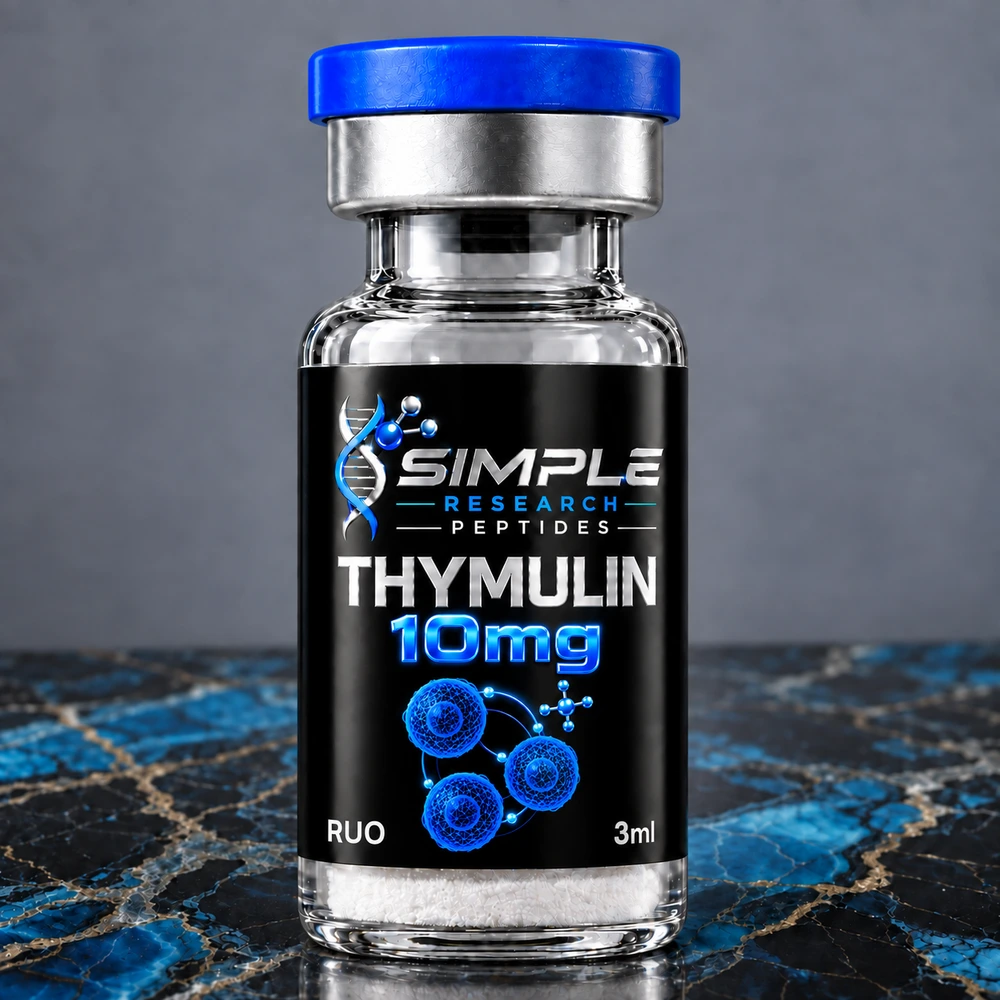
Back to the Research Compound Library
Established peptide–zinc biology; intervention-specific gaps
Evidence reviewed September 13, 2026.
Research overview and identity
Thymulin is a thymic peptide whose biological activity is closely associated with zinc. It should be distinguished from other thymic peptides, including thymosin alpha-1, rather than treating them as one interchangeable immune ingredient.
Mechanism under investigation
Primary chemical research examined zinc binding to the nonapeptide. This interaction is central to interpreting thymulin activity, so peptide identity alone may not fully describe the experimentally active material.
What the studies report
A 1984 study characterized zinc–thymulin interactions. Human nutritional research later linked zinc deficiency with reduced thymulin activity and examined restoration following zinc repletion. These findings help establish the biology of the endogenous peptide–metal system. [1] [2]
Limits of the evidence
Correcting zinc deficiency is not the same intervention as administering a thymulin research preparation. The cited studies do not establish broad immune enhancement or treatment of autoimmune or infectious disease by a retail peptide. Zinc status, chemical form and assay methodology need to be documented.
Matching research material to a paper
Check the material identity, formulation and analytical methods against the study methods. A product name or milligram amount alone does not demonstrate experimental equivalence. Published research does not establish the identity, purity or potency of a retail batch; batch-specific analytical documentation must be assessed separately.
For laboratory research only. Not for human or veterinary use. This guide is educational and contains no dosing, reconstitution or administration instructions.
Sources and further reading
- Primary characterization of zinc binding to thymulin (1984)
- Human zinc-deficiency and thymulin-activity research (1988)