






Metabolism · Compound guide
Obestatin Research Guide
Explore the mechanisms, study findings and evidence limits behind this research topic.
Product artwork identifies the SRP listing. It does not demonstrate safety or clinical benefit. The evidence guide and its sources follow below.
View product label and documentation →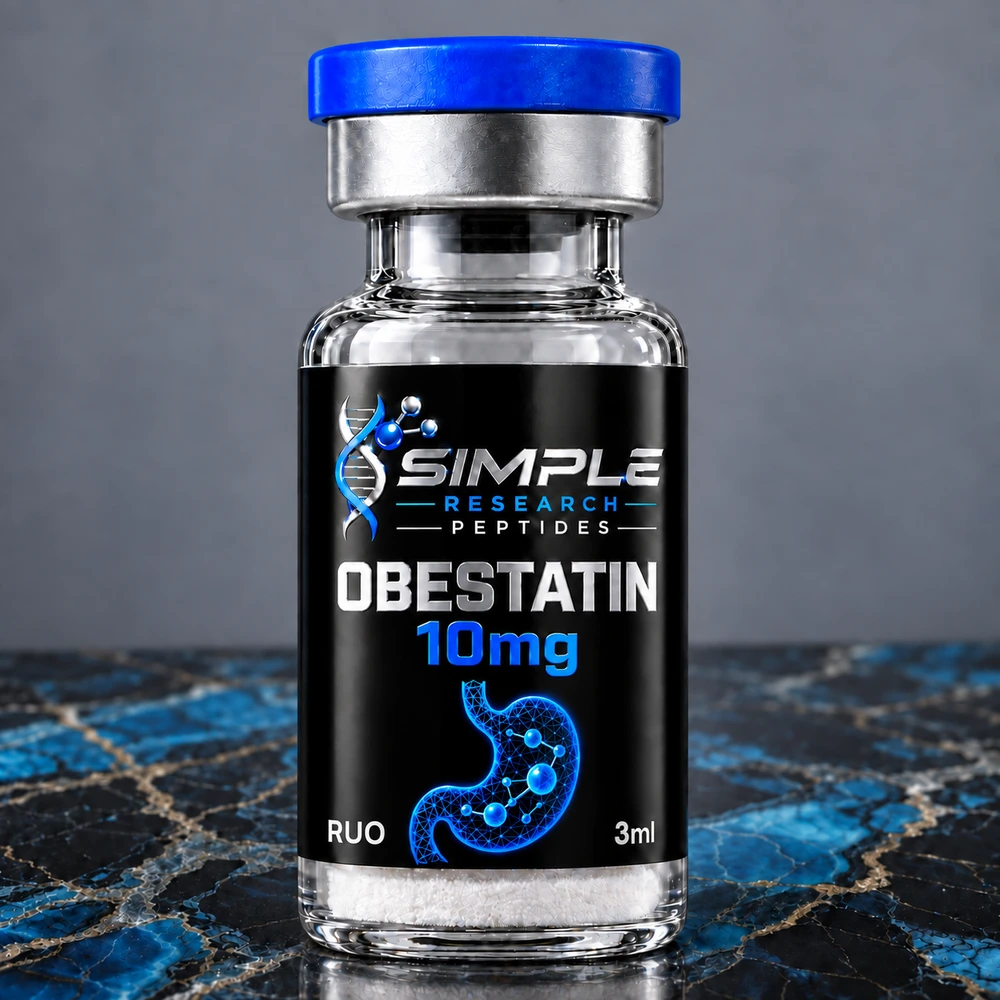
Explore the mechanism chart
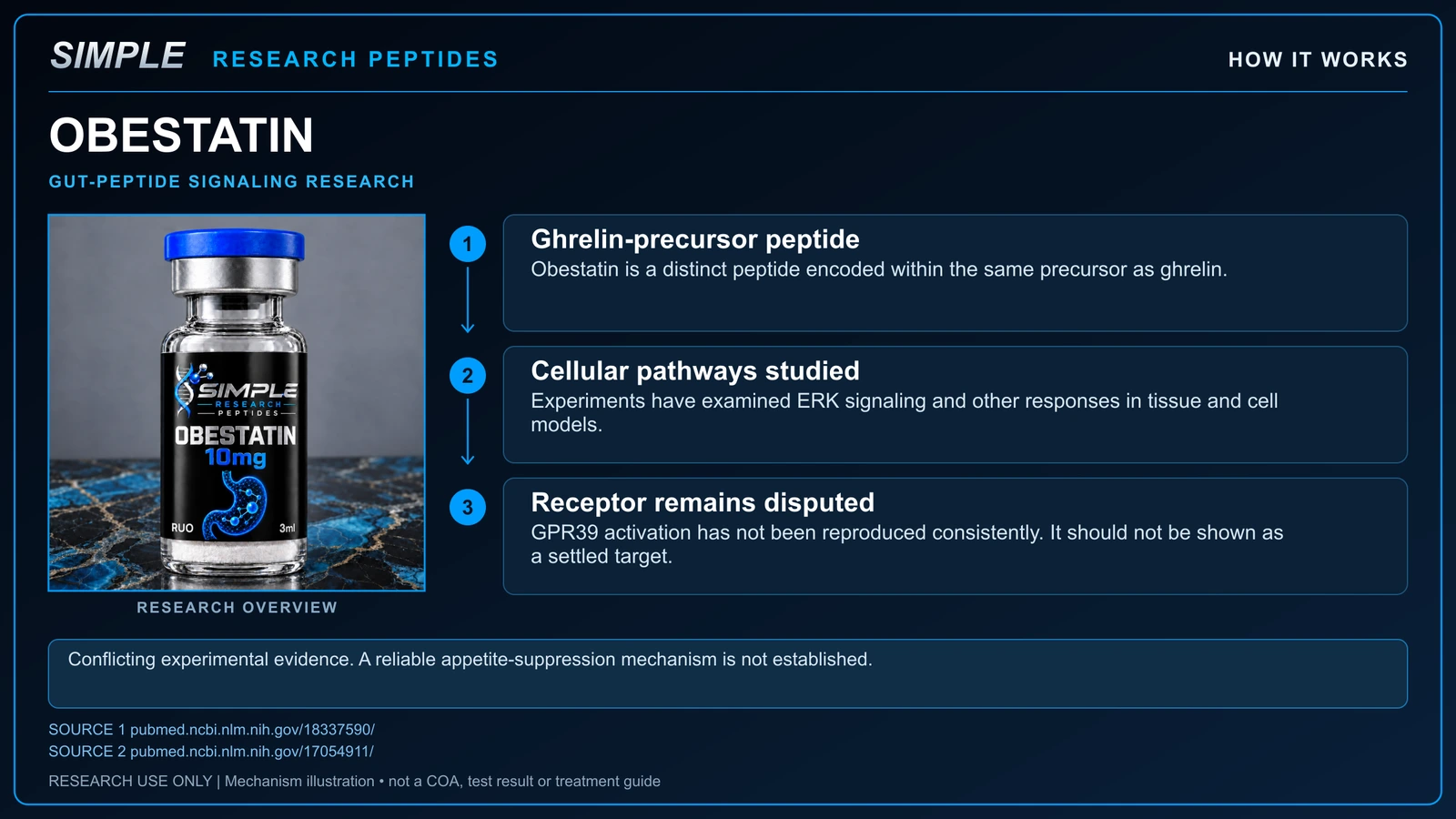
Mechanistic illustration. Interpret alongside the evidence and limitations below.
Back to the Research Compound Library
Preclinical biology with contested receptor and feeding claims
Evidence reviewed September 13, 2026.
Research overview and identity
Obestatin is a peptide derived from the ghrelin precursor. Its original description proposed effects opposing ghrelin in feeding regulation, but important parts of that interpretation were challenged by subsequent experiments.
Mechanism under investigation
The initial report proposed GPR39 as an obestatin receptor. Later studies did not consistently reproduce that receptor activation, so this pathway should be described as disputed rather than as a settled appetite-control mechanism.
What the studies report
The 2005 discovery paper reported feeding-related effects. Subsequent receptor and animal studies failed to confirm key findings, including consistent GPR39 activation and suppression of food intake under their tested conditions. These are meaningful differences in the primary literature. [1] [2] [3]
Limits of the evidence
The evidence does not justify presenting obestatin as an established appetite suppressant or weight-loss therapy. A balanced interpretation includes unsuccessful replication and alternative explanations. Product spelling, sequence and precursor biology also need to be distinguished when searching the literature.
Matching research material to a paper
Check the material identity, formulation and analytical methods against the study methods. A product name or milligram amount alone does not demonstrate experimental equivalence. Published research does not establish the identity, purity or potency of a retail batch; batch-specific analytical documentation must be assessed separately.
For laboratory research only. Not for human or veterinary use. This guide is educational and contains no dosing, reconstitution or administration instructions.
Sources and further reading
- Zhang et al. (2005): original obestatin discovery report
- Holst et al.: investigation challenging obestatin activation of GPR39
- Rodent investigation of reproducibility of obestatin feeding effects