


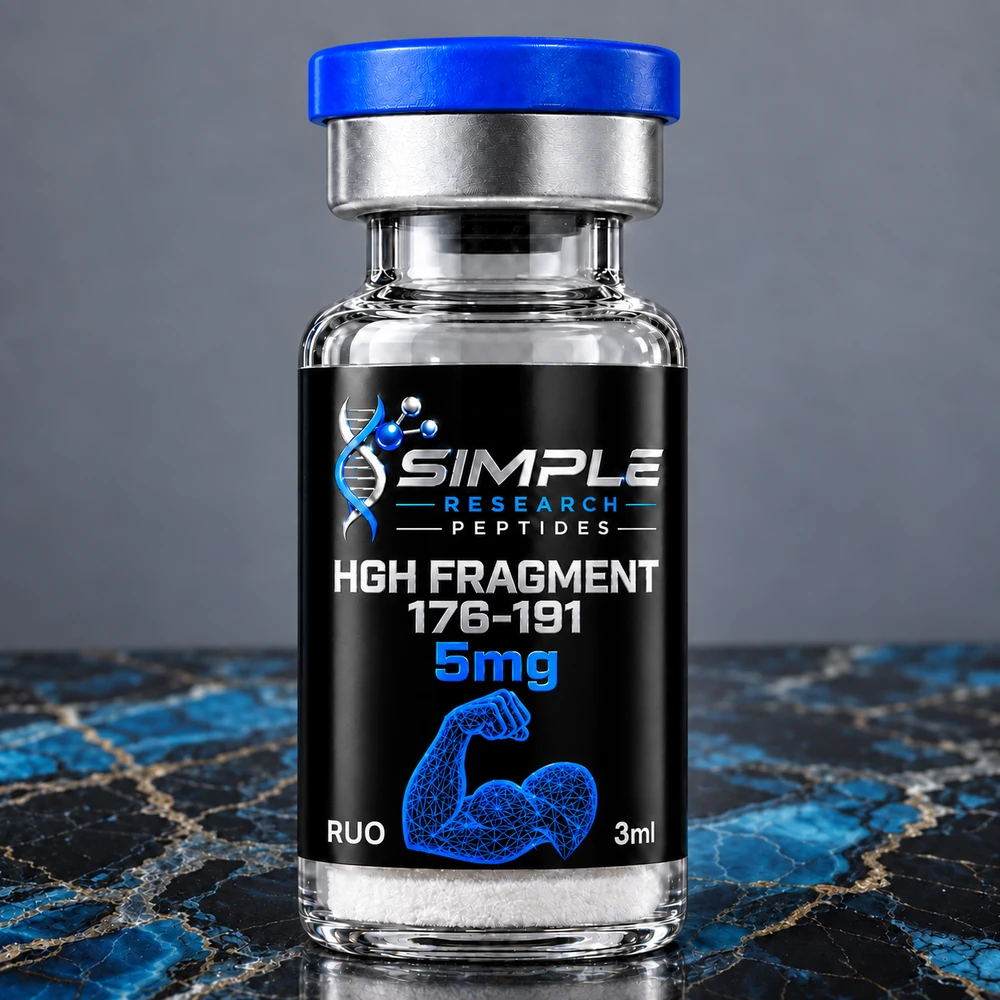
HGH Fragment 176–191 5mg
HGH Fragment 176–191 is discussed in research on the C-terminal region of human growth hormone and its relationship to lipid metabolism. The supplied 5mg vial is intended for controlled laboratory investigation.
Peptide identity and research context
The terms hGH Fragment 176–191 and tyr-hGH 177–191 are sometimes used interchangeably in commercial descriptions, but the exact sequence and disulfide form matter. Cox and colleagues describe AOD9604 as hGH residues 177–191 with an additional N-terminal tyrosine. A study of AOD9604 does not, by itself, establish the identity or performance of every vial labeled HGH Fragment. Molecular formula, molecular weight and stability claims must match the documented material being studied. Cox et al., 2015.
Adipose tissue and metabolic signaling
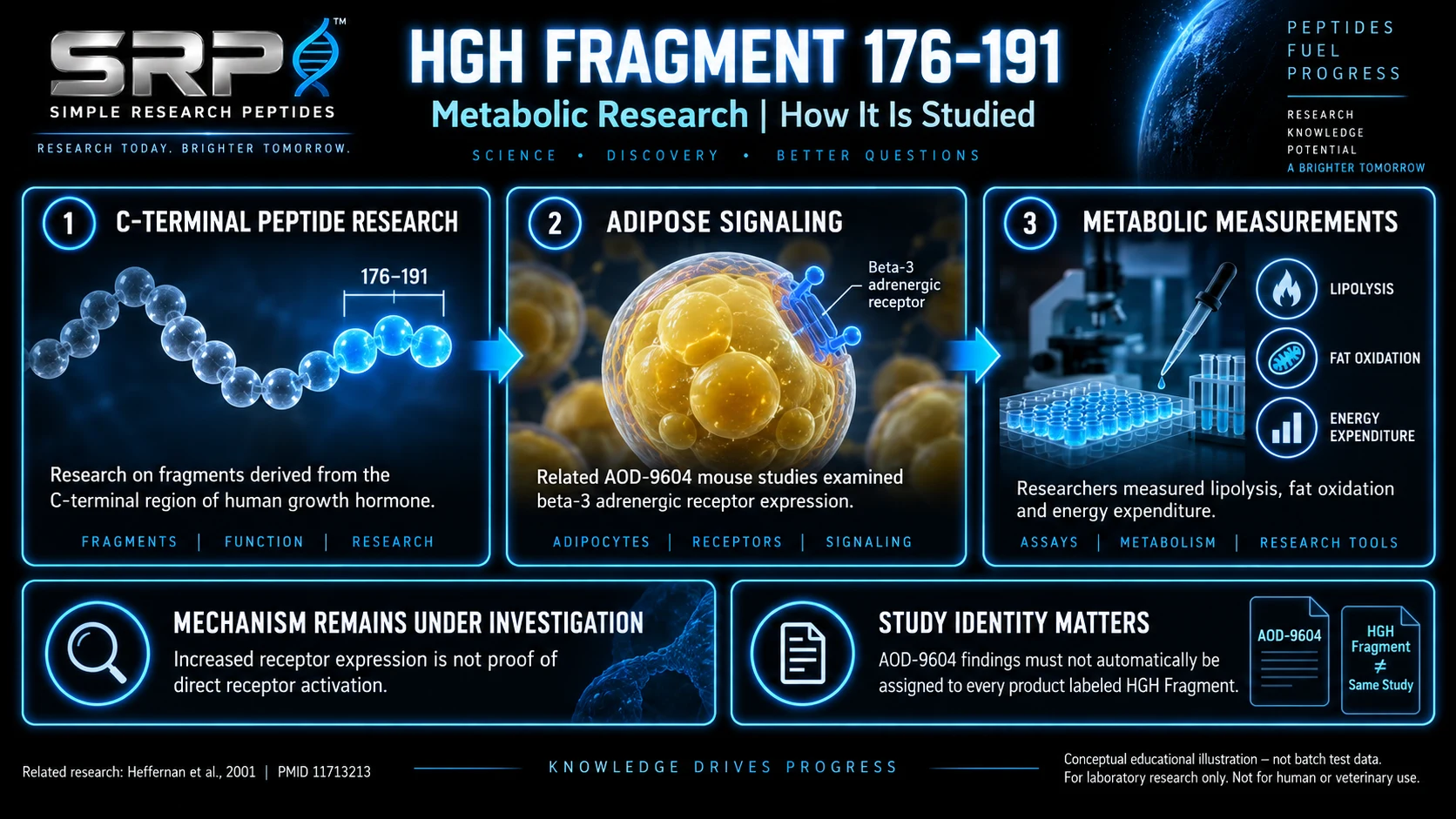
In related AOD9604 mouse experiments, researchers observed changes in body fat and beta-3 adrenergic receptor RNA expression. Long-term effects on body weight and lipolysis were absent in receptor-knockout mice, whereas an acute experiment still found increased energy expenditure and fat oxidation. The authors did not identify direct beta-3 receptor activation as the mechanism. These findings concern a specific animal model and research compound; they do not establish human weight-loss results for this product. Heffernan et al., 2001.
Cartilage research
The cartilage study cited in the supplied research material used AOD9604 in rabbits with experimentally induced knee osteoarthritis. It compared saline, hyaluronic acid, AOD9604, and their combination. The combination produced better cartilage assessments than either active material alone in that model. This is preclinical AOD9604 evidence, not proof of cartilage regeneration in people or a batch-specific result for this vial. Kwon and Park, 2015.
Glucose metabolism and evidence limits
Earlier work examined glucose and glycogen metabolism in rats using synthetic peptides related to the hGH C-terminal sequence. Those experiments should not be treated as evidence that all growth-hormone fragments have identical metabolic effects. Ma et al., 1982.
Human-trial claims about related AOD9604 preparations cannot establish clinical efficacy for this research vial. This listing does not promise fat loss, cartilage repair, glucose control, oral stability, or equivalence to full-length growth hormone.
Gallery and documentation
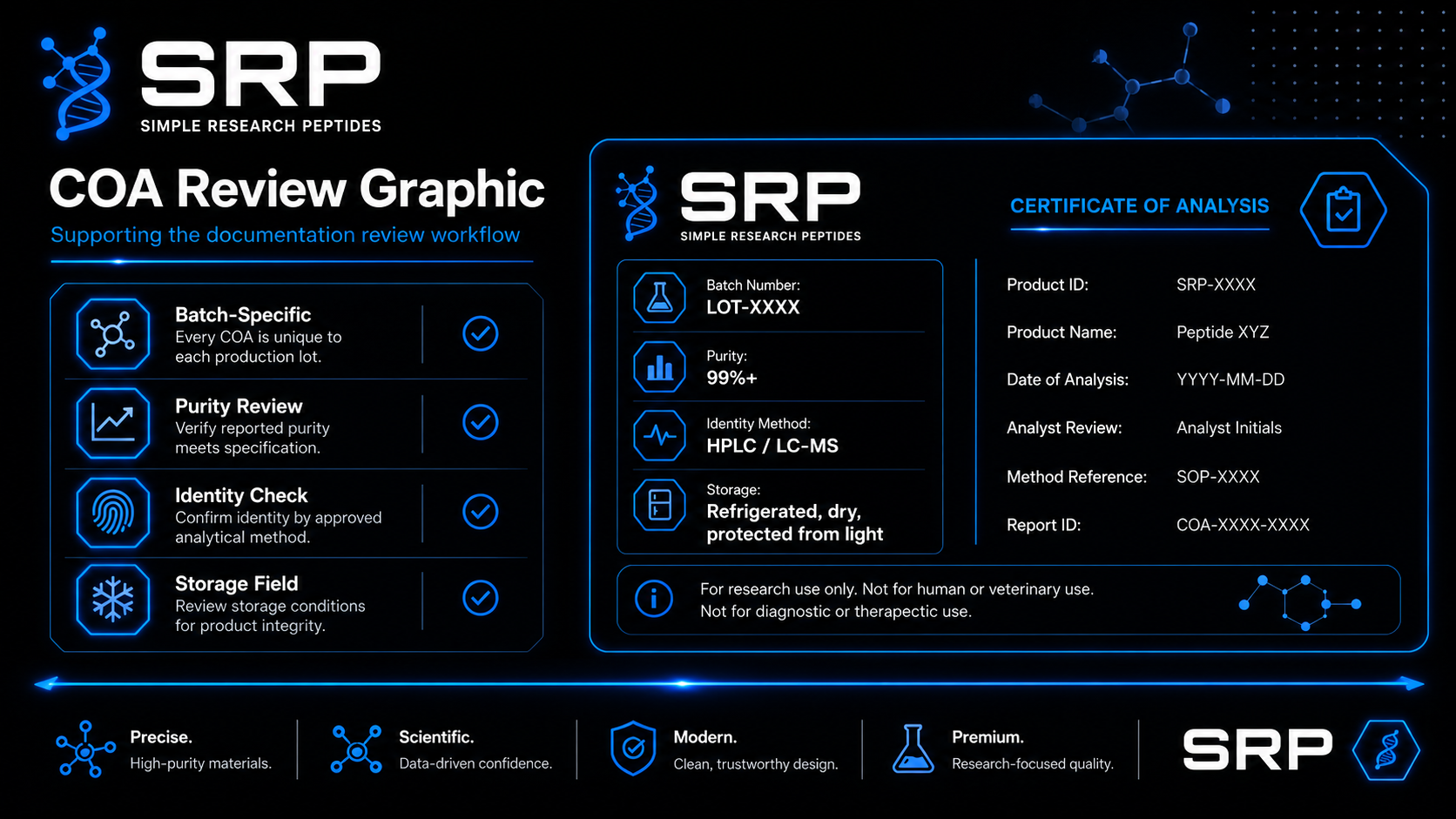
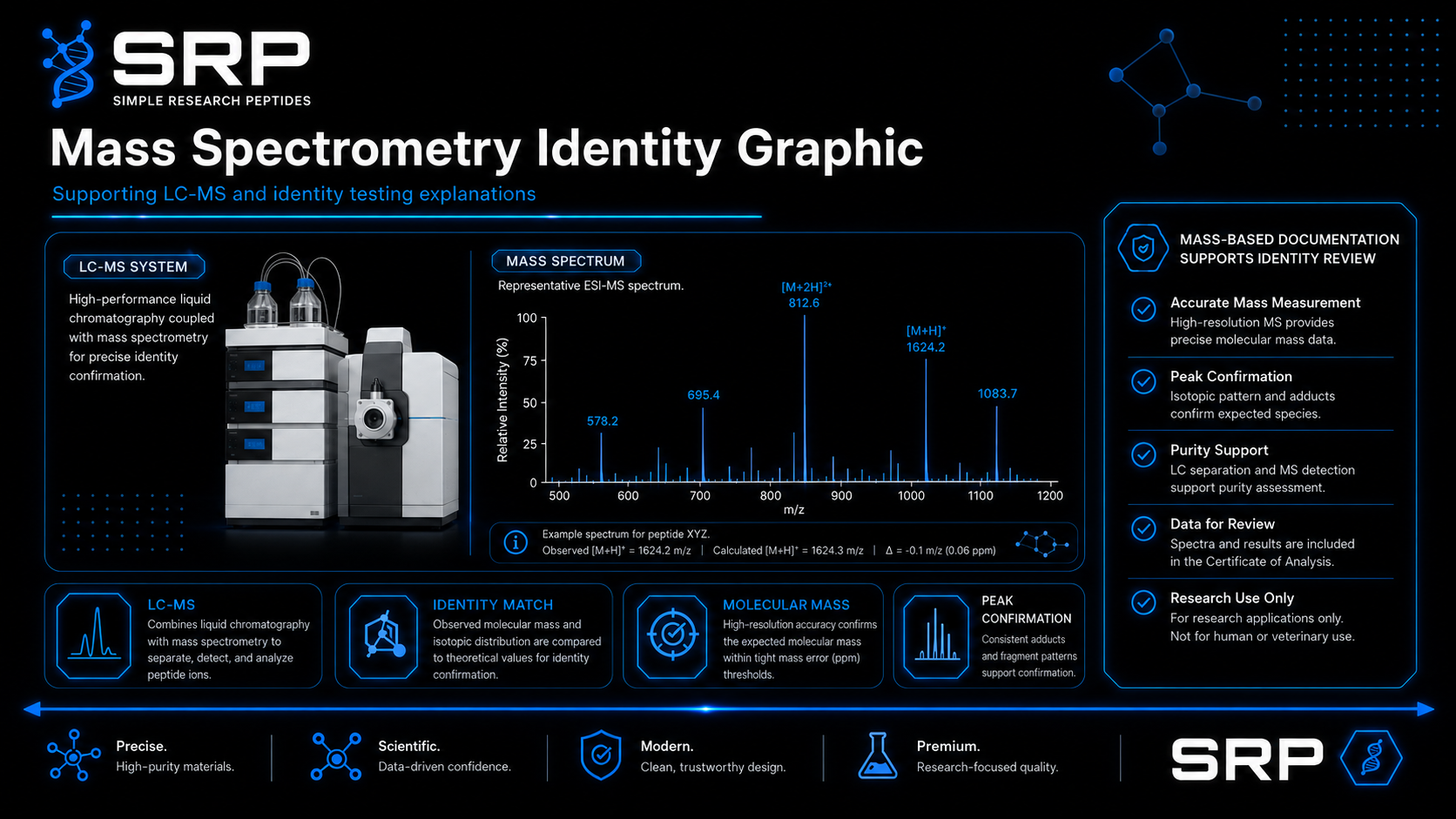
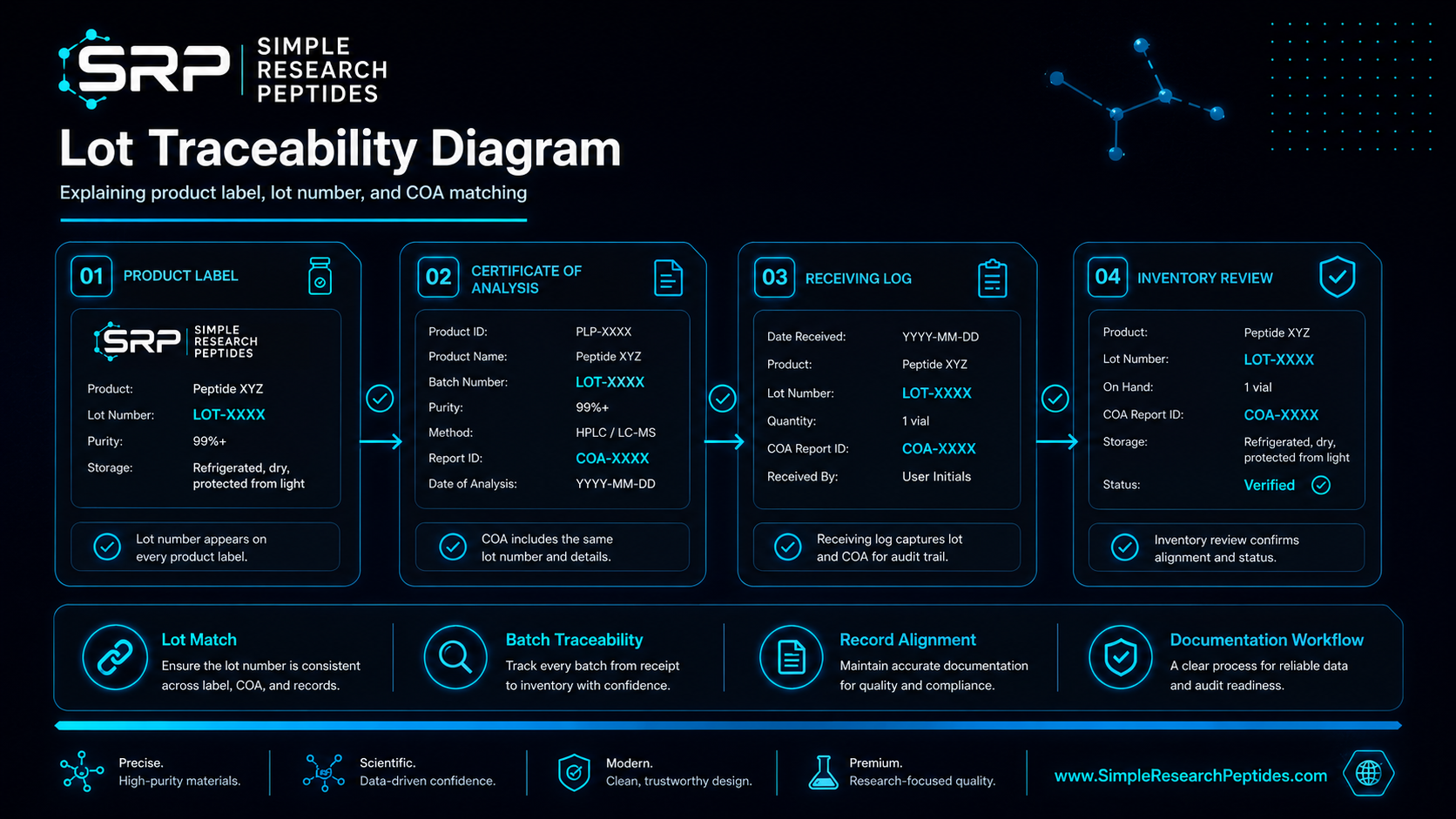
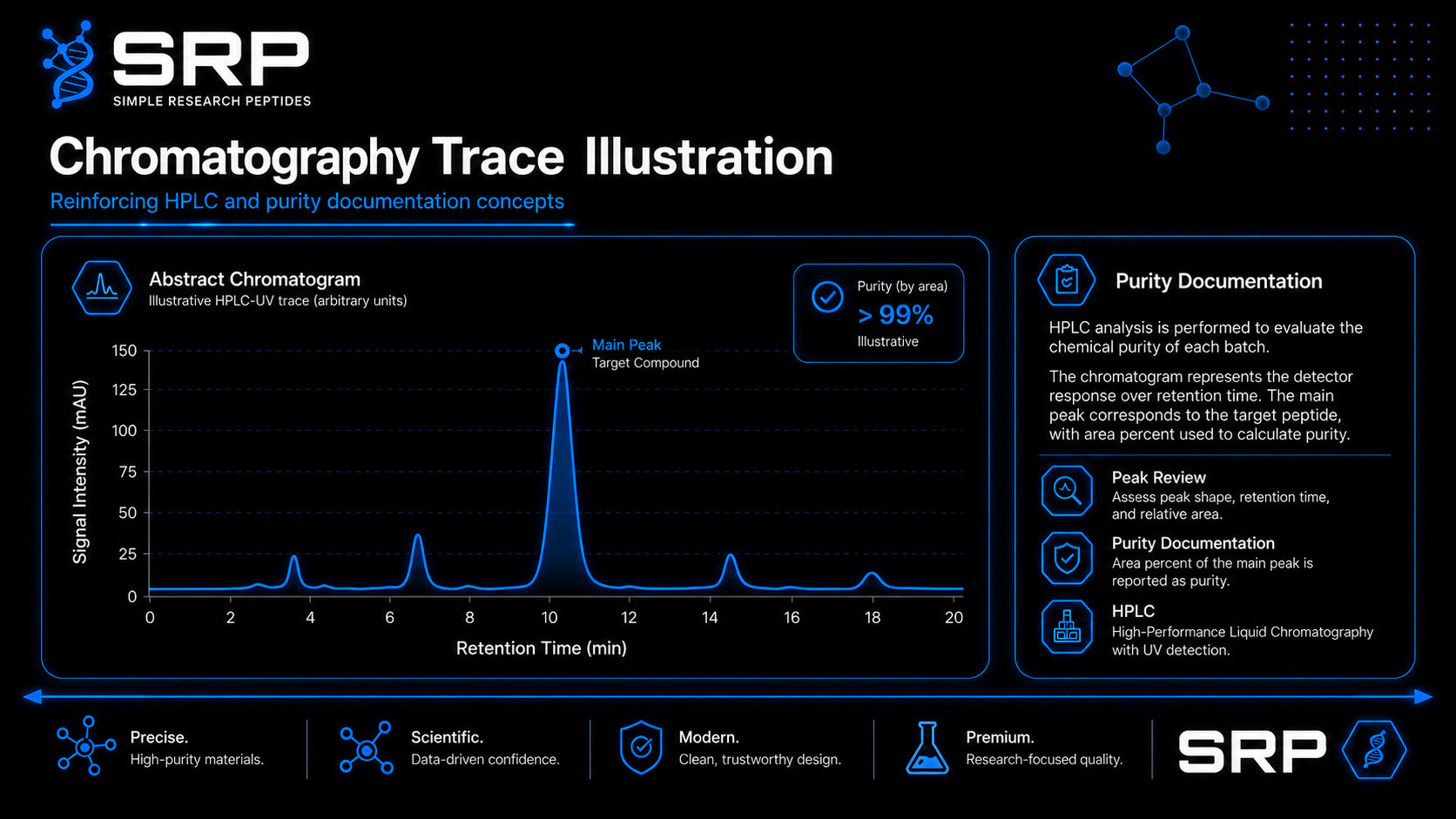
The mechanism graphic and four standard documentation charts are educational illustrations. They are not this batch’s certificate of analysis, purity measurement, mass spectrum, or chromatogram. Batch-specific findings require a matching laboratory report.
For laboratory research only. Not for human or veterinary use.
Reviews
There are no reviews yet.