


← Return to the Research Vault
Metabolism · Compound guide
AOD-9604
Explore the mechanisms, study findings and evidence limits behind this research topic.
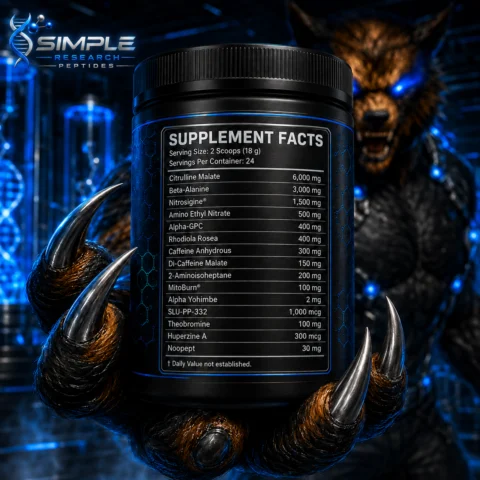
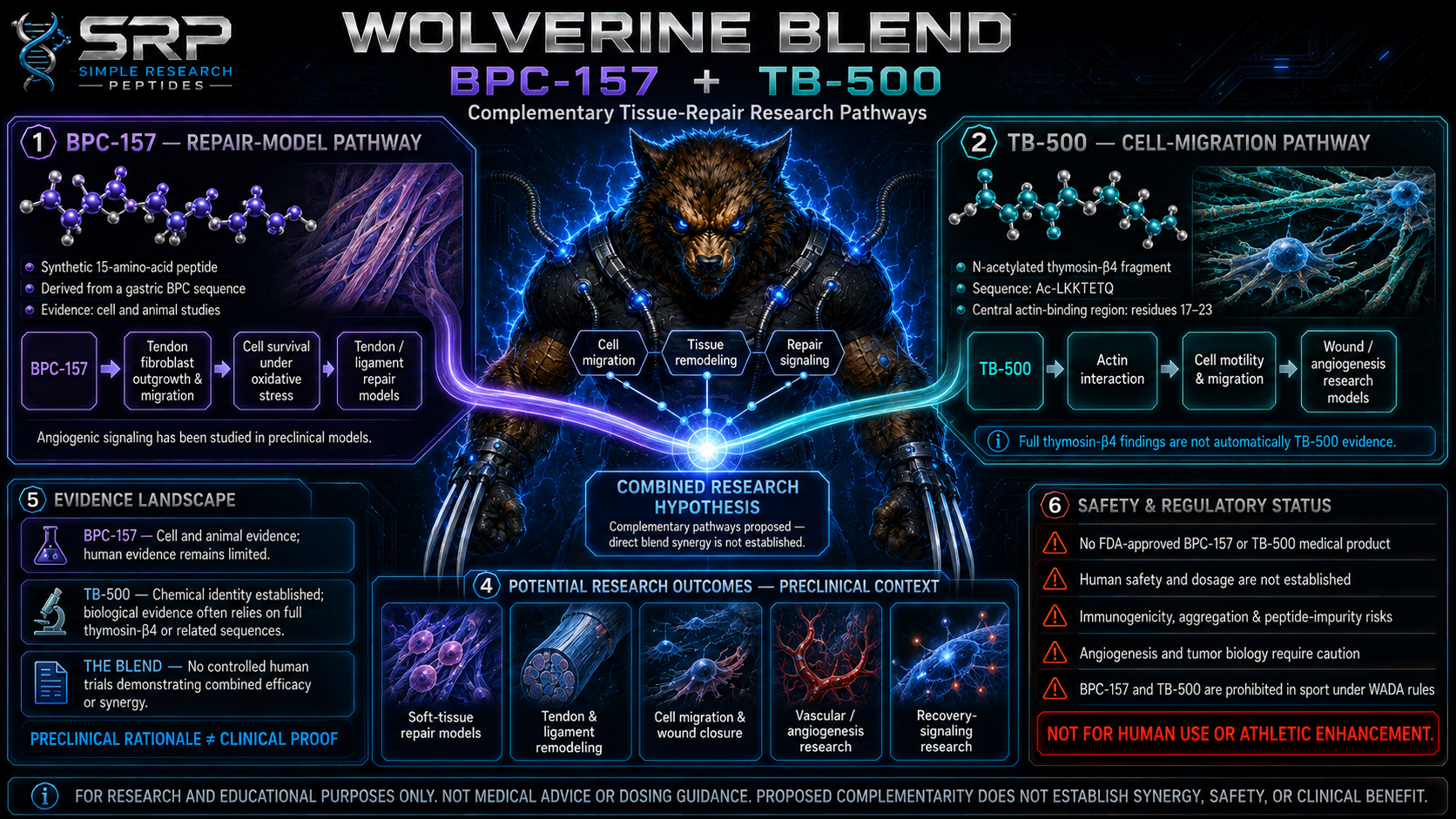
Product artwork identifies the SRP listing. It does not demonstrate safety or clinical benefit. The evidence guide and its sources follow below.
View product label and documentation →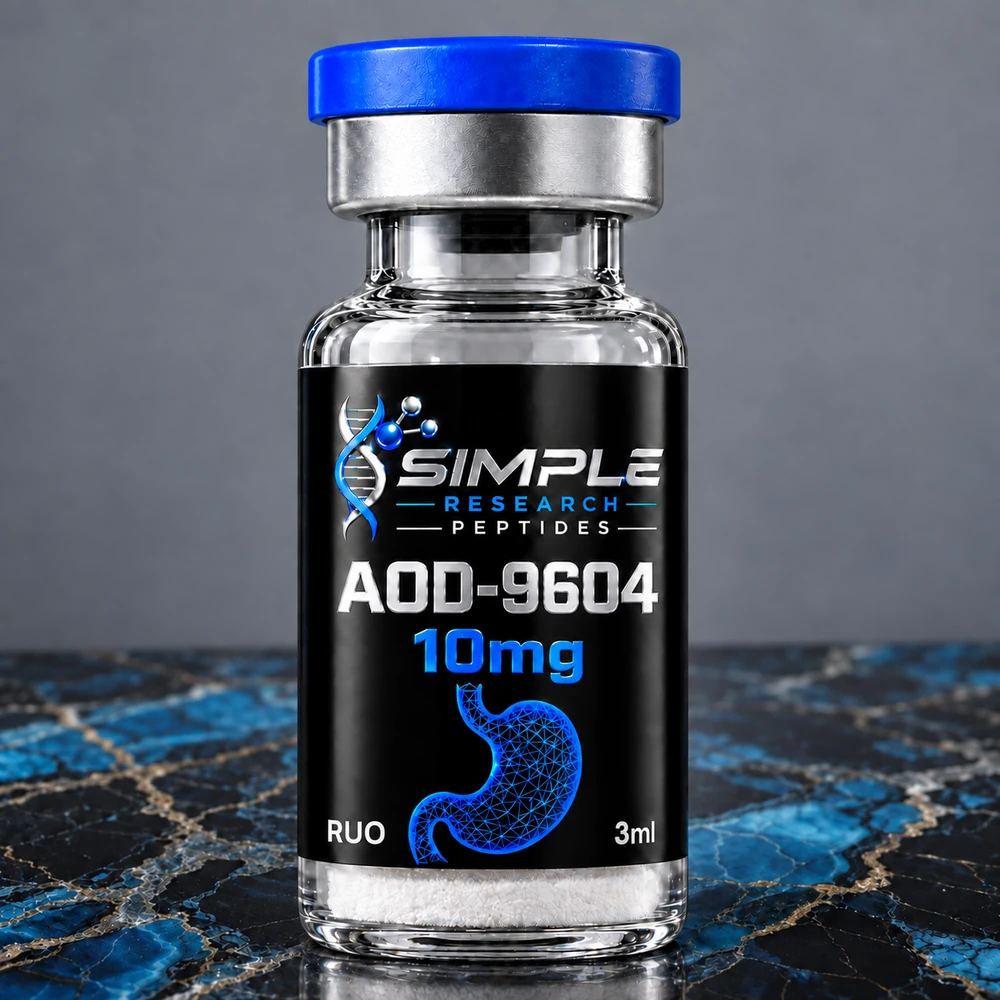
SRP COMPOUND INTELLIGENCE
AOD-9604 Research Guide
An evidence-mapped overview of AOD-9604 (AOD9604; Tyr-hGH 177–191; later registry name LAT-8881) covering compound identity from opened registries and papers, proposed lipid-metabolism actions only as far as opened AOD-9604 papers support them, published animal studies that named AOD9604, the opened human safety summary, later LAT-8881 pain/migraine registry records, and current evidence limitations.
Tyr-hGH 177–191
Not full-length hGH
Human weight-loss efficacy not in opened papers
Research use only
Educational information only. AOD-9604 is not an FDA-approved drug for human use. Laboratory research use only; not for human or animal use. AOD-9604 is not somatropin. No human dosing, reconstitution, or administration protocol appears on this page. This page does not claim human weight-loss efficacy.
01 / Identity
Tyr-hGH 177–191, not intact growth hormone
AOD-9604 is a synthetic hexadecapeptide: the C-terminal hGH residues 177–191 plus an N-terminal tyrosine, with a Cys7–Cys14 disulfide. Opened registries (PubChem CID 71300630; FDA UNII 7UP768IP4M; NCATS) and Stier et al. (2013) give the same linear sequence YLRIVQCRSVEGSCGF.
Preferred GSRS / NCATS name is LAT-8881. UNII availability does not imply approval. NCATS approval year is unknown.
The live SRP listing is titled AOD-9604 (5 mg Vial) and also displayed a “10 mg / 3 mL” heading on the 16 August 2026 fetch. That mismatch is recorded, not resolved. The page stated no sequence, CAS, or CID.
02 / Overview
A C-terminal fragment built to test a split
Opened Monash / Metabolic papers describe AOD9604 as a synthetic analogue of the C-terminal lipolytic domain of hGH (PMID 11146367; PMID 11713213; PMID 11673763). The development hypothesis was that a fragment might retain fat-metabolism actions without activating the growth-hormone receptor / IGF-1 axis.
Heffernan et al. (2001) reported that AOD9604 did not compete for the hGH receptor and did not induce proliferation in BaF-BO3 cells transfected with that receptor, unlike hGH. Stier et al. (2013) report no IGF-1 rise in the human trials they summarized.
This is not somatropin, tesamorelin, sermorelin, CJC-1295, or a GHRP.
03 / Mechanism
Observed in AOD9604-named papers only
Observed Oral AOD9604 for 19 days in obese Zucker rats cut weight-gain more than 50% versus control and increased adipose lipolytic activity, without the insulin-sensitivity impairment of chronic intact hGH (PMID 11146367).
Observed In ob/ob mice, 14-day AOD9604 reduced body-weight gain and increased fat oxidation and plasma glycerol, without hyperglycaemia, and without hGHR binding or BaF3 proliferation (PMID 11673763).
Observed Chronic weight/lipolysis effects were absent in beta3-AR knockout mice, but an acute AOD9604 experiment still increased energy expenditure and fat oxidation in those knockouts. Not a direct beta3-AR agonist (PMID 11713213).
Proposed Stier 2013 hypothesizes that binding site 2 of hGH is missing, so receptor dimerization may not occur. No opened paper reported a modern receptor-panel Ki table.
Not used Rahman, Lee, and Seeds (2026, PMID 41490200) group AOD-9604 with GH secretagogues that activate IGF-1 signaling. That grouping contradicts Heffernan 2001 and Stier 2013.
04 / Research Map
Where the literature actually sits
Rodent metabolic work
Three AOD9604-named papers (Ng 2000; Heffernan 2001 x2) in obese rats and mice.
Human Metabolic programme
Stier 2013 (DOI 10.4021/jem157w) summarizes six RCTs, ~893 adults. Safety only. No body-weight efficacy table. ClinicalTrials.gov has 0 AOD-9604 studies.
Rabbit OA model
Kwon and Park 2015: intra-articular AOD9604 +/- HA. Not a human OA trial. PMID 26275694.
LAT-8881 pain trials
Same UNII. NCT03865953, NCT04153409, NCT05298306 did not meet primary endpoints. Not obesity evidence.
05 / Snapshot
What was studied, in what system
Read the compound actually studied column first. Published designs are historical facts, not a protocol.
| Domain | Compound actually studied | System | Status | Source |
|---|---|---|---|---|
| Identity | YLRIVQCRSVEGSCGF | PubChem / GSRS / NCATS / Stier | Hexadecapeptide; Cys7-Cys14 | CID 71300630; UNII 7UP768IP4M |
| Oral rodent | AOD9604 | Obese Zucker rats, 19 days | Weight-gain cut; lipolysis up | PMID 11146367 |
| Mouse minipump | AOD9604 vs hGH | ob/ob mice | No hGHR binding / proliferation | PMID 11673763 |
| beta3-AR | AOD9604 vs hGH | Obese and knockout mice | Not a direct beta3-AR agonist | PMID 11713213 |
| 15-res cycle | hGH 177-191, no extra Tyr | NMR + adipose assays | Related; not this hexadecapeptide | PMID 11152298 |
| Human safety | AOD9604 (Metabolic) | Six RCTs, ~893 adults | No IGF-1 rise; no efficacy table | DOI 10.4021/jem157w |
| Secondary reviews | AOD-9604 (cited) | Valentino 2010; Misra 2013 | 2.6 vs 0.8 kg rest on sources not opened | PMID 20445536 |
| Rabbit OA | AOD9604 +/- HA | Collagenase knees, n=32 | Animal model only | PMID 26275694 |
| LAT8881 pain | LAT8881 (same UNII) | Phase 2 pain/migraine | Primary endpoints not met | NCT03865953 / 04153409 / 05298306 |
06 / Timeline
How the record accumulated
Ng — oral Zucker rats
Weight-gain cut; no hGH-like insulin effect. PMID 11146367.
Heffernan — mice, receptor, beta3-AR
No hGHR binding/proliferation; not a direct beta3-AR agonist. PMID 11673763; PMID 11713213.
Metabolic METAOD001-006
Six RCTs, 893 adults. Stier 2013 is the opened safety summary. No efficacy table in that paper.
Stier, Vos, Kenley safety paper
No IGF-1 rise, no OGTT deterioration, no antibodies in assayed subsets. DOI 10.4021/jem157w.
Kwon rabbit OA; Cox anti-doping ID
LAT8881 pain/migraine NCTs
Same UNII. Primary endpoints not met. Not obesity trials.
07 / Not established
Gaps in the opened record
No opened primary obesity-efficacy paper
Stier 2013 is safety-only. Kilogram figures in later reviews rest on Bray 2007 and an ASX notice that were not opened here.
Zero ClinicalTrials.gov AOD-9604 studies
Metabolic Phase IIb trials were Australian TGA CTN registrations. LAT8881 NCTs are pain/migraine.
Not hGH and not 176-191
Opened head-to-head data argue against hGHR agonism and IGF-1 elevation. Native 176-191 starts with Phe.
Cartilage evidence is one rabbit study
Kwon 2015 is n=32 collagenase OA. No opened human OA RCT.
GRAS language is not a drug approval
Stier food-ingredient GRAS sentence is not FDA approval of a drug.
Research-market lots are unlinked
Nothing opened here certifies that a given vial matches Metabolic or Lateral Pharma material.
08 / Studies
Primary papers in this map
AOD9604-only — obese rats
Ng et al., 2000 — Horm Res
Oral AOD9604 500 ug/kg/day, 19 days, obese Zucker rats. Weight-gain 15.8 +/- 0.6 g vs 35.6 +/- 0.8 g controls. Increased adipose lipolysis. No adverse insulin-sensitivity effect on clamp, unlike chronic hGH. PMID 11146367.
AOD9604-only — mice, receptor
Heffernan et al., 2001 — Int J Obes
14-day minipump. Reduced weight-gain; increased fat oxidation. Did not compete for hGHR or induce BaF3 proliferation. PMID 11673763.
AOD9604-only — beta3-AR
Heffernan et al., 2001 — Endocrinology
Chronic IP effects absent in beta3-AR knockouts; acute energy-expenditure signal remained. Not a direct beta3-AR agonist. PMID 11713213.
Related — 15-residue cycle, not this peptide
Ogru et al., 2000 — J Pept Res
NMR of cyclo(6,13) hGH 177-191 without the extra tyrosine. Do not cite as hexadecapeptide AOD9604 in-vivo evidence. PMID 11152298.
Human safety summary — no efficacy table
Stier, Vos, Kenley, 2013 — J Endocrinol Metab
Six RCTs, 893 adults. No IGF-1 rise, no OGTT deterioration, no anti-AOD9604 antibodies in assayed subsets. Weight-loss efficacy numbers are not in that paper. DOI 10.4021/jem157w.
Secondary review — sources not opened
Valentino 2010; Misra 2013
Restate 2.6 vs 0.8 kg and a failed 24-week trial ending in 2007, citing Bray 2007 and an ASX notice that were not opened here. PMID 20445536; PMID 23092275.
Rabbit OA — not a human trial
Kwon and Park, 2015 — Ann Clin Lab Sci
Weekly intra-articular AOD9604 +/- HA after collagenase. Rabbit model. PMID 26275694.
LAT8881 — same UNII, not obesity
NCT03865953 / NCT04153409 / NCT05298306
Oral or IV LAT8881 in neuropathic pain, migraine, and radicular pain. Posted primary endpoints not met. Not AOD-9604 obesity evidence.
09 / Lab caution
Identity first; no use protocol
Confirm the article: YLRIVQCRSVEGSCGF with a 7-14 disulfide. Native 176-191 starts with Phe. A COA that only says HGH fragment 176-191 has not identified AOD-9604.
PubChem mass 1815.1 Da. Cox 2015 describes parent plus a CRSVEGSCG metabolite. No reconstitution, injection, or oral-use instructions are given here. Research use only.
10 / FAQ
Common questions
What is AOD-9604?
A synthetic 16-residue peptide, Tyr-hGH 177-191 (YLRIVQCRSVEGSCGF) with a Cys7-Cys14 disulfide. Also registered as LAT-8881 (UNII 7UP768IP4M).
Is it the same as HGH fragment 176-191?
No. That is a marketplace alias. Native 176-191 starts with Phe. AOD-9604 is Tyr plus 177-191.
Does it raise IGF-1 like growth hormone?
Opened Heffernan 2001 cell work and Stier 2013 human safety summary argue it does not act through the hGH receptor and did not raise IGF-1 versus placebo in those trials.
Did human trials show weight loss?
Not in any primary paper opened for this page. Stier 2013 is safety-only. Kilogram figures in later reviews rest on sources that were not opened here.
Is it FDA-approved?
No. NCATS approval year unknown. Not for human or animal use.
Does this page include dosing?
No. There is no human dosing, reconstitution, or administration protocol on this page.
11 / References
Sources actually opened
- Ng FM, et al. Metabolic studies of a synthetic lipolytic domain (AOD9604) of human growth hormone. Horm Res. 2000. PMID 11146367.
- Heffernan M, et al. The effects of human GH and its lipolytic fragment (AOD9604) on lipid metabolism. Int J Obes Relat Metab Disord. 2001. PMID 11673763.
- Heffernan MA, et al. Increase of fat oxidation and weight loss in obese mice caused by AOD9604. Endocrinology. 2001. PMID 11713213.
- Stier H, Vos E, Kenley D. Safety and Tolerability of the Hexadecapeptide AOD9604 in Humans. J Endocrinol Metab. 2013;3(1-2):7-15. doi: 10.4021/jem157w. Full text opened. No efficacy table.
- Kwon DR, Park GY. Intra-articular AOD9604 with or without HA in rabbit OA. Ann Clin Lab Sci. 2015. PMID 26275694.
- Cox HD, et al. Detection and in vitro metabolism of AOD9604. Drug Test Anal. 2015. PMID 25208511.
- Ogru E, et al. NMR of 15-residue cyclic hGH 177-191. J Pept Res. 2000. PMID 11152298.
- Valentino MA, Lin JE, Waldman SA. Clin Pharmacol Ther. 2010. PMID 20445536. Secondary statements; Bray 2007 and ASX not opened.
- Misra M. Curr Cardiol Rev. 2013. PMID 23092275.
- Wilding J. AOD-9604 Metabolic. Curr Opin Investig Drugs. 2004. PMID 15134286.
- PubChem CID 71300630; FDA UNII 7UP768IP4M; CAS 221231-10-3; ClinicalTrials.gov NCT03865953, NCT04153409, NCT05298306.
Educational information only. AOD-9604 is not an FDA-approved drug for human use. Investigational compound. Laboratory research use only; not for human or animal use. Last source review: 16 August 2026 (America/Indianapolis).