



Hormone signaling · Compound guide
Tesamorelin
Explore the mechanisms, study findings and evidence limits behind this research topic.
Product artwork identifies the SRP listing. It does not demonstrate safety or clinical benefit. The evidence guide and its sources follow below.
View product label and documentation →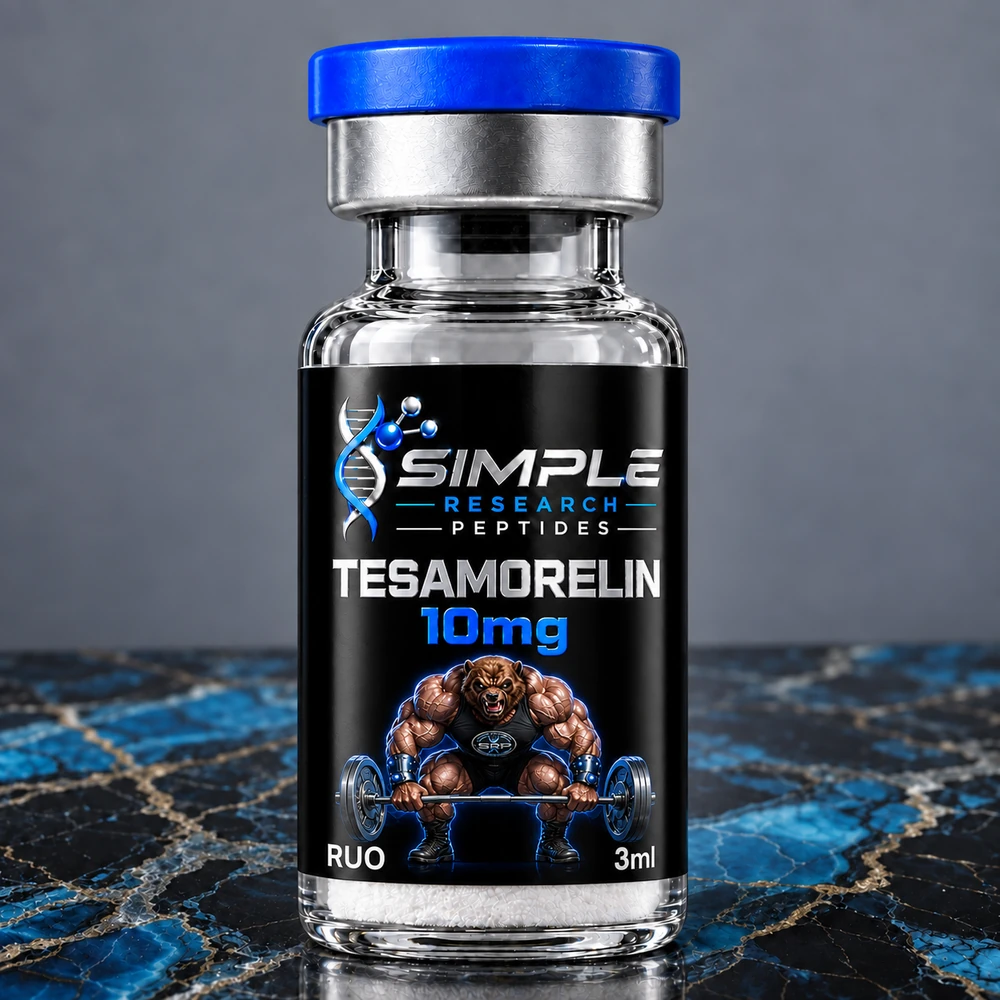
Tesamorelin Research Guide
An evidence-mapped guide to tesamorelin, including GHRH receptor biology, randomized studies in HIV-associated lipodystrophy, approved-product distinctions, and limits on off-label extrapolation.
Fast Answer
Tesamorelin is a synthetic GHRH analog studied for its ability to stimulate endogenous growth-hormone signaling and alter visceral adipose tissue in adults with HIV-associated lipodystrophy. An FDA-approved finished tesamorelin medicine exists for a defined indication.
SRP tesamorelin research material is not EGRIFTA SV, is not an approved finished drug, and should not inherit the approved product’s identity, quality controls, labeling, or clinical claims.
How Tesamorelin Is Studied
Tesamorelin activates the GHRH receptor in the pituitary, increasing pulsatile GH secretion and downstream IGF-1 signaling. Research endpoints include visceral adipose tissue, liver fat, waist measures, body composition, glucose regulation, inflammatory markers, and muscle quality.
The pathway is endocrine and system-wide. A change in one body-composition compartment does not establish general weight-loss, bodybuilding, anti-aging, or performance benefits.
Evidence Map
- Phase 3 research: randomized trials in people with HIV and excess abdominal fat found reductions in visceral adipose tissue.
- Liver-fat research: a smaller randomized trial reported reductions in visceral and hepatic fat, while emphasizing the need for longer-term study.
- Discontinuation: extension data found that improvements were lost after treatment was stopped.
- Other populations: evidence should not be generalized beyond the studied population without direct trials.
Safety and Evidence Limits
GH/IGF-1 pathway research requires attention to glucose intolerance, fluid retention, musculoskeletal symptoms, injection reactions, endocrine feedback, and contraindication questions relevant to approved prescribing information. Long-term consequences and off-label populations require additional evidence.
This page is educational and research-focused. It does not provide dosing, reconstitution, or personal treatment instructions.
Frequently Asked Questions
Is tesamorelin simply a weight-loss peptide?
No. Its approved finished-drug indication is narrow and relates to excess abdominal fat in adults with HIV-associated lipodystrophy.
Can HIV lipodystrophy trial results be generalized to bodybuilding?
No. Different populations and endpoints require direct evidence.
Is SRP tesamorelin EGRIFTA SV?
No. SRP material is for laboratory research and is not the approved finished drug.