



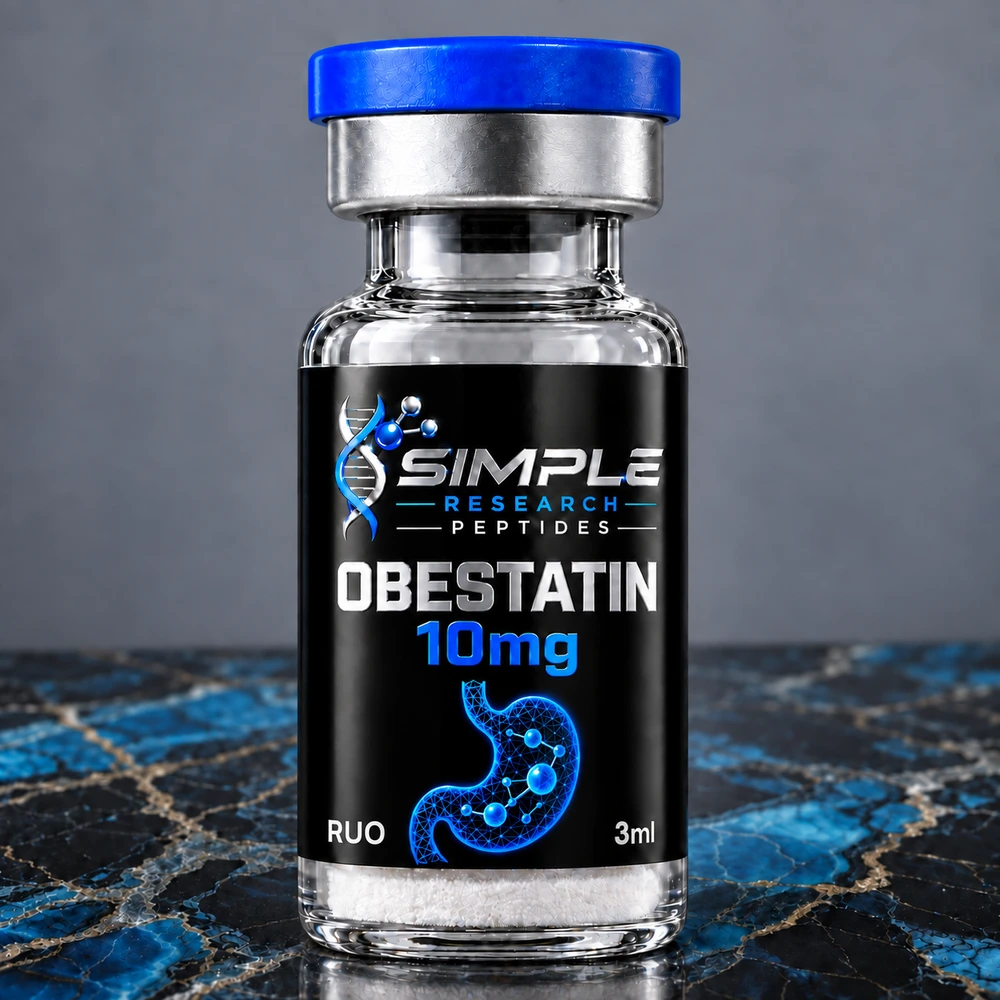
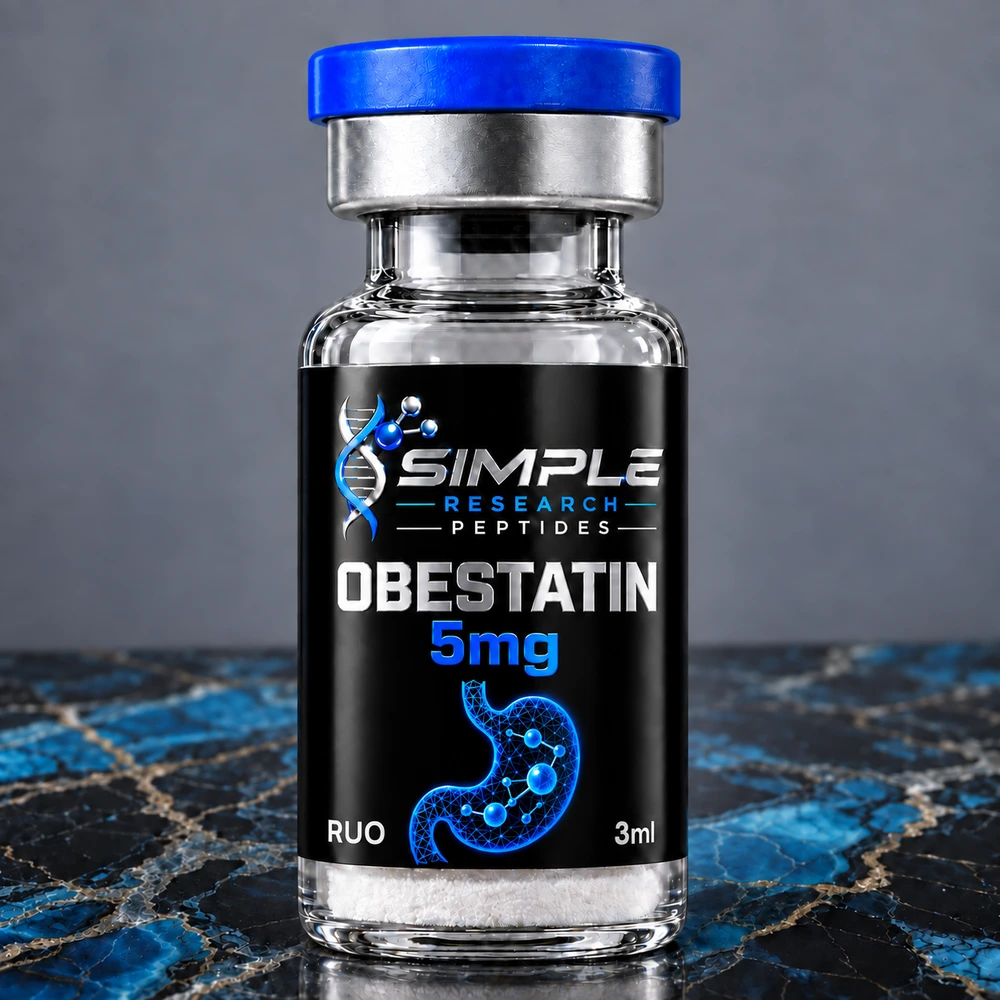
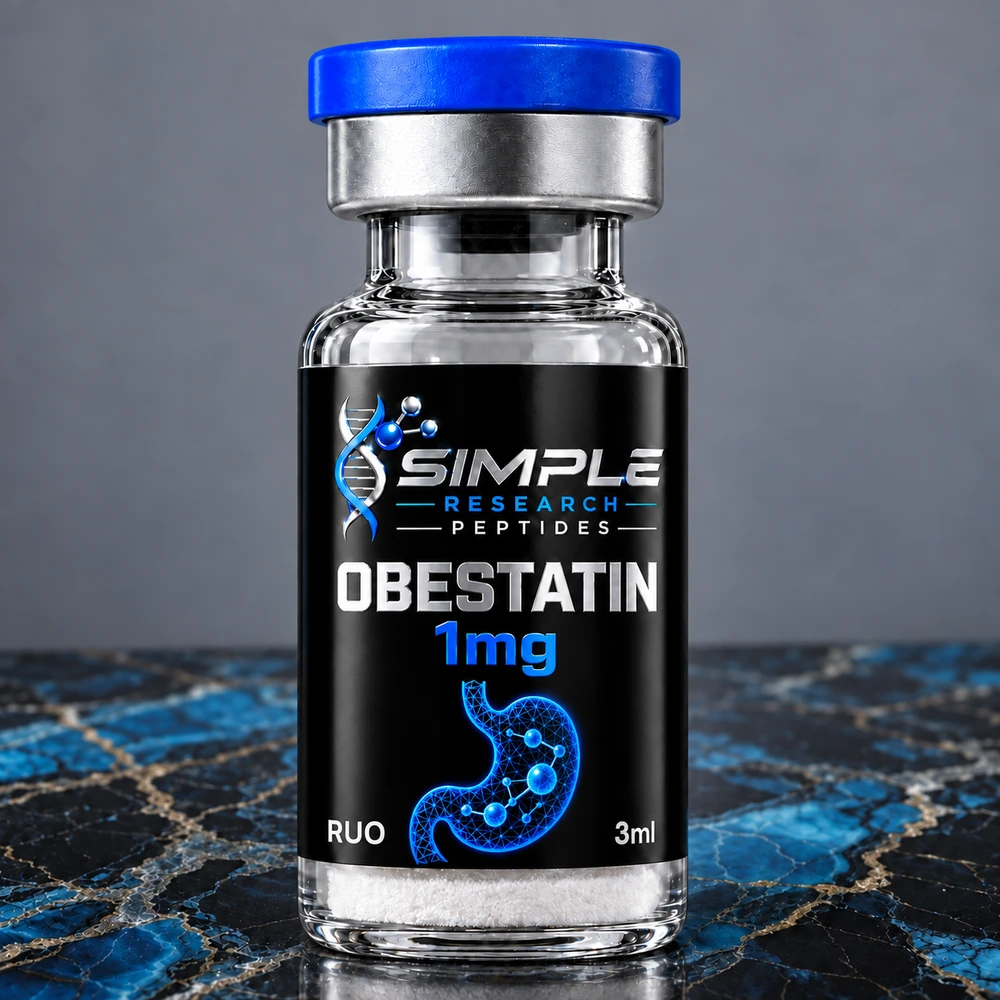
Obestatin research vials — 1mg, 5mg and 10mg
Obestatin is listed in three strengths on this single product page: 1mg, 5mg and 10mg per vial. The 1mg option is currently out of stock. Select the required option to see its matching label, current price and available stock. Each purchased unit is one vial, and the 3ml label marking refers to nominal container capacity rather than a prepared solution concentration. The shared stomach-and-signaling graphic reflects the compound’s place in gut-peptide research. The two strengths share the same research background; a larger amount per vial does not imply a different mechanism or a stronger biological outcome in any particular experiment.
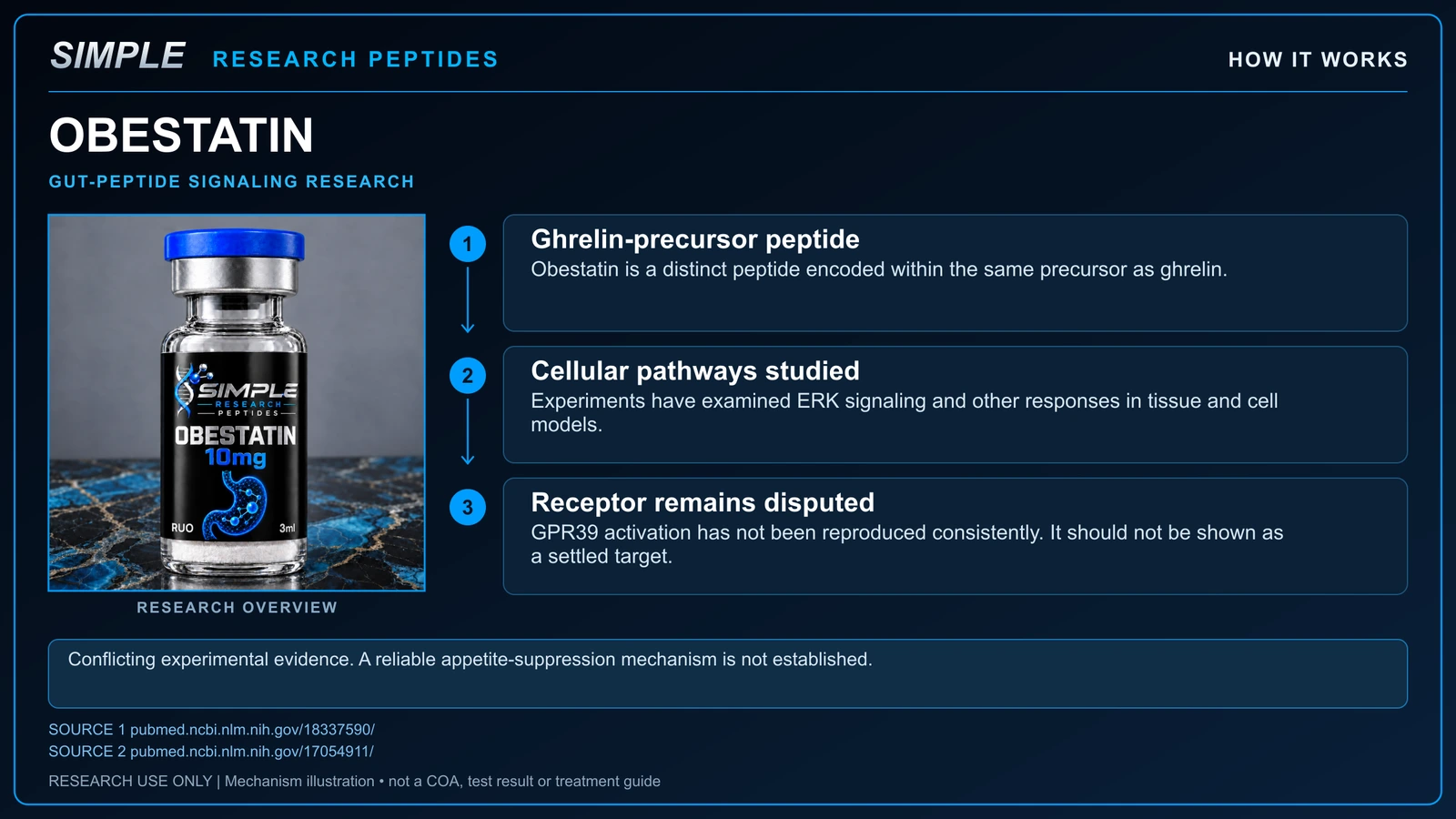
Obestatin is a peptide associated with the precursor that also gives rise to ghrelin. Early research described effects on food intake and gastrointestinal activity and proposed GPR39 as a receptor. That history is useful for understanding why the peptide attracted research interest, but the original interpretation should be considered alongside later conflicting findings. One independent study used cAMP and calcium-response assays and did not reproduce activation of GPR39 by obestatin. The receptor assignment is therefore presented here as disputed rather than a settled pathway, and the product is not described as a proven appetite suppressant. Original discovery study and independent GPR39 study.
Additional experimental work examined early-response gene activity in gastrointestinal and adipose tissues. A 2008 paper reported c-fos responses and ERK1/2 phosphorylation in cultured preadipocytes, together with tissue and receptor-binding experiments supporting the authors’ proposed model. These observations concern defined assays and experimental conditions. They help frame questions about cell signaling, receptor identification and reproducibility, but they do not resolve all disagreements in the literature. The accompanying SRP chart reflects this distinction by showing cellular pathways under investigation and explicitly noting uncertainty about the receptor. Read the cell-signaling and tissue study.
For literature review, separate an observed signaling response from a claim about its upstream receptor, and separate both from a whole-organism outcome. A change in a cultured-cell marker does not automatically explain changes in feeding behavior, metabolism or other complex physiology. Material identity also matters: peptide sequence, terminal modifications and analytical characterization should be checked against the experimental paper. The references on this page describe published research materials, not testing of SRP’s current stock. No clinical effectiveness, human safety or use regimen is established by this product description.
Documentation and research use
The SRP COA review, chromatography, mass-spectrometry and lot-traceability graphics are educational examples, not analytical measurements from these vials. They do not establish purity, identity, sterility or clinical suitability. Match any report to the selected strength and the actual lot before drawing conclusions about the material. Follow supplier documentation for handling and storage. For research use only; not for human or veterinary use, diagnosis or treatment.

Reviews
There are no reviews yet.