For compound identity, published research and evidence limitations, read the DSIP research guide.
I Slept 3.5 Hours a Night for a Year
What my year-long watch tracking showed before and after I began DSIP research—and why trying to train, recover, think clearly, and improve without enough sleep was one of the hardest parts of my journey.
This page documents my personal timeline, impressions, watch readings, and broader health journey. It does not prove that DSIP caused any change in my sleep, energy, recovery, body composition, or health. Consumer wearable measurements are estimates rather than clinical sleep testing. This article is not medical advice, a treatment recommendation, or human-use guidance, and it provides no dosage, reconstitution, administration, cycling, stacking, sourcing, or purchasing instructions.
My Starting Point: Running on Empty
For close to a year, my watch repeatedly recorded nights where I averaged approximately 3.5 hours of sleep. My sleep score regularly fell into the 30s, and the amount of estimated REM sleep shown by my watch was often only about 12 minutes.
I was still trying to train, work, stay productive, manage stress, and improve physically. The problem was that effort did not replace recovery. I could force myself through a workout, but I could not force my body to feel restored when the sleep foundation was missing.
The hardest part was not simply feeling tired. It was trying to build strength, recover from training, stay patient, think clearly, and keep progressing while my body felt like it never fully recharged.
My Samsung Health Screenshots
These are the actual screenshots I saved from Samsung Health. They are presented as a record of what the app displayed—not as laboratory confirmation and not as proof that one variable produced the change.
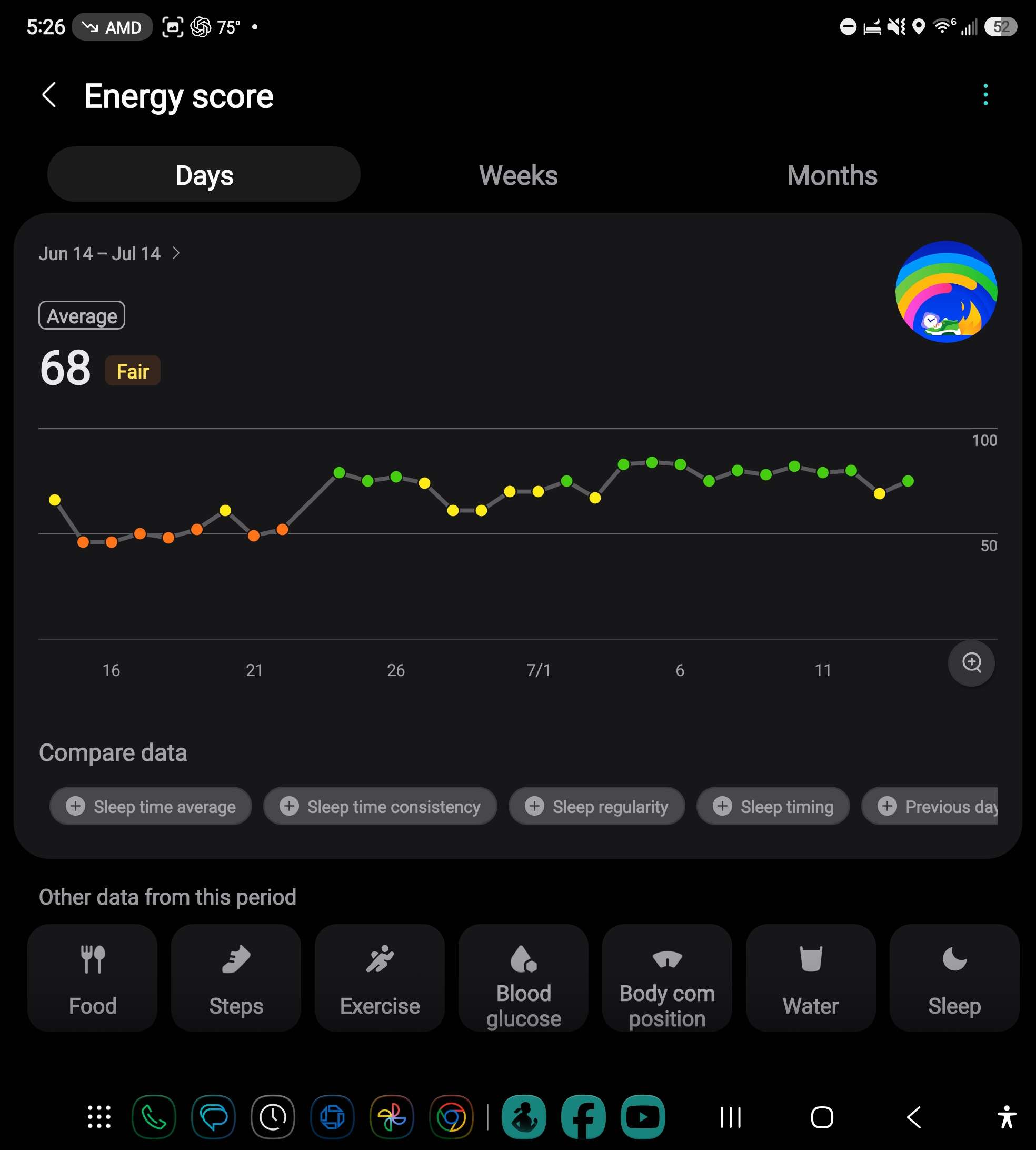
Average Energy Score: 68
The month-long graph covers June 14 through July 14 and displays an average energy score of 68, marked “Fair.” The earlier readings were generally lower, while many later readings moved into the green range. This is a timeline observation, not a medical measurement or proof of causation.
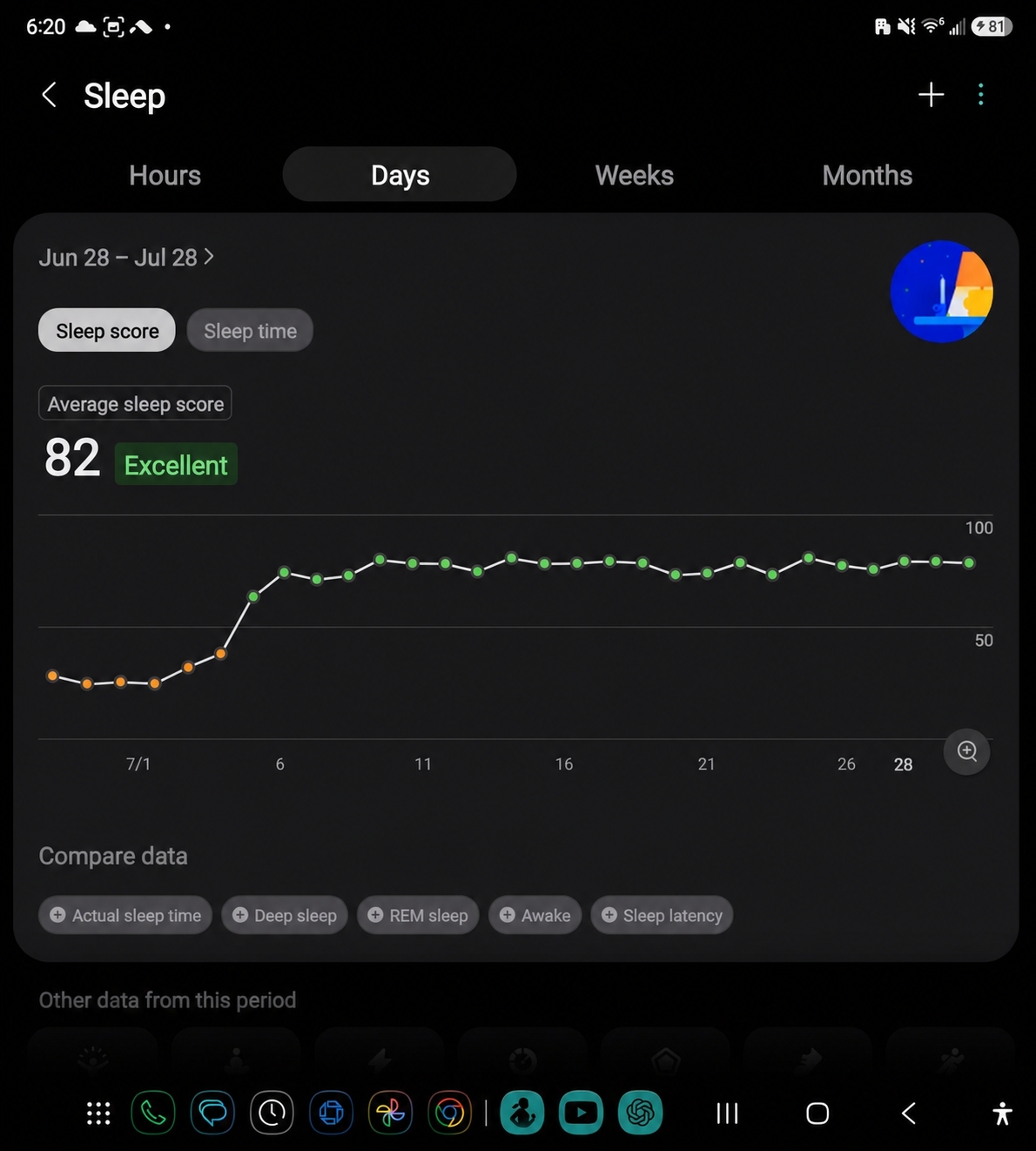
Recorded Sleep Score: 81
On July 5, Samsung Health displayed a sleep score of 81, marked “Good.” That was a major contrast with the scores in the 30s that had appeared repeatedly during my earlier period of severe sleep restriction.
Sleep Score Trend
A simplified visual comparison of my earlier trend and the later recorded score.
Estimated REM Trend
Wearable-estimated sleep stages are useful for trends but are not equivalent to a clinical sleep study.
Why Recovery Was So Difficult Without Sleep
When sleep was consistently short, every part of recovery felt harder. I could still show up and work, but the cost of doing so was much higher. My experience reinforced that training creates the demand for adaptation, while sleep and recovery provide the opportunity for that adaptation to occur.
Training Recovery
Workouts could still happen, but soreness, fatigue, and the feeling of being physically depleted were harder to overcome.
Daily Energy
It was difficult to feel fully recharged, even when I was staying disciplined with exercise, food, hydration, and work.
Focus and Patience
Low sleep affected more than my body. It made mental clarity, emotional control, patience, and consistent decision-making harder.
Consistency
The longer poor sleep continued, the more effort it took to maintain the habits that were responsible for my broader progress.
Trying to improve while sleeping 3.5 hours a night felt like building something without a foundation.
Bobby Lawson — Personal Sleep JournalWhat Changed After I Began DSIP Research
After I began DSIP research, my watch data and personal sleep experience changed significantly. My later sleep scores reached the high 70s and low 80s, including the recorded score of 81 shown above. My watch also began showing approximately 1.5 to 2 hours of estimated REM sleep on stronger nights instead of the earlier average of roughly 12 minutes.
I also felt that recovery became more manageable and my energy became more consistent. However, the timing of two events does not establish that one caused the other. My routine, stress, training load, body weight, nutrition, hydration, sleep opportunity, and other recovery variables were also changing.
My Recorded Timeline
Earlier scores in the 30s, approximately 3.5 hours of sleep, roughly 12 minutes of estimated REM, and later Samsung Health readings that included a score of 81.
Single-Variable Causation
My personal timeline cannot prove that DSIP alone caused the changes, nor can it predict what another person would experience.
Limited Human Evidence
A small older trial studied DSIP in 16 people with chronic insomnia, which is far too limited to turn my experience into a general conclusion.
An Unresolved Research Question
A later scientific review described DSIP’s proposed role as a sleep factor as poorly documented and still unresolved.
Watch the Sleep Research Story
DSIP Sleep Research Introduction
A short cinematic introduction to the sleep-research chapter of my journey.
My Sleep and Recovery Journey
Watch the longer video directly on this page or open it on YouTube.
Two Stages of My Broader Transformation
These photos show two different points in my broader health and fitness journey. They are included to show what prolonged fatigue felt like in the context of my life and what sustained training, nutrition, recovery work, and long-term consistency looked like over time.
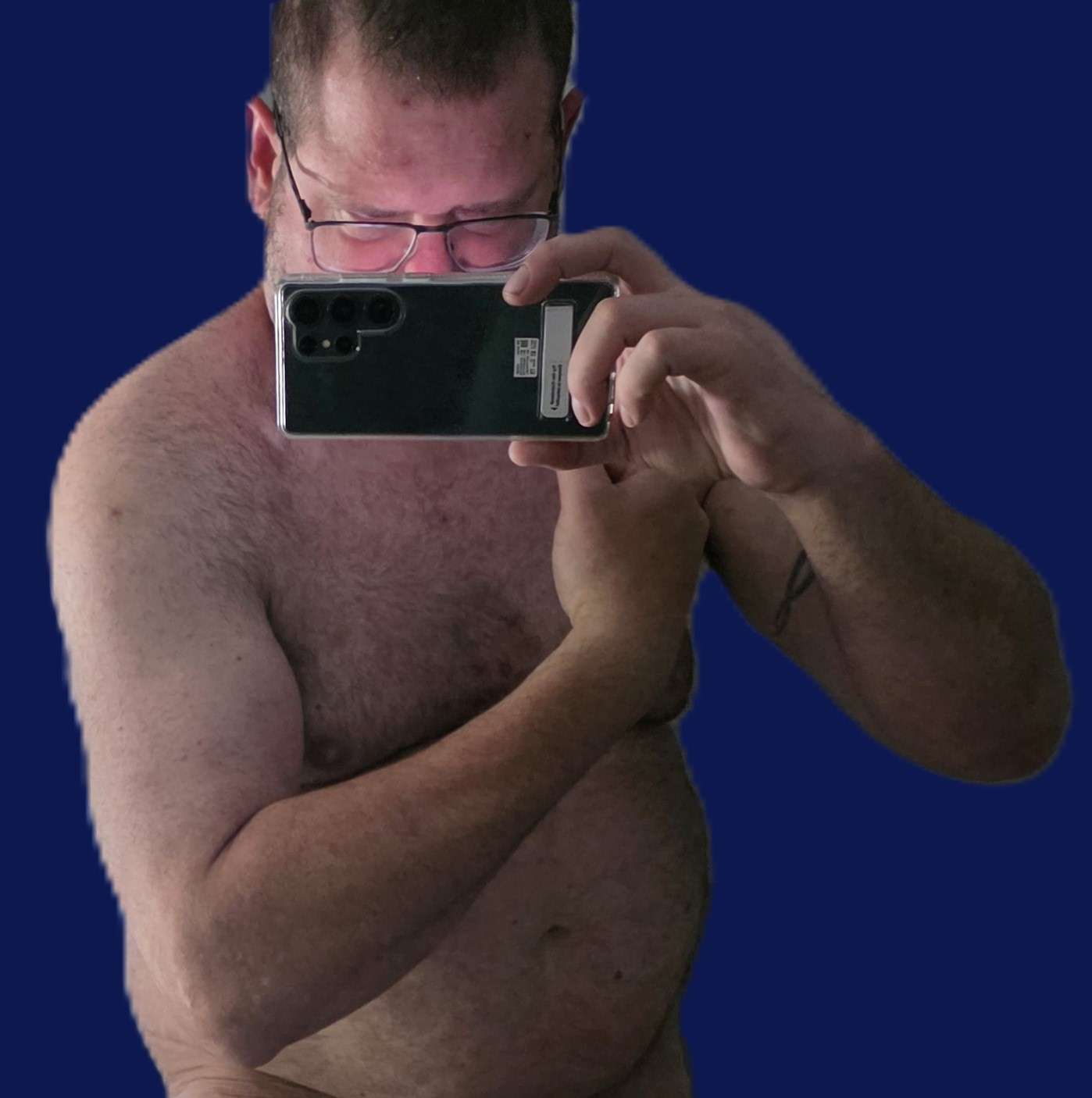
Before Improved Sleep and Recovery
This was an earlier stage of my overall journey, during a period when severely restricted sleep made recovery and consistency much harder.

After Sustained Training, Nutrition, and Recovery Work
This later photo reflects a much larger transformation built through sustained daily effort—not a result that can be assigned to one sleep variable or one research compound.
The Main Factors Behind My Progress
The biggest lesson from my journey is that the fundamentals did the heavy lifting. Better sleep made it easier for me to execute those fundamentals, but it did not replace them.
Consistent Daily Training
I trained repeatedly over time, stayed active, pushed myself, and continued working even when motivation was not perfect.
Diet and Calorie Counting
I paid attention to calories, protein, food choices, portions, and the overall consistency needed to change body weight.
Recovery Habits
I worked on sleep, hydration, rest, stress, and the recovery practices needed to keep training and functioning.
Long-Term Discipline
The transformation came from repeating useful behaviors over time, not from one product, one compound, one workout, or one good week.
My honest conclusion: Better sleep appeared alongside better recovery and more stable energy in my personal timeline. But the visible transformation came from consistent training, calorie control, nutrition, movement, and long-term execution.
Research Context and References
DSIP remains an unsettled research topic. The references below are included so readers can review the limited human evidence and the scientific uncertainty directly instead of relying on marketing claims or personal anecdotes.
- Small human insomnia study: Effects of delta sleep-inducing peptide on sleep of chronic insomniac patients . The double-blind study involved 16 participants and should not be treated as broad proof of effectiveness.
- Scientific review: Delta sleep-inducing peptide (DSIP): a still unresolved riddle . The review emphasizes that DSIP’s proposed relationship with sleep remained poorly documented and unresolved.